


The Morning Sixpack Podcast Edition: Trump’s Expanding Power, Global Entanglements, and the People Driving Them
Welcome back to The Morning Sixpack, where we untangle the chaos so you don’t have to. Today’s lineup is a tour through Trump’s second-term foreign policy, domestic shake-ups, and the enforcers making it all possible. Let’s get into it.
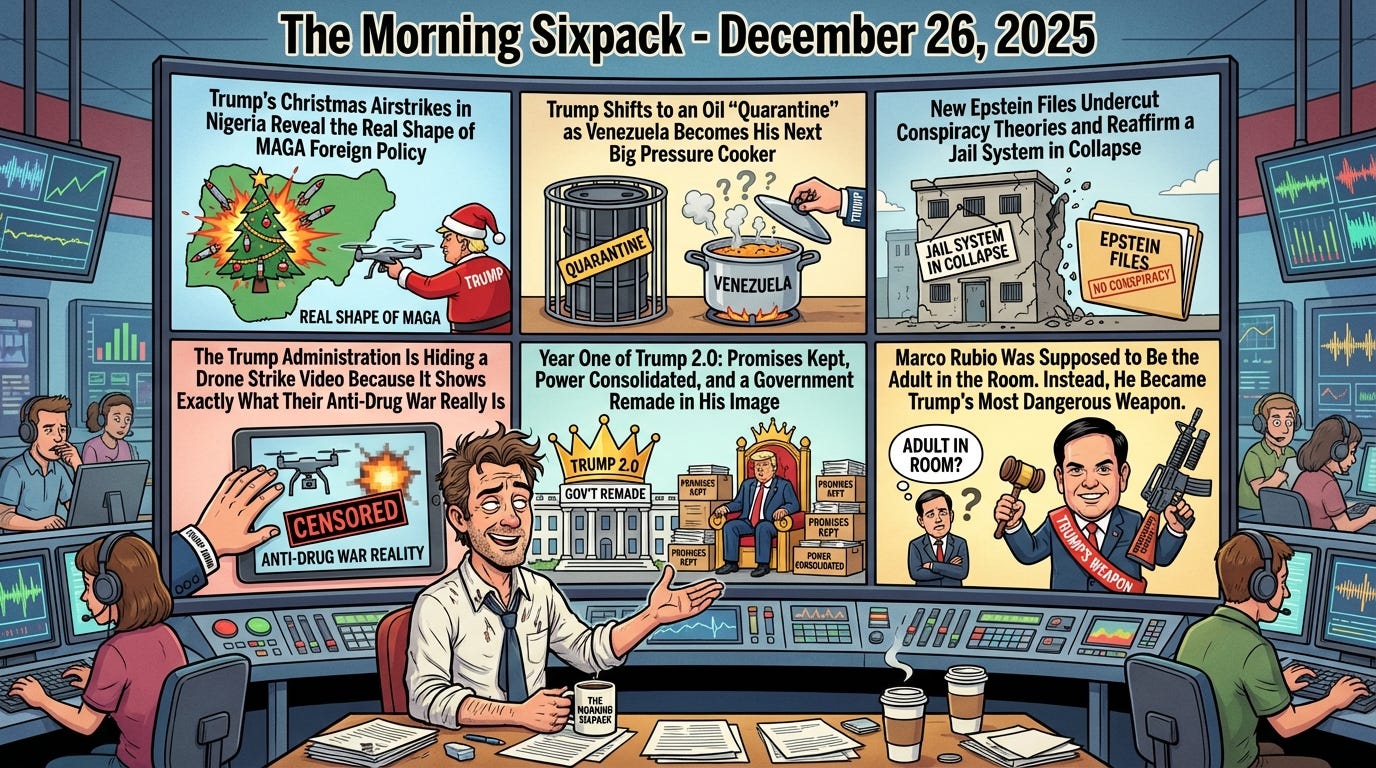
1. Trump’s Christmas Airstrikes in Nigeria Reveal the Real Shape of MAGA Foreign Policy
Trump launched Tomahawks on Christmas Day, signaling that his foreign interventions now track perfectly with the priorities of his political base. The strikes hit ISIS-linked camps, wrapped in rhetoric about protecting Christians—a domestic political message disguised as global strategy. Long-running crises in Nigeria provided the pretext, but the timing and justification were aimed squarely at evangelical voters. The result? A self-styled anti-interventionist president who keeps finding new theaters for intervention, so long as the optics serve him at home.
2. Trump Shifts to an Oil “Quarantine” as Venezuela Becomes His Next Big Pressure Cooker
The White House has shifted U.S. military focus to a so-called oil “quarantine,” an economic chokehold masquerading as diplomacy. Trump hints at military options while insisting he’s just enforcing sanctions, even as aircraft carriers and F-35s loom over the Caribbean. The administration wants Maduro gone, and it’s betting that starvation-level economic pressure will topple him. Critics call it illegal aggression; the White House calls it Tuesday.
3. New Epstein Files Undercut Conspiracy Theories and Reaffirm a Jail System in Collapse
Freshly released DOJ documents don’t change Epstein’s cause of death—they just expose a federal detention system unable to prevent it. The files portray weeks of negligence: skipped rounds, falsified logs, and a previous near-suicide that staff mishandled at every turn. Conspiracies may be more cinematic, but the documents point to the more mundane horror—bureaucratic failure, not murder.
4. The Trump Administration Is Hiding a Drone Strike Video Because It Shows Exactly What Their Anti-Drug War Really Is
Pentagon leaders refuse to release footage of a September strike because it shows U.S. forces killing shipwrecked survivors—not cartel combatants. Trump first promised transparency, then pretended he never said it. Lawmakers who’ve seen the video say the “sources and methods” excuse is fiction; the real concern is political blowback. The administration’s theory of drug war as armed conflict collapses if Americans see what this actually looks like.
5. Year One of Trump 2.0: Promises Kept (well…), Power Consolidated, and a Government Remade in His Image
Trump’s first year back in office is a masterclass in how to rapidly remake a government when checks and norms are optional. Deportations soared, border crossings plunged, and courts became the last thin line of resistance. Inflation dipped in places but remained stubborn elsewhere. Foreign policy “peace deals” proved mostly theater. And Trump delivered sweeping tax cuts, mass pardons for Jan. 6 rioters, and culture-war executive orders that remade federal policy in a single stroke.
6. Marco Rubio Was Supposed to Be the Adult in the Room. Instead, He Became Trump’s Most Dangerous Weapon.
Rubio didn’t temper Trump’s instincts—he professionalized them, turning the State Department into a disciplined engine of suppression and escalation. Under his watch, foreign student activists were detained and vanished into legal limbo, migrants were funneled into brutal prisons abroad, and U.S. diplomacy became a blunt force instrument aligned with Trump’s authoritarian goals. Rubio once called Trump a strongman. Now he’s building the scaffolding that makes strongman rule possible.
That’s today’s Sixpack—foreign strikes, secrecy, collapse, consolidation, and the loyalists who make the whole machine hum. Thanks for listening, and stay tuned: tomorrow’s news cycle is already warming up.


