


Every story this week feels like a referendum on control—who has it, who’s losing it, and who’s pretending they never wanted it in the first place. From campus gun violence to foreign policy flare-ups, from immigration brawls to spiraling economic unease, the through-line is unmistakable: the country is stretched thin, and the seams are beginning to show.
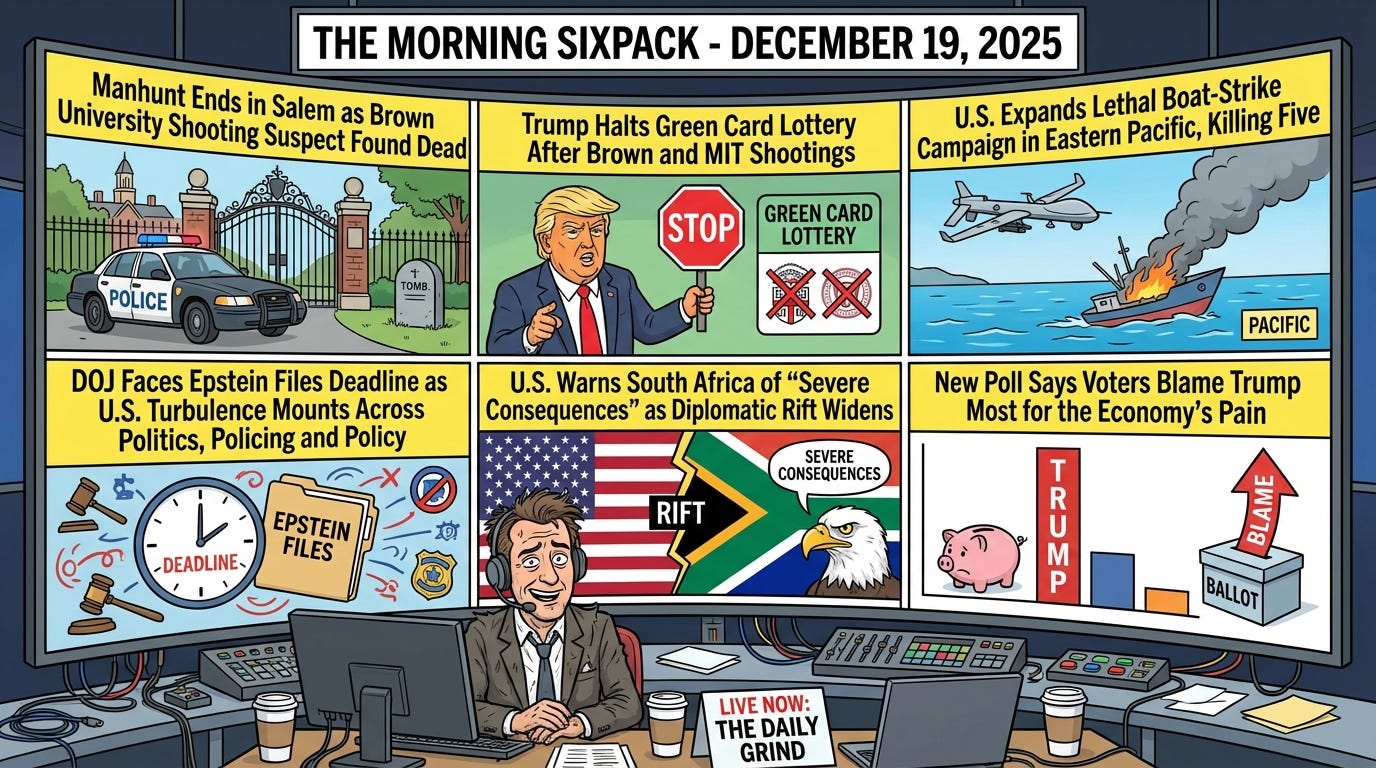
Manhunt Ends in Salem as Brown University Shooting Suspect Found Dead
The six-day search for the Brown University gunman ended not with answers, but with a corpse in a New Hampshire storage unit. Claudio Neves Valente—linked to two shootings across two states—took his own life, leaving investigators with a puzzle missing its most important piece: motive. The academic communities rocked by his violence are being asked to move forward without closure, because the suspect chose silence over accountability.
Trump Halts Green Card Lottery After Brown and MIT Shootings
The White House wasted no time using the tragedy to suspend the diversity visa lottery program. Trump and DHS Secretary Kristi Noem framed the move as a national security necessity, but the policy’s long-standing critics saw an opportunistic strike on legal immigration. One killer’s visa history now fuels a campaign to narrow the country’s front door even further.
U.S. Expands Lethal Boat-Strike Campaign in Eastern Pacific, Killing Five
Two more suspected drug-smuggling boats were blown apart this week—adding five deaths to a campaign already past 100 fatalities. The administration insists the strikes are part of an “armed conflict” with cartels, but lawmakers are increasingly uncomfortable with the legal gymnastics and moral ambiguity. When intelligence is withheld and explosions do the talking, oversight becomes a casualty.
DOJ Faces Epstein Files Deadline as Pressure Mounts Across Washington
With the deadline to release the Epstein files looming, the Justice Department is running out of places to hide. Those documents could pull back the curtain on years of federal failures and the network of powerful men who want the story buried. Meanwhile, Washington is juggling immigration crackdowns, health-care anxieties, foreign-policy volatility, and an internal conservative civil war—proof that governance by adrenaline is not a sustainable model.
U.S. Warns South Africa of “Severe Consequences” as Rift Deepens
The administration’s claim of a “genocide” against white South Africans has officially turned into a diplomatic mess. Expelled personnel, tariff threats, and public scolding have taken U.S.–South Africa relations from strained to combustible. Pretoria sees interference; Washington sees a moral crusade; the rest of the world sees an avoidable fight escalating by choice, not necessity.
New Poll Says Voters Blame Trump Most for Today’s Economy
Despite the administration’s victory laps, most Americans think Trump—not Biden—owns the state of the economy. Voters feel the pinch of food, energy, housing, and basic living costs, and no amount of rhetorical swagger can substitute for cheaper groceries. When a president mocks “affordability” as a hoax while families are budgeting like it’s a competitive sport, the disconnect becomes deafening.
Thanks for listening to The Morning Sixpack—where the news doesn’t just break, it reveals what’s already cracking underneath.


