



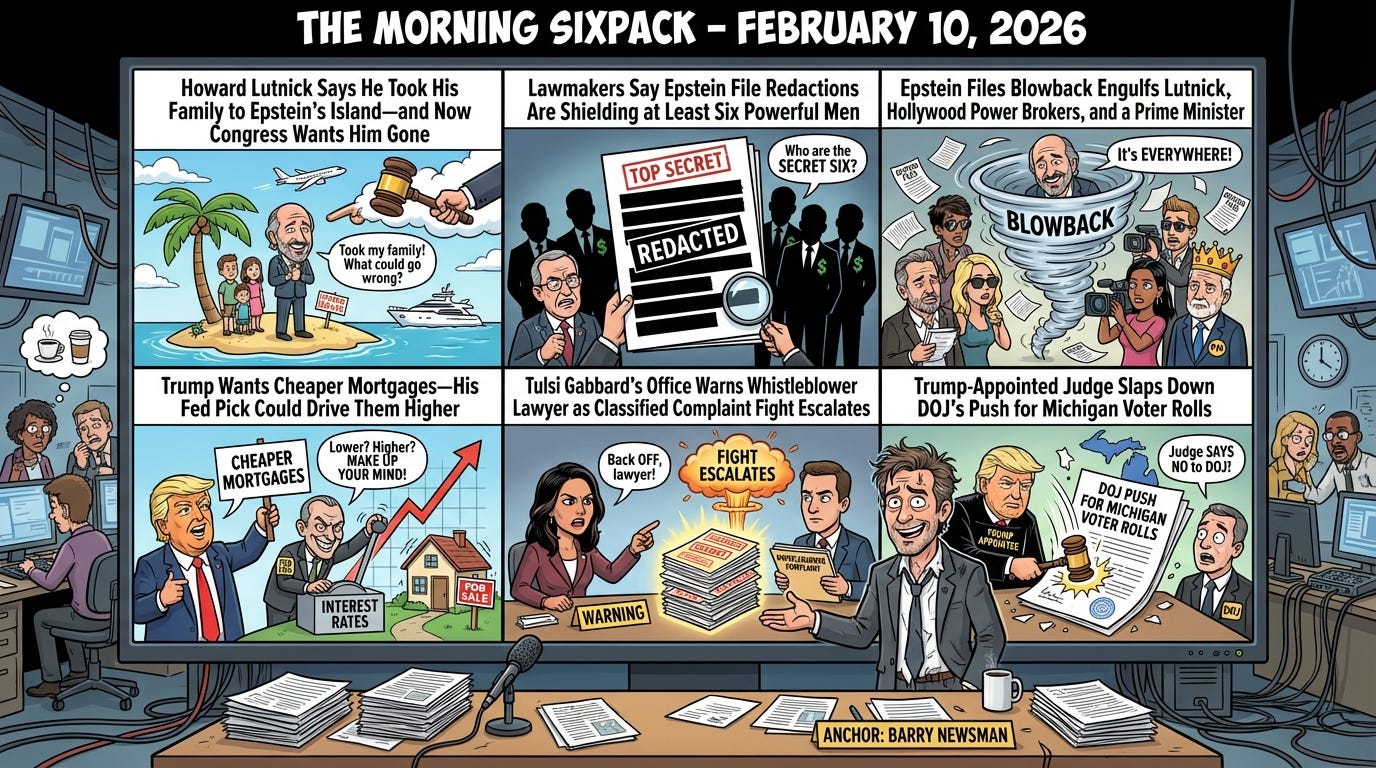
Epstein Everywhere, Judges Push Back, and Trump’s Economics Hit a Wall
Washington tried to move on. The documents said no.
Today’s Morning Sixpack podcast pulls together the threads tying Epstein, the Justice Department, the Federal Reserve, and election oversight into one messy picture of power, pressure, and accountability. From sworn testimony to sealed names to judges openly losing patience, this episode is about institutions under stress—and who’s blinking first.
Howard Lutnick finally admitted his family visited Jeffrey Epstein’s island, and Congress isn’t buying the minimization.
The Commerce Secretary insists the visit was brief, innocent, and uneventful—but lawmakers say the bigger issue is credibility after years of downplaying his ties. The podcast breaks down why this admission landed harder than his defenders expected.
Two lawmakers say Epstein file redactions are protecting at least six powerful men.
Reps. Thomas Massie and Ro Khanna claim the Justice Department is hiding names that may implicate wealthy and influential figures while exposing victims. We walk through why this fight is becoming a bipartisan credibility crisis for DOJ.
The Epstein blowback is now global—engulfing Hollywood, Washington, and a British prime minister.
From Casey Wasserman facing revolt in entertainment circles to Keir Starmer’s government wobbling overseas, the files are detonating reputations far beyond U.S. borders. This isn’t a contained scandal anymore.
Trump wants lower mortgage rates, but his Fed pick may push them higher.
Kevin Warsh’s long crusade against the Fed’s balance sheet collides head-on with Trump’s housing promises. We explain why cutting rates and shrinking the Fed at the same time doesn’t work—and why markets, not speeches, decide.
Tulsi Gabbard’s office warns a whistleblower lawyer about criminal exposure.
A classified complaint deemed non-credible still took eight months to reach Congress, and now DOJ-style warnings are flying. The episode unpacks how “process” can become the story—and why delays matter as much as outcomes.
A Trump-appointed judge blocks DOJ’s attempt to seize Michigan voter rolls.
Courts are starting to draw firm lines on election data, and this ruling—plus a similar one in Oregon—suggests DOJ’s strategy is wearing thin even with friendly judges.
Six stories, one theme: power hates sunlight, and the institutions designed to manage it are straining under the glare. This isn’t just about Epstein or Trump or one administration—it’s about whether accountability still works when the stakes get uncomfortable.


