


The Morning Sixpack Podcast: Power Plays, Pressure Points, and a Government Stretching Its Limits
Welcome back—today’s lineup is a masterclass in institutional stress-testing, from the streets of Minneapolis to the vaults of central banking. Each story stands alone, but together they chart a country (and a world) wrestling with authority, accountability, and the consequences of leadership by brute force. Let’s get into it.
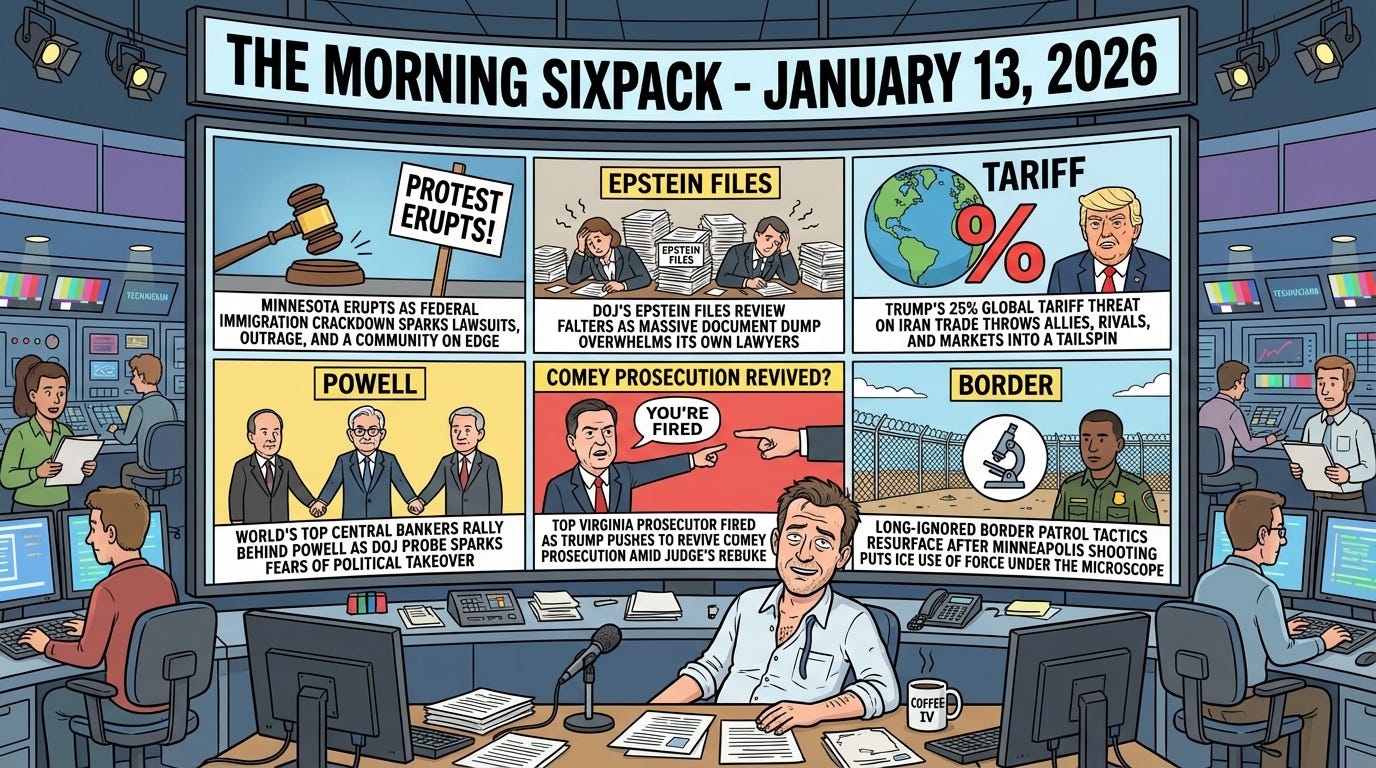
Minnesota Erupts as Federal Immigration Crackdown Sparks Lawsuits, Outrage, and a Community on Edge
Minnesota’s streets became the front line of a federal power surge, with protests, tear gas, and a fatal ICE shooting pushing local leaders into open rebellion. As ICE flooded the state with thousands of officers in its largest-ever enforcement operation, Minneapolis and St. Paul joined Minnesota in suing the Trump administration for violating constitutional rights. The killing of Renee Good—captured on video and contested even by state officials—fueled nationwide vigils and intensified scrutiny of immigration tactics that communities say have crossed into occupation. The state calls it a “federal invasion.” The administration calls it law enforcement. That gap says everything.
DOJ’s Epstein Files Review Falters as Massive Document Dump Overwhelms Its Own Lawyers
Inside the Justice Department, the scramble to process millions of Epstein-related files has turned into a bureaucratic meltdown. Hundreds of attorneys were reassigned in an “all hands on deck” order, only to miss page quotas, flag glaring workflow problems, and complain that they can’t do their actual jobs. Technical failures in the first batch of disclosures already bruised DOJ’s credibility; now internal emails describe a “very rocky start” with no clear path to completion. It’s transparency mandated by law—but executed like a fire drill with blindfolds.
Trump’s 25% Global Tariff Threat on Iran Trade Throws Allies, Rivals, and Markets Into a Tailspin
President Trump’s declaration that any country trading with Iran will face a 25% U.S. tariff shook global markets and unsettled longtime trading partners. China—by far Iran’s biggest lifeline—is livid, warning it will take “all necessary measures.” Turkiye, Pakistan, India, and others now face a choose-your-own-economic-doom scenario: anger Washington or abandon billions in trade. The threat, issued without legal grounding or policy documentation, escalates tensions already inflamed by regional conflict and Iran’s battered economy. In short: one Truth Social post, global shockwaves.
World’s Top Central Bankers Rally Behind Powell as DOJ Probe Sparks Fears of Political Takeover
The world’s major central bankers stepped forward in a rare unified voice to defend Fed Chair Jerome Powell as the DOJ launches a criminal probe against him. After a year of Trump’s personal attacks and demands for rate cuts, the investigation—which Powell warns jeopardizes Fed independence—set off alarms from London to Seoul. Former Fed chairs, Republicans in Congress, and global institutions say the same thing: weaponizing law enforcement against a central bank leader is a shortcut to financial instability. Yellen didn’t hold back, calling it “the road to banana republic.”
Top Virginia Prosecutor Fired as Trump Pushes to Revive Comey Prosecution Amid Judge’s Rebuke
The internal war over Trump’s desire to reindict James Comey continues to chew through the Justice Department. Robert McBride, a respected prosecutor, was fired after refusing to simultaneously run a major U.S. attorney’s office and lead the renewed Comey case—one that judges have repeatedly rejected for lack of legal footing. Meanwhile, Trump-installed Lindsey Halligan continues to sign filings as U.S. attorney despite a judge ruling her appointment unlawful, prompting fresh judicial threats. Courts around the country are rejecting similar attempts to shoehorn loyalists into federal prosecutor roles. The pattern isn’t subtle.
Long-Ignored Border Patrol Tactics Resurface After Minneapolis Shooting Puts ICE Use of Force Under the Microscope
A decade-old suppressed report on Border Patrol shootings is suddenly relevant again after ICE officer Jonathan Ross shot and killed Renee Good. The report found agents were stepping into the paths of moving vehicles to justify deadly force and firing at rock-throwers out of frustration—recommendations to end such practices were rejected by CBP. Video analysis in Good’s case raises serious questions about whether old habits persist under new leadership. When an agency’s own history warns of “creating justification for deadly force,” every new shooting demands deeper scrutiny—not more excuses.
Thanks for listening—each of these stories shows how institutions bend under political pressure, but also how resistance forms in courts, communities, and even international financial circles. See you in the next edition of The Morning Sixpack Podcast.


