

Border Czar Caught on Tape: $50,000 Cash, Contracts, and a Vanishing FBI Probe
Tom Homan, Trump’s handpicked border czar, was caught on hidden camera taking $50,000 in cash from undercover FBI agents posing as contractors.
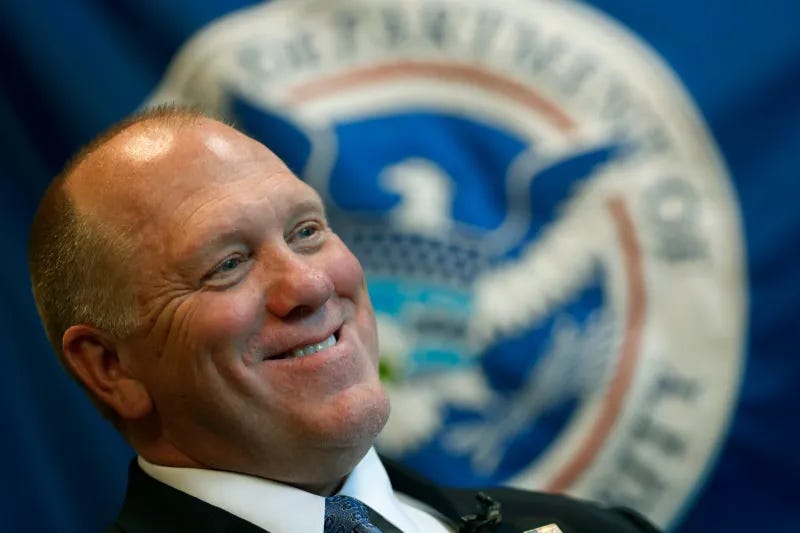
The deal? Homan allegedly promised to steer government contracts their way once Trump retook the White House. That was September 2024 in Texas, and the FBI had the receipts—literally.
According to multiple sources and internal DOJ documents, the probe initially looked strong enough to support conspiracy or bribery charges. But once Trump returned to office in January 2025, the investigation hit a brick wall. Within weeks, senior Trump appointees had quietly shelved the case, with FBI Director Kash Patel later requesting a status update that led to the official closure.
Publicly, the Justice Department insisted there was “no credible evidence of wrongdoing,” dismissing the probe as a “baseless” holdover from the Biden era. The White House went further, framing it as a political hit job. Deputy Press Secretary Abigail Jackson declared: “Tom Homan has not been involved with any contract award decisions. He is a career law enforcement officer and lifelong public servant who is doing a phenomenal job.”
But behind the curtain, federal prosecutors and FBI officials debated charging Homan with conspiracy to commit bribery. Legal experts told MSNBC that while bribery statutes typically require the suspect to already hold office, taking cash in exchange for promised future influence still fits under conspiracy and fraud laws. “The crime is the agreement,” explained Randall Eliason, former chief of public corruption prosecutions in D.C.
The real kicker? Trump announced Homan’s appointment as border czar on Nov. 11, 2024—just weeks after the FBI sting. By then, Homan had shuttered his lucrative consulting firm, but questions lingered about whether his financial entanglements and “door-opening” promises still shadow his role as the man overseeing Trump’s mass deportation plans.
Source: MSNBC
Editor: This isn’t just another Trump-world “nothingburger.” It’s the same menu item they’ve been serving for years: cash-for-favors corruption dressed up as “deep state persecution.” The FBI caught the guy on tape with a bag of money—and somehow that’s not credible evidence? That’s like catching a bank robber with dye-stained hands and saying, “Nah, he’s probably just into arts and crafts.” This is what happens when the fox isn’t just guarding the henhouse—he’s running the USDA Poultry Division.
More: Trump Justice Dept. Closed Investigation Into Tom Homan for Accepting Bag of Cash
Pentagon’s New Press Rules Spark Bipartisan Outrage
The Pentagon just told reporters they can’t gather information without prior government approval—or lose their credentials.

That’s not journalism. That’s state-run media. Defense Secretary Pete Hegseth’s new policy has ignited a firestorm from lawmakers, newsrooms, and press freedom advocates across the political spectrum.
Republican Rep. Don Bacon didn’t hold back: “This is so dumb that I have a hard time believing it is true. We don’t want a bunch of Pravda newspapers only touting the Government’s official position.”
Democrats piled on, too. Rep. Lloyd Doggett warned that “Pentagon censorship betrays the freedom it is charged to defend,” while Rep. Mary Gay Scanlon reminded Hegseth: “The Pentagon does not run the press—or the country. The people do.”
Major outlets including The Washington Post, New York Times, NPR, and the Wall Street Journal all condemned the restrictions. “Any attempt to control messaging and curb access by the government is counter to the First Amendment and against the public interest,” said Matt Murray, The Post’s executive editor. NPR promised to “push back,” while the Times called it “at stark odds with constitutional protections.”
Hegseth’s camp insists these are just “common-sense guidelines” to protect national security, but the timing is telling. His team has already threatened reporters with polygraphs to hunt leakers, and now they’re requiring journalists to sign gag agreements just to enter the building. This isn’t safeguarding secrets—it’s muzzling watchdogs.
Even Sen. Ted Cruz, no stranger to culture-war posturing, said on his podcast: “I think it is unbelievably dangerous for government to put itself in the position of saying, ‘We’re going to decide what speech we like and what we don’t.’” When Ted Cruz sounds like the voice of reason on free speech, you know we’re deep into authoritarian territory.
Source: Washington Post (gift article)
Editor: A Pentagon that fears reporters more than foreign adversaries is not protecting democracy—it’s strangling it. This is how you get propaganda, not accountability. Next thing you know, they’ll make reporters wear Pentagon-issued blindfolds, just in case they accidentally “see” something not pre-cleared for public consumption.
Trump Taps Loyalist Lindsey Halligan as Virginia’s Top Federal Prosecutor Amid Political Turmoil
Donald Trump just nominated one of his personal legal defenders, Lindsey Halligan, to run the Eastern District of Virginia’s U.S. attorney’s office—an office already in chaos after its top prosecutor was forced out.
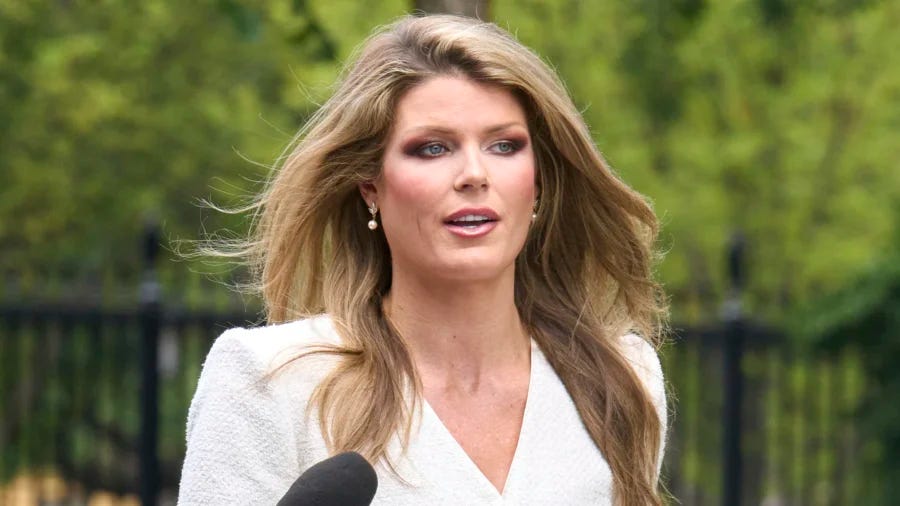
The move immediately raised alarms, as Halligan isn’t just a lawyer—she’s been one of Trump’s inner-circle defenders since Mar-a-Lago and is now being positioned to oversee an office under pressure to charge Trump’s political enemies.
Halligan’s nomination came less than 24 hours after Erik Siebert, the district’s former top prosecutor, resigned under intense White House pressure to indict New York Attorney General Letitia James on what critics describe as flimsy mortgage fraud claims. Trump made his pick public on social media, promising Halligan would be “Fair, Smart, and will provide, desperately needed, JUSTICE FOR ALL!”
The reality looks a lot less noble. James, a longtime Trump adversary, has denied the allegations and called the investigation pure political revenge. Prosecutors have spent months digging, but they’ve yet to find any actual evidence worthy of an indictment. That hasn’t stopped Trump from leaning on Attorney General Pam Bondi to “act fast” and bring cases against his opponents, even tossing James Comey’s name back into the mix for good measure. “They’re guilty, they’re not guilty — we have to act fast,” Trump said.
Halligan is no stranger to Trump-world. She represented him during the classified documents fiasco at Mar-a-Lago and has more recently been tasked with purging “improper ideology” from Smithsonian properties. Elevating her now signals Trump’s intent to install loyalists who won’t hesitate to follow through on his retribution agenda.
Adding to the confusion, conservative attorney Mary “Maggie” Cleary had just told staff she’d been tapped as acting U.S. attorney before Trump’s announcement blindsided her. Cleary herself has claimed she was falsely accused of being at the Capitol on January 6. Trump dismissed Siebert with a social media broadside, saying, “He didn’t quit, I fired him!” then mocked his bipartisan support in Virginia, sneering that “next time let him go in as a Democrat, not a Republican.”
Source: Yahoo News
Editor: Trump keeps promising “justice for all,” but what he really means is “vengeance for me.” Halligan’s nomination isn’t about fairness—it’s about loyalty. This isn’t a justice system anymore; it’s a loyalty test, and the only passing grade is kneeling at Trump’s knees.
Cyber Attack and System Failures Throw Global Air Travel into Chaos
Thousands of passengers are stranded as airports from the U.S. to Europe grind to a halt after a cyber attack crippled airline check-in systems and an air traffic outage grounded flights.
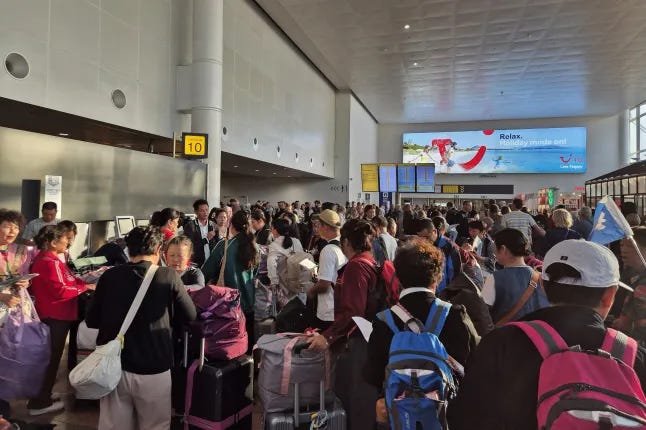
Travelers are facing delays, cancellations, and even evacuations in what has become a worldwide disruption to air travel.
It all began Friday in the U.S., when air traffic controllers at Dallas-Fort Worth and Dallas Love Field lost radar and communications, forcing thousands of flights to be grounded. The ripple effects quickly spread across 20 other U.S. airspaces, delaying departures in New York, Los Angeles, Miami, Chicago, and beyond. Canada wasn’t spared either, with Toronto, Montreal, and Vancouver all experiencing delays.
By Saturday, Europe was caught in the mess. A cyber attack on Collins Aerospace—the company that runs airline check-in and boarding systems—crippled airports including London Heathrow, Brussels, and Berlin. Collins’ parent company RTX confirmed a “cyber-related disruption,” but declined to name specific airports. “Work continues to resolve and recover from Friday’s outage,” Heathrow said, urging passengers to check their flight status before traveling.
Meanwhile, Dublin Airport added a layer of chaos when Terminal 2 was evacuated over a security scare. Reports of suspected detonators in a passenger’s bag brought in the Irish Defence Forces’ bomb squad, though the terminal was later cleared. Photos showed thousands of people stuck outside the building as flights were temporarily impacted.
As of midday Saturday, at least 29 flights were cancelled across Heathrow, Brussels, and Berlin, with countless more delayed. Airlines like Ryanair and easyJet reported minimal impact, but British Airways remained silent. For stranded passengers, EU rules require airlines to provide meals, accommodation, and alternative flights—but don’t expect the minibar or a five-star suite to be covered.
Source: Metro
More: DFW Airport, Love Field disruption caused by 'multiple failures' of telecommunications equipment
Editor: Air travel is already misery on a good day—now toss in hacked systems, grounded planes, and bomb squads. What’s next, baggage fees for standing in an evacuation line? At this point, airports don’t need duty-free shops, they need therapy booths.
Putin Escalates War on Ukraine While Trump Sits on the Sidelines
Vladimir Putin has concluded he can step up attacks on Ukraine without fearing U.S. pushback under Donald Trump.

Kremlin insiders told Bloomberg that after last month’s summit in Alaska, Putin walked away convinced Trump won’t lift a finger to strengthen Kyiv’s defenses, giving Moscow the green light to intensify its invasion.
Russian forces have already ramped up strikes on Kyiv, Kharkiv, and other urban centers, targeting power grids and infrastructure in a bid to grind Ukraine into concessions. “Putin is trying to increase his leverage for the next round of negotiations about Ukraine whenever it happens,” said analyst Vita Spivak.
The result: one of the heaviest barrages since the 2022 invasion, with nearly 3,500 drones and 190 missiles launched in September alone.
Trump has floated sanctions as a possible response, but he’s demanding that European allies move first, calling on G7 nations to punish China and India for buying Russian gas. That hesitation is seen in Moscow as a green light. As one senior analyst put it, “Putin seeks to achieve some visible victories by winter, but he is failing on the battlefield so far. Therefore he turns to nuclear blackmail and psychological pressure, including mass bombardments.”
Ukraine, for its part, is striking back. Drones have hit Russian oil-processing plants and even Moscow’s Baltic terminals, aiming to starve Putin’s war machine of fuel. Zelenskiy has declared Ukraine will not cede territory, rejecting Putin’s demand to give up more land in Donetsk and Luhansk. Despite mounting attacks, Ukrainian forces have even clawed back small pieces of territory in Donetsk.
Putin’s calculus is simple: Trump’s reluctance to act buys Russia time and space to escalate. Moscow is betting that a distracted Washington, coupled with Europe’s cautious pace, will wear down Kyiv. Cars burning in Kyiv streets and families hiding in basements are the human cost of that calculation—while Trump dithers, Putin bombs.
Source: Bloomberg
Editor: Putin sees Trump as an enabler, not a deterrent—and why wouldn’t he? When America signals indecision, Moscow hears opportunity. If Trump’s grand strategy is “let Europe handle it,” he’s not leading the free world, he’s subcontracting it. And spoiler alert: Putin knows exactly how to exploit that vacuum.
Defector Warns Russia Plotting Strike on Poland to Test NATO Before Christmas
A senior Russian defector has revealed that Moscow is preparing a “greyzone” strike on Poland designed to fracture NATO unity and destabilize Europe.
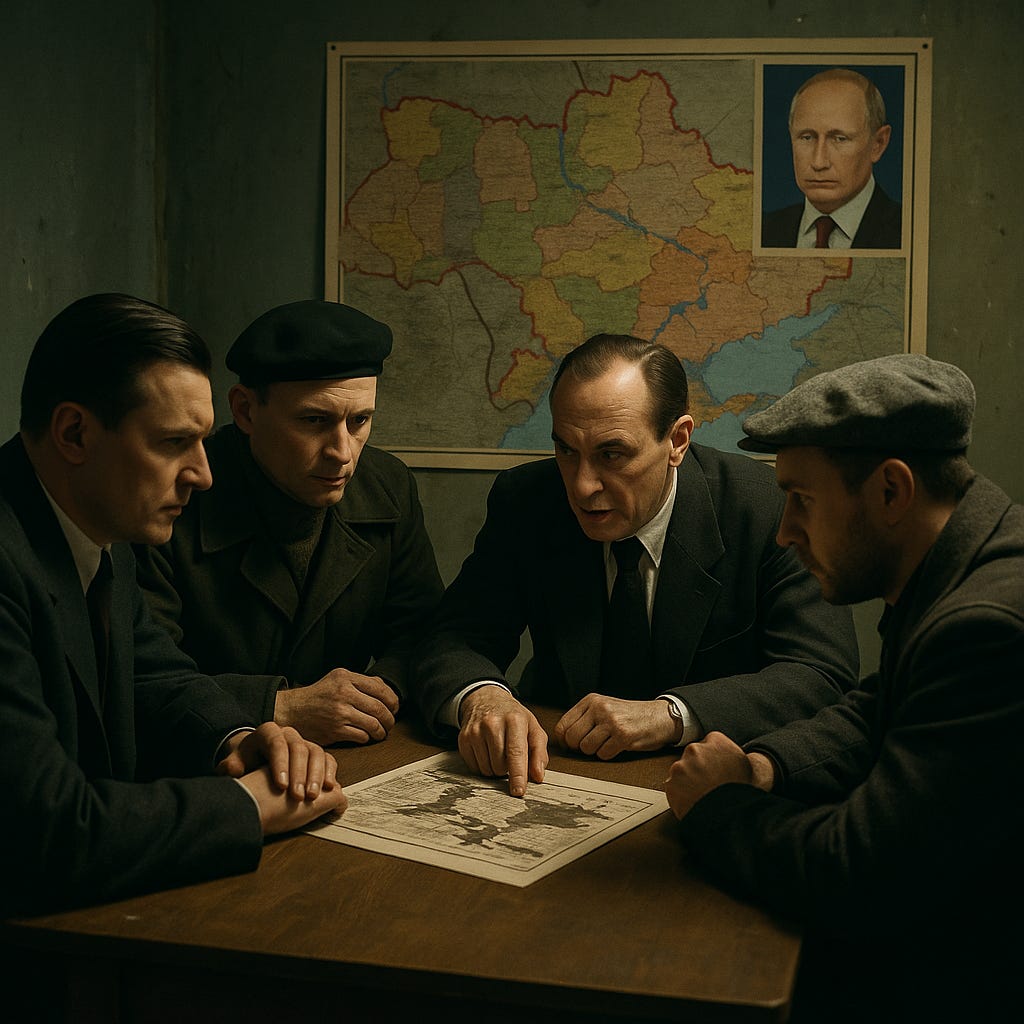
The warning, passed through an Eastern European ally at London’s DSEI arms fair, has triggered urgent U.S. and UK discussions about how to respond if the Kremlin pushes past its current border provocations.
The intelligence, reportedly from a Russian major general who fled the country, claims the Kremlin is planning a limited but deliberate attack on Polish soil. This wouldn’t be a full-scale invasion, but a calibrated strike meant to confuse, deny, and provoke NATO—exactly how Russia played it in Crimea back in 2014. British officials said Russia already tested the waters last week when 19 drones violated Polish airspace in what they called “the most serious violation of NATO territory to date.”
The timing couldn’t be more dangerous. Estonia just faced an “unprecedentedly brazen” breach when three MiG-31 fighter jets capable of carrying hypersonic missiles circled over the Gulf of Finland before being intercepted. “This reflects a new era of threat that demands a new era of defence,” a UK government spokesman said. Poland responded by triggering Article 4 of the NATO treaty, prompting emergency consultations and a deployment of RAF Typhoon jets to patrol its skies alongside French, German, and Swedish forces.
Polish Prime Minister Donald Tusk delivered perhaps the starkest assessment yet: his country is now closer to outright war “than at any time since the Second World War.” Analysts warn that Russia’s tactics are deliberately unsustainable for NATO—forcing expensive jets to take out cheap drones—while spreading disinformation campaigns in Finland and elsewhere to soften the political ground for future provocations.
One analyst, Mykola Kuzmin of the Henry Jackson Society, summed it up bluntly: “They’re probing NATO. If they can strike Poland and NATO flinches—even slightly—it undermines the whole alliance.” With winter looming and Europe’s cohesion under strain, Moscow is betting a deniable strike in Poland could redraw the rules of deterrence.
Source: Express
Editor: Putin’s playbook is the same old mob trick—poke, deny, and see who blinks first. The difference now is that the stakes aren’t just Crimea; they’re Warsaw, NATO, and the entire European order. If NATO can’t stand firm against drones and “deniable” strikes, then we’ve basically gift-wrapped Article 5 and handed it back to Moscow with a bow.
BONUS
Trump’s $100K H-1B Visa Fee Threatens Tech Talent and U.S. Growth
Donald Trump just slapped a $100,000 price tag on the H-1B visa, a move that could drive tech talent out of the U.S. and cripple long-term growth.
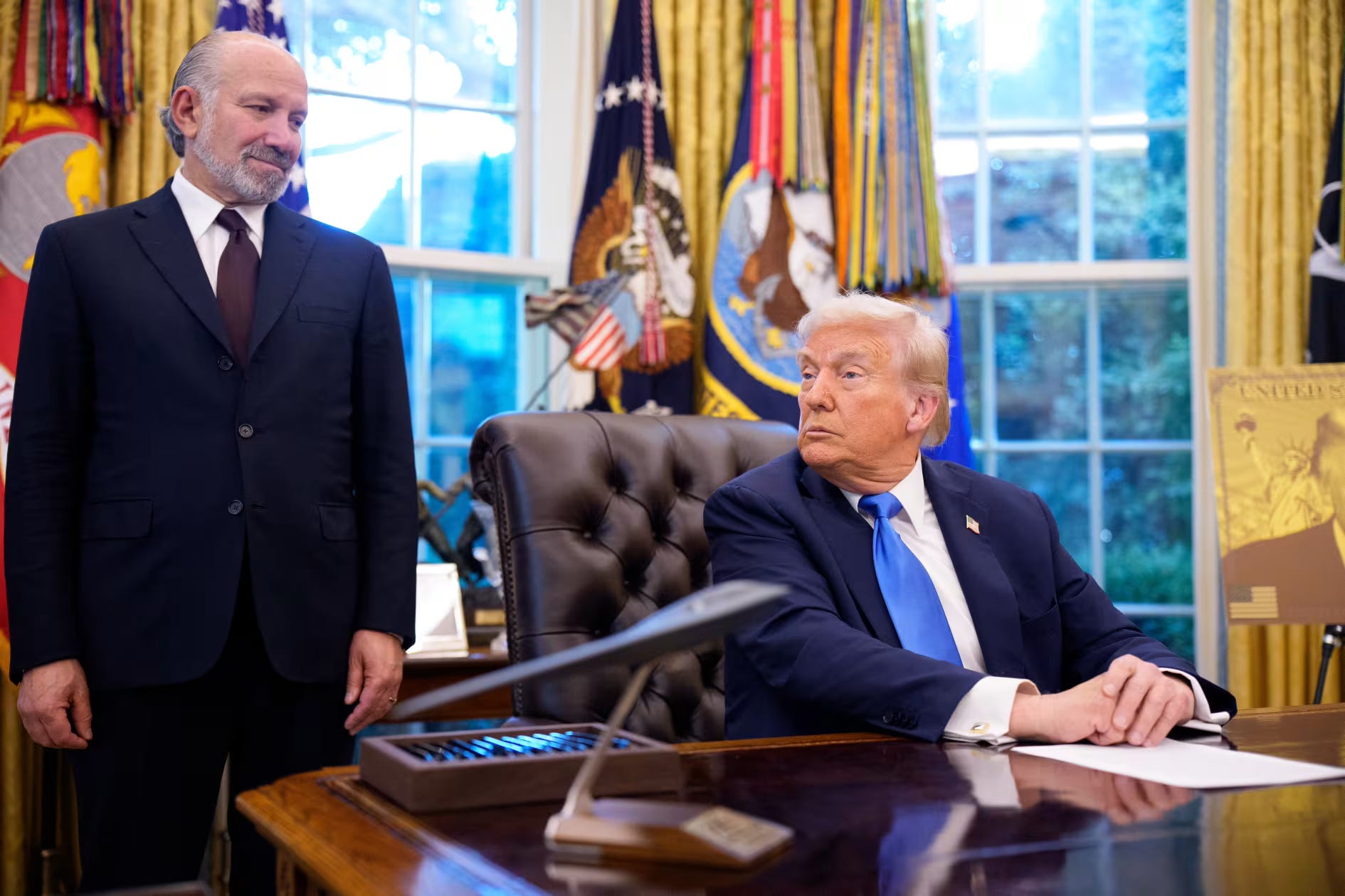
The executive order, signed Friday, instantly rattled companies like Amazon, Microsoft, and Apple—among the biggest users of the program—and raised fears of a brain drain that even AI can’t fix.
The rollout was as chaotic as the policy itself. Commerce Secretary Howard Lutnick said the fee would be annual, while White House Press Secretary Karoline Leavitt insisted it was a one-time charge on new visas only. Either way, the message was clear: foreign talent comes at a premium. “No U.S. company is safe from erratic U.S. politics,” warned Thu Lan Nguyen, a strategist at Commerzbank.
The White House argues the fee is necessary because the share of IT workers on H-1Bs has doubled since 2003—even as many of those same firms have laid off American workers. But economists warn the costs outweigh the politics. “By making it very expensive for companies to attract foreign talent, and by forcing some international students to leave the country after graduation, the brain drain will weigh heavily on productivity,” said Atakan Bakiskan of Berenberg, who cut his U.S. growth forecast to 1.5%.
Critics say the policy could backfire badly. Companies may simply shift operations abroad to countries with friendlier immigration rules, like Canada, while losing the very engineers and coders who file patents at higher rates than their U.S. counterparts. Goldman Sachs researchers note that each high-skilled immigrant reduces the budget deficit by about $75,000 over a decade—a return on investment Trump seems eager to torch.
And in a twist, not all the reaction came from the expected corners. Netflix co-founder Reed Hastings, a Democratic donor, actually praised the move. But for most of Silicon Valley, Wall Street, and anyone who believes innovation depends on brains rather than border fees, the takeaway was blunt: Washington is gambling away America’s tech edge.
Source: MarketWatch (gift article)
Editor: Slapping a six-figure toll on visas isn’t “America First”—it’s talent last. The U.S. didn’t get to be a tech powerhouse by scaring off the smartest minds on the planet. If the future of innovation is supposed to be built here, maybe don’t chase the builders to Toronto with a $100k invoice stapled to their passport.