


Israel Claims Iran Broke Cease-Fire Hours After Trump Announced Truce, Raising Doubts About Peace Prospects
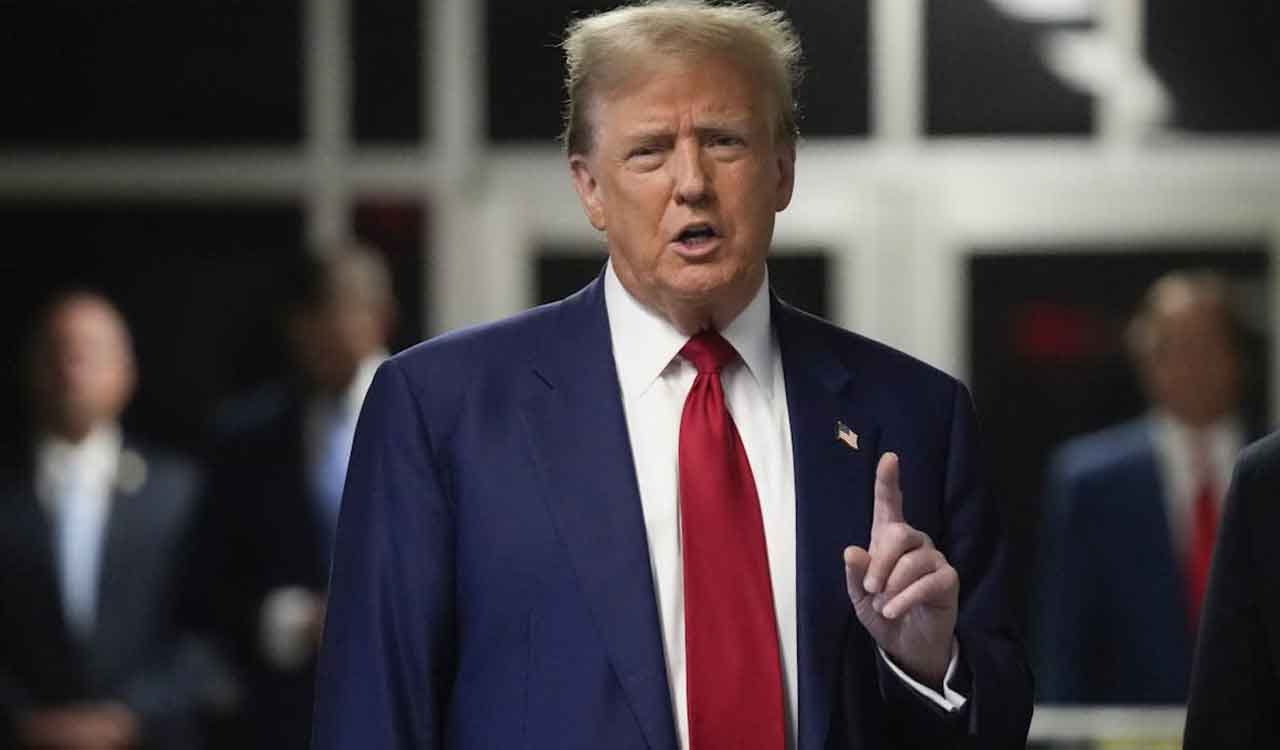
The fragile cease-fire between Israel and Iran unraveled within hours, as missile launches cast a shadow over a conflict the world hoped was ending.
President Trump had touted a “complete and total cease-fire” between Israel and Iran late Monday, promising the war would be “considered ended” 24 hours after the truce began. But despite his optimistic announcement, confusion reigned over when the cease-fire would start—and whether it would hold at all. Iran’s state media initially confirmed the truce, yet Israeli forces reported missile attacks continuing well past the deadline.
Senior Israeli military officials didn’t hold back, declaring Iran had flagrantly violated the cease-fire and vowing a forceful response. Meanwhile, Iranian authorities denied any missile launches after the truce took effect, leaving observers stuck between conflicting narratives as the dust settled on yet another round of violence.
The conflict ignited on June 13, when Israel targeted Iranian military leaders and nuclear facilities, pushing the U.S. into action with strikes on Iran’s most sensitive nuclear enrichment sites. While President Trump confidently claimed total destruction of these targets, others were more cautious in their assessments. Iran’s retaliatory missile strike on a major U.S. base in Qatar marked the conflict’s escalation, though no U.S. casualties were reported.
The human toll continues to rise: Over 400 have been killed in Iran and thousands wounded, while Israel has confirmed at least 28 deaths, including civilians caught in the crossfire. This cease-fire might have been an olive branch, but the missiles tell a different story.
Source: New York Times
I don’t want to be “that guy,” but these fuckers have been fighting forever and they’re not going to stop until one—or both—have been obliterated. FACT.
Oh, and Iran got 400 kg of enriched uranium out of those “totally obliterated” uranium enrichment sites (keep reading). Nobody knows where it went. Oh well?
Fed Chair Powell Signals Patience, Braces for Tariff Impact on Inflation
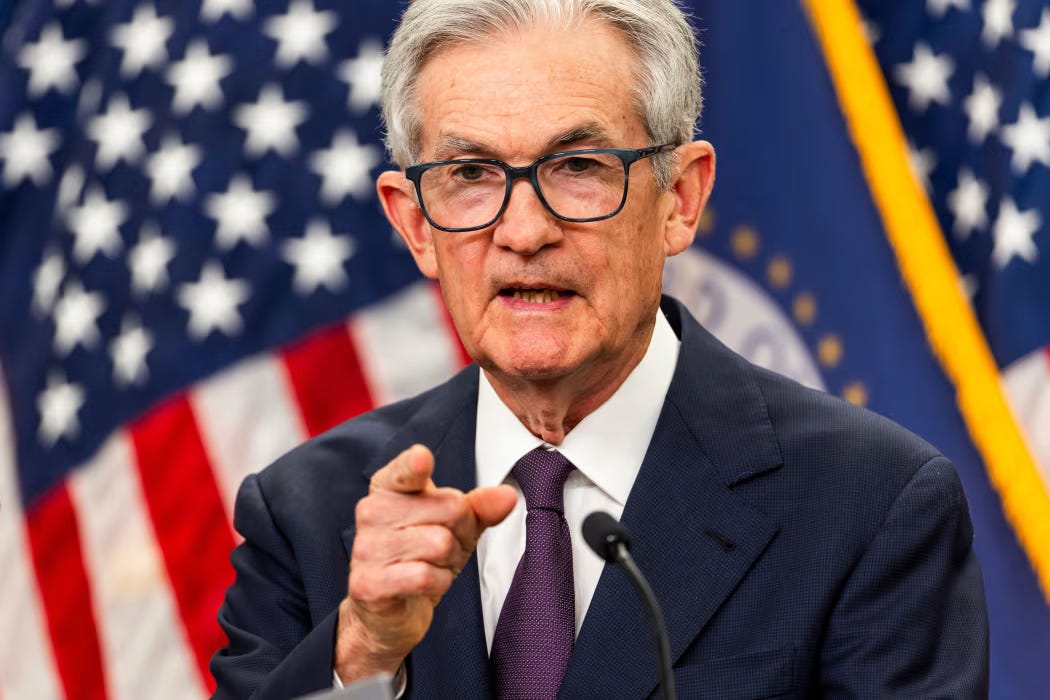
Jerome Powell made it clear: The Federal Reserve isn’t rushing to cut rates despite growing pressure from Trump.
Speaking before Congress, Powell emphasized the Fed’s focus on ensuring that any tariff-driven price jumps remain a one-off rather than morph into persistent inflation. The economy’s solid footing gives the Fed room to watch and wait instead of rushing into policy changes. His best hope for lower inflation is a depression. He may well get it.
Powell highlighted the delicate balancing act the Fed faces as tariffs announced by the Trump administration ripple through supply chains. The core question: Will higher costs translate into ongoing inflation or just a temporary price bump? is this a serious question? They aren’t one-time tariffs. Why the hell would they be one-time price bumps? Inane…
Powell said the Fed’s job is to monitor how tariffs affect prices and wage growth without letting inflation expectations spiral out of control. The Fed is notorious for being late on every major economic twist. They’ve literally missed everything the past 40 years—except the so-called “soft landing” when Biden was POTUS and the world wasn’t going to Hell in a handbasket.
Inside the Fed, a divide is emerging. Some officials, including Trump appointees Christopher Waller and Michelle Bowman, lean toward resuming rate cuts as soon as July, betting tariff effects will be mild and short-lived. Others caution that businesses might pass increased costs to consumers, potentially anchoring higher inflation for longer. This split is visible in new Fed economic projections, showing a wide range of expectations for rate moves in the coming months.
President Trump has ramped up his public criticism, demanding quicker rate cuts to fuel growth. Yet Powell is pushing back, underscoring the Fed’s independence and the need for data-driven decisions. The next inflation and employment reports will be pivotal in guiding the Fed’s steps forward.
Powell’s testimony underscores that the Fed is in no hurry to adjust policy amid the fog of tariff impacts, preferring to stay patient and deliberate in the face of economic uncertainty.
Source: Wall Street Journal
Canada’s Inflation Holds Steady at 1.7%, Defying Tariff Fears for Now

Canada’s inflation rate in May stayed put at a moderate 1.7%, signaling no immediate shock from trade tensions or tariffs.
Despite worries that tariffs on steel, aluminum, and autos would jack up prices, cooling gasoline costs and softer shelter expenses kept the overall inflation picture stable.
Gasoline prices have been on a steady downward trend, helped by a recent tax removal, which is expected to keep pump prices low for the next year. Meanwhile, mortgage costs and rents have eased thanks to lower interest rates and weakening demand, pulling down the biggest component of the inflation basket: shelter.
StatsCan reported a monthly inflation uptick of 0.6% for May, largely driven by seasonal boosts in travel and energy costs—nothing out of the ordinary. Core inflation measures tracked by the Bank of Canada, CPI-trim and CPI-median, both nudged down to 3%, just hanging at the top of the central bank’s target band.
The key takeaway? This steady inflation figure sets the stage for the Bank of Canada’s upcoming rate decision on July 30. If inflation continues to stay on the low side, we could be looking at a potential rate cut, though the current betting leans toward another pause.
In the markets, the Canadian dollar slipped slightly but remains steady against the U.S. dollar, while government bond yields inched up. For now, Canada’s inflation story looks stable, but all eyes will be on next month’s data to see if tariffs and trade tensions start to bite.
Source: Reuters
Who knew Canada could manage inflation better than the US Fed?
Iran May Have Secreted Away 400kg of Highly Enriched Uranium Ahead of U.S. Strikes
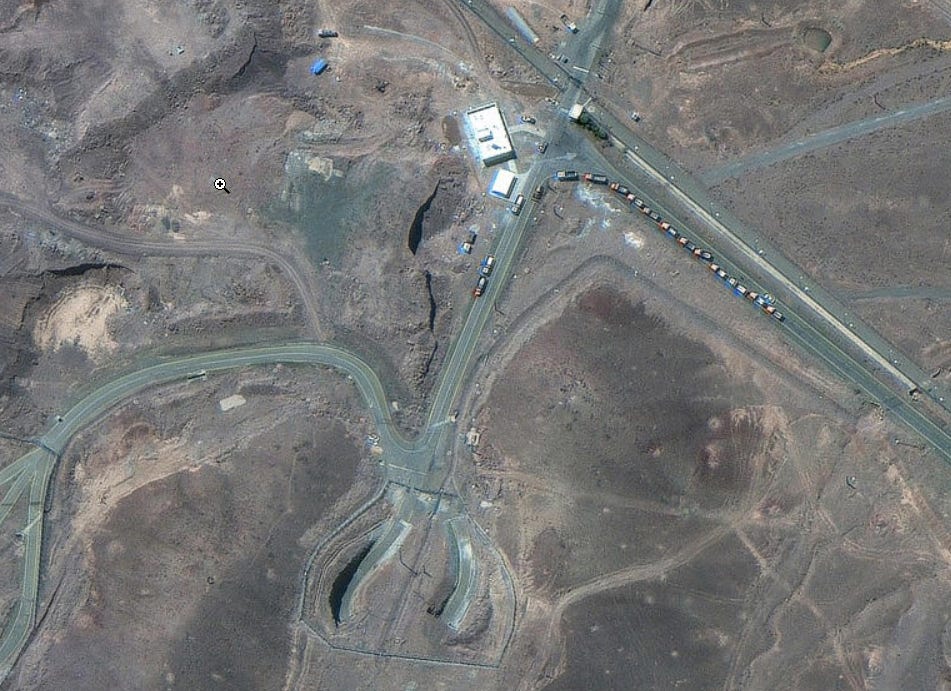
Satellite images reveal a frantic operation at Iran’s Fordow nuclear facility just before U.S. airstrikes, as trucks lined up moving critical materials out of sight.
Analysts suggest Iran likely smuggled nearly all its highly enriched uranium to a secret location, raising fresh concerns about how effective the strikes truly were.
This isn’t just a routine evacuation—it signals Tehran’s determination to keep its nuclear ambitions alive, even in the face of direct military pressure. The timing of the truck movements, captured on June 19, indicates a last-minute scramble to safeguard nuclear assets before the bombs dropped.
Despite the strikes intended to cripple Iran’s nuclear program, this covert uranium transfer could mean much of the most dangerous material slipped out of reach, undermining the strike’s intended impact. As one nuclear warfare expert put it, “This doesn’t mark the end of Iran’s nuclear quest—it’s more like a temporary setback.”
Iran’s ability to hide thousands of centrifuges and nuclear materials elsewhere keeps the threat very much alive, and the international community faces a game of cat and mouse as Iran adapts its tactics to stay a step ahead.
If the U.S. thought these strikes would decisively halt Iran’s nuclear ambitions, they might have underestimated Tehran’s resolve—and its resourcefulness in moving the pieces around.
Source: The Telegraph
Children in Gaza Are Starving as Aid Falls Far Short Amid Ongoing Conflict

Gazan parents are forced to feed their children milky water just to stave off starvation as Israel continues to limit essential aid deliveries.
The UN has called Gaza “the hungriest place on Earth,” warning that the entire population is teetering on the brink of famine—a situation that has only worsened since May.
UNICEF confirms that thousands of children under five have been hospitalized for acute malnutrition in just the past month, a brutal indicator of how dire things have become. While Israel has allowed some aid in, it barely scratches the surface of what’s needed to keep people alive, with deadly chaos erupting at distribution points under Hamas-run authorities.
This isn’t just a humanitarian crisis; it’s a ticking time bomb that could deepen regional instability. As families suffer in silence, the world watches, yet the flow of aid remains painfully slow and insufficient.
The stakes are clear: If this continues, we’re not just looking at a famine in Gaza, but a failure of the international community to act decisively to prevent needless deaths. And we can look forward to a future war crimes trial at the Hague for Netanyahu. Right?
Source: Semafor
Former Ontrak CEO Sentenced to 42 Months in Groundbreaking Insider Trading Case
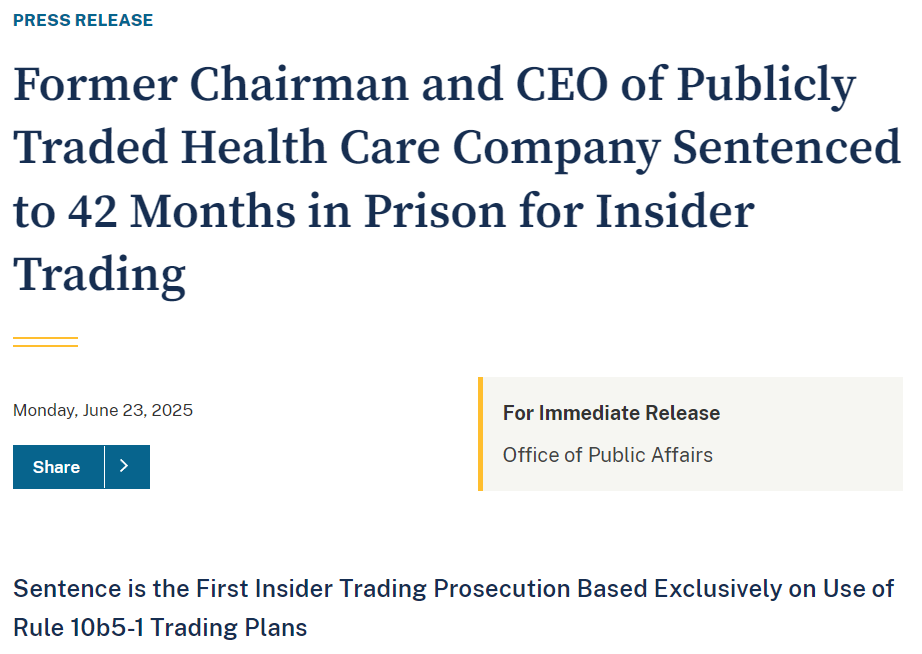
Terren Scott Peizer just became the first executive convicted solely for abusing Rule 10b5-1 trading plans—those widely used “safe harbor” stock sale programs trusted by thousands of insiders.
The DOJ handed down a 42-month prison sentence and nearly $18 million in fines and restitution after prosecutors proved Peizer sold shares ahead of bad news that tanked Ontrak’s stock by over 40%.
Court documents revealed Peizer’s frantic texts about losing a major client and his “fixation” on keeping another deal alive before setting up his trading plan, enabling him to dodge $12.5 million in losses. This isn’t just a technicality; it’s a stark warning that even pre-planned trades won’t shield executives from prosecution if evidence shows manipulative intent.
Peizer’s lawyer called the conviction a “true miscarriage of justice” and promised to appeal, pointing to full company disclosure and compliance approval before trades. But this case cracks open the door to scrutinize insider sales once thought untouchable—something every corporate exec should pay attention to.
Ontrak’s stock crash followed a huge blow when client Aetna cut ties, costing Peizer personally hundreds of millions and triggering this high-stakes legal drama. Peizer’s fall from grace underscores the thin line executives walk when navigating corporate turbulence and personal gain.
If you’re running or advising a public company, this verdict screams: don’t take your Rule 10b5-1 plans for granted. The DOJ just changed the game, and the risks are real.
Source: Yahoo Finance
It’s about fucking time these bigwigs pay for their insider trading bullshit. There’s a little poetic justice here, too: Peizer traded testimony for immunity at the Michael Milken trial decades ago. What goes around comes around… eventually.
Now, if only we would begin prosecuting members of Congress for doing the same.
("And we can look forward to a future war crimes trial at the Hague for Netanyahu. Right?")
Yes.