


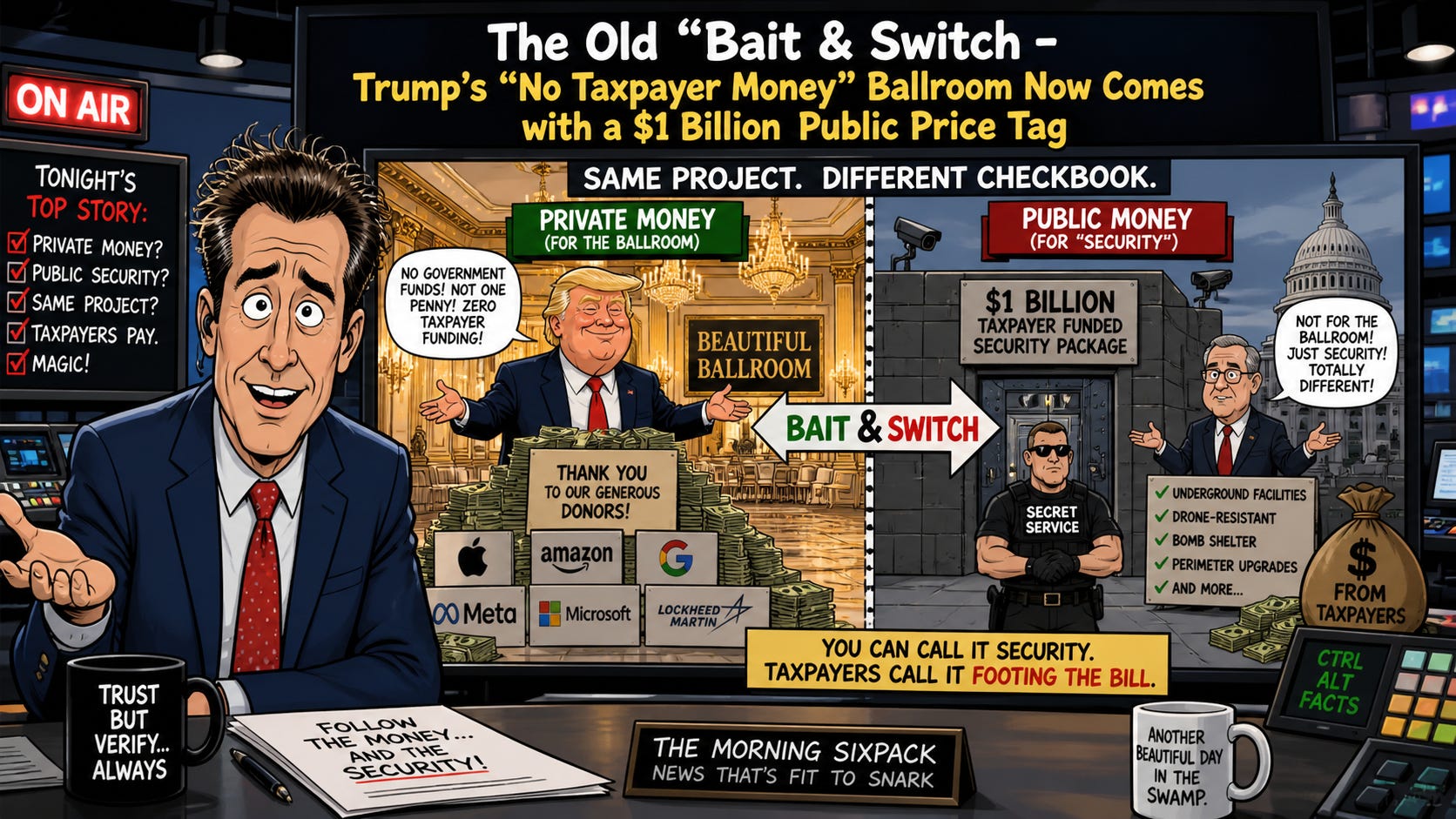
Trump promised a privately funded White House ballroom—now Republicans are pushing a $1 billion taxpayer-funded security package tied to the same project. The fine print says “security,” but the politics say something else entirely.
The distinction between “private ballroom” and “public security” is doing a lot of heavy lifting—and nearly nobody is buying it.
Donald Trump spent months insisting the ballroom would cost taxpayers “not one penny,” branding it as a donor-funded “GIFT” to the White House. And yes, big-name corporations—from Apple to Lockheed Martin—were reportedly lined up to help foot the bill. That was the sales pitch: No public money, no controversy, just a shiny new space paid for by wealthy friends.
Now comes Congress with a $1 billion request—but technically, it’s not for the ballroom. The legislation frames the money as funding Secret Service upgrades tied to the broader East Wing modernization, including underground security features and hardened infrastructure. On paper, it explicitly bars spending on “non-security elements.”
That’s where the argument splits. Republicans and the White House say this is standard: Donors cover construction, taxpayers cover presidential security. Critics say that’s a distinction without a difference. If the security costs only exist because of the ballroom project, then taxpayers are still subsidizing something Trump said would be privately funded.
There’s also the donor angle. Reports suggest dozens of major corporations were involved, with some disclosures coming only after pressure. That raises familiar questions about influence—because when companies with federal interests bankroll a White House project, it’s not exactly a bake sale.
Source: NBC News
Editor: So to recap: The ballroom is “free,” the security is $1 billion, and we’re all supposed to pretend those two things just happened to meet in the same zip code.