



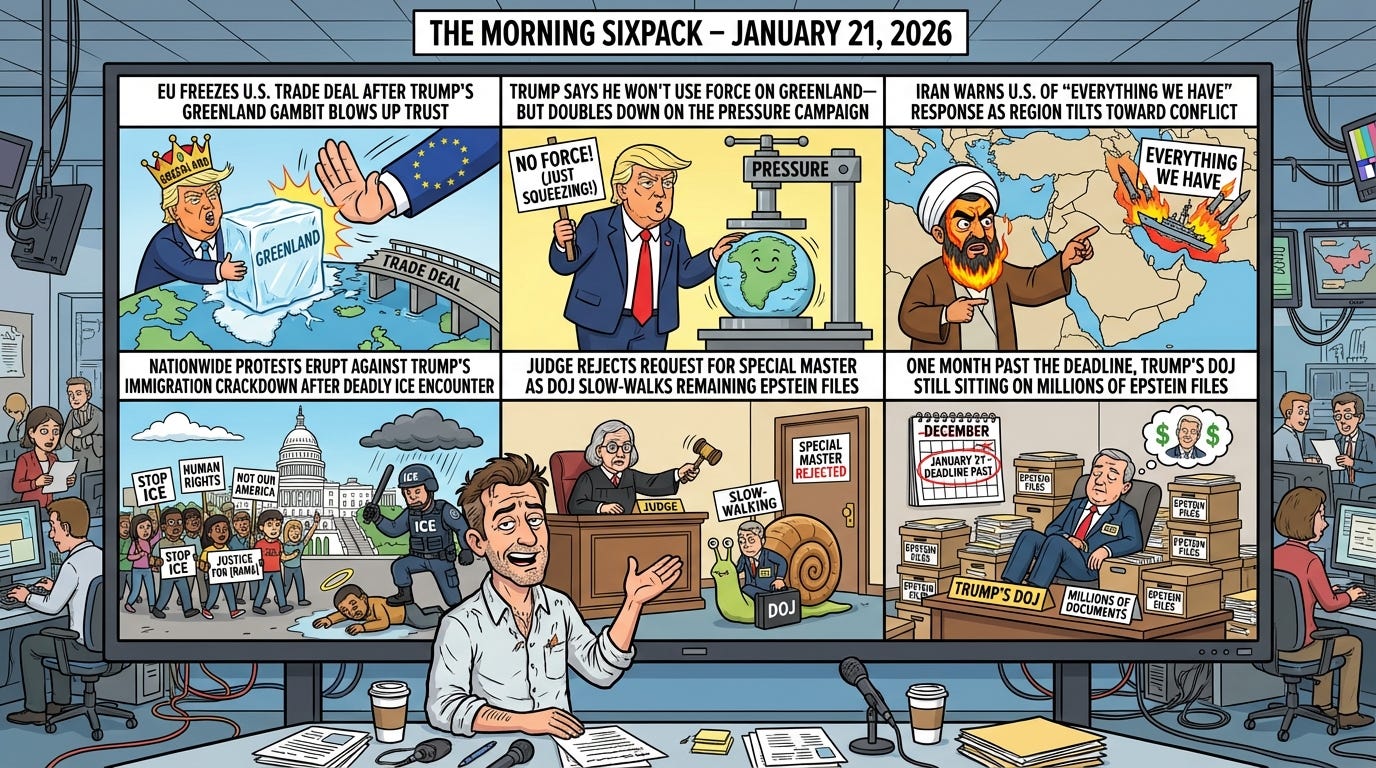
The Morning Sixpack Podcast: Greenland Gambits, Regional Flashpoints, and a DOJ That Won’t Come Clean
Welcome back—today’s episode is a world tour of brinkmanship, domestic unrest, and federal foot-dragging so dramatic it deserves its own genre. Let’s dive in.
1. EU Freezes U.S. Trade Deal After Trump’s Greenland Gambit Blows Up Trust
Europe hit pause on a major U.S. trade deal after Trump revived his Greenland acquisition crusade and paired it with tariff threats. EU lawmakers finally drew a line, saying Washington can come back to the table when it’s interested in cooperation instead of coercion. For now, the transatlantic relationship looks a lot like Greenland itself—icy and drifting further apart.
2. Trump Says He Won’t Use Force on Greenland—but Doubles Down on the Pressure Campaign
At Davos, Trump promised he wouldn’t invade Greenland but wasted no time reminding Denmark that refusal comes with consequences. Markets sighed in relief before realizing he was still dangling tariffs and confusing Greenland with Iceland. His message: sell us the island or feel the chill. Not exactly the stuff of stable alliances.
3. Iran Warns U.S. of “Everything We Have” Response as Region Tilts Toward Conflict
Iran’s foreign minister threatened full retaliation if the U.S. strikes again, even as protests and crackdowns escalate inside the country. A U.S. carrier group is closing in, missiles are shifting positions, and regional leaders are begging for restraint. Tehran’s vow—“everything we have”—signals a moment where miscalculation could turn into a regional inferno overnight.
4. Nationwide Protests Erupt Against Trump’s Immigration Crackdown After Deadly ICE Encounter
Demonstrators marched nationwide after ICE agents killed Renee Good, a U.S. citizen—fueling outrage at Trump’s harsh immigration agenda. Students walked out, unions mobilized, and cities coast to coast echoed with chants demanding accountability. The administration insists it has a mandate; the streets seem to disagree loudly.
5. Judge Rejects Request for Special Master as DOJ Slow-Walks Remaining Epstein Files
A federal judge acknowledged concerns about DOJ’s sluggish release of Epstein files—but said he has no authority to intervene. Despite missing the statutory deadline and holding back hundreds of thousands of documents, DOJ remains in control of the process. Lawmakers and victims want a neutral monitor; the court says its hands are tied. Confidence in the system is tied as well—and fraying.
6. One Month Past the Deadline, Trump’s DOJ Still Sitting on Millions of Epstein Files
The DOJ admits it still has more than two million Epstein documents despite a law ordering full release by December. Survivors and lawmakers accuse the department of delay, over-redaction, and outright defiance of Congress. Calls for a special master are growing louder, but structural hurdles remain. Transparency may be the law, but execution seems entirely optional.
And that’s The Morning Sixpack: six stories, one theme—a world full of institutions insisting everything is under control while the evidence screams otherwise. Catch you next time.


