


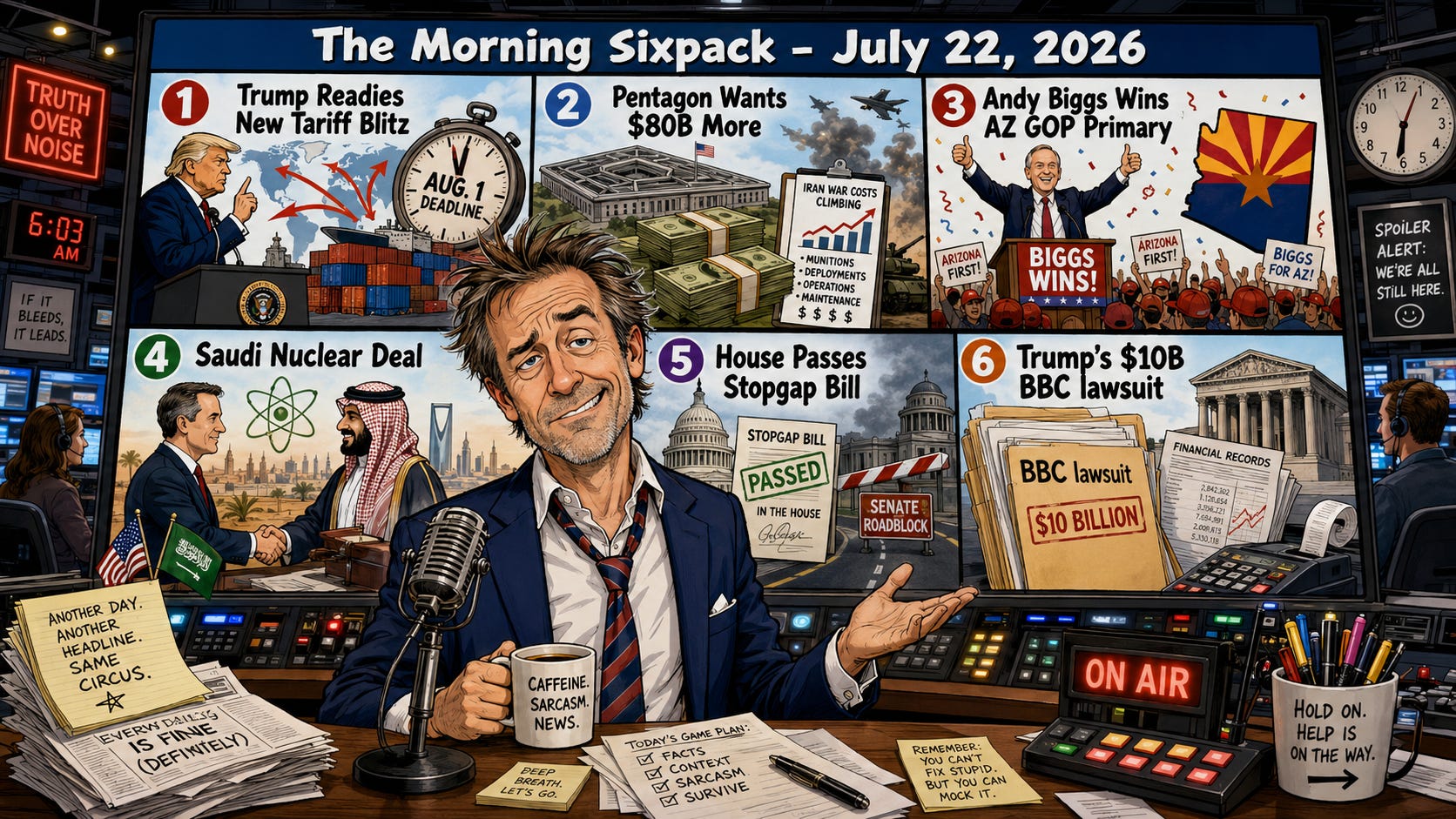
Washington is swapping one tariff scheme for another, and America's trading partners are about to find out the bill just went up.
Trump Readies New Tariff Blitz as Global Levy Nears Deadline
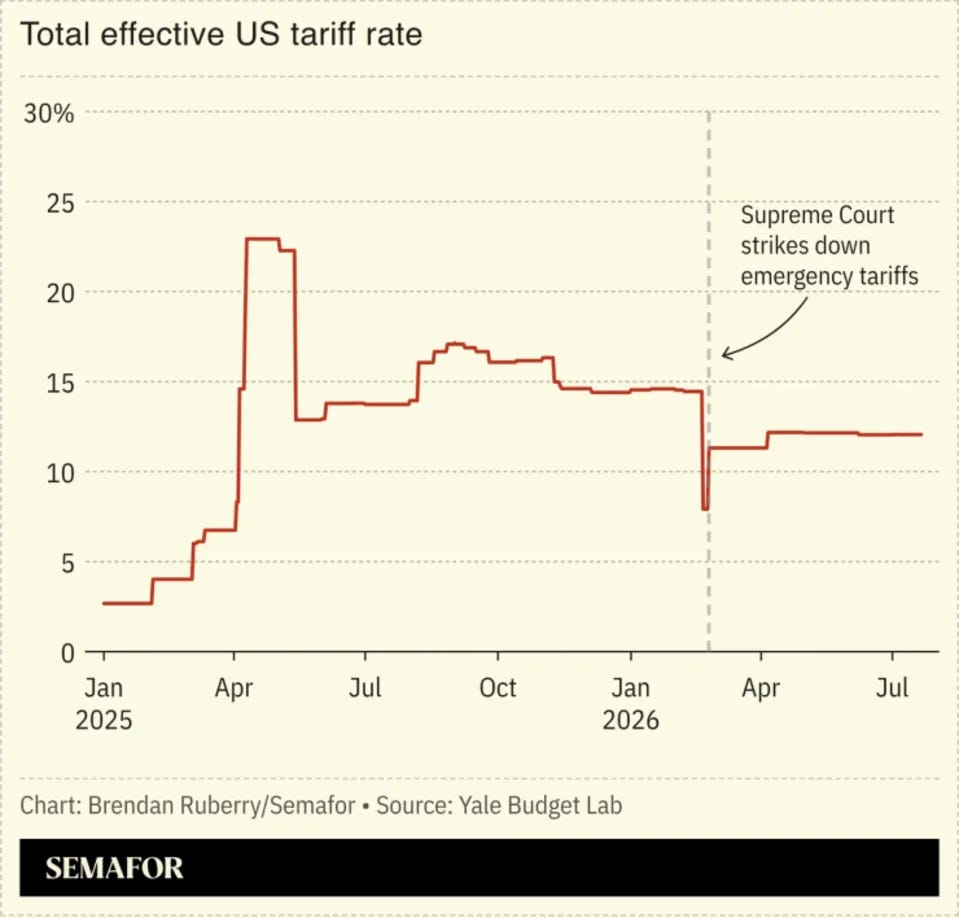
The Trump administration is preparing a new round of tariffs on roughly 60 trading partners as its temporary 10% global tariff expires Friday.
The next wave of tariffs is expected to cover most U.S. trade, putting fresh pressure on allies and rivals alike.
Trade envoy Jamieson Greer said the administration will move soon on tariffs tied to alleged failures by other countries to combat forced labor. The planned duties, expected to range from 10% to 12.5%, would replace the temporary global levy that followed legal setbacks to Trump’s earlier trade agenda.
“The US has laws to prohibit trading goods with forced labor. Other countries, most don’t have a law, those that do don’t really enforce it,” Greer said.
The targets in the crosshairs include the countries in the European Union, China, Taiwan, Vietnam, and Japan, setting the stage for another round of trade fights. The EU has already dismissed tariffs based on forced labor claims as “unjustified,” making it clear this won’t be a quiet policy change.
Trump is also piling on additional trade pressure with a 25% tariff on various Brazilian goods, a 50% tariff on many Canadian products scheduled for August, and investigations into excess industrial capacity involving 16 trading partners. Meanwhile, Greer heads to Mexico this week as USMCA talks continue, while negotiations with Canada remain stuck in the mud.
Source: Vanguard News
Editor: Tariffs are becoming Trump’s favorite negotiating tool. Whether they produce better trade deals or just bigger headaches and prices for consumers is the part that never seems to make the press release.
DoD head Hegseth says the Pentagon needs another $80 billion, but some lawmakers want to know where the last pile of cash went first.
Pentagon Seeks $80 Billion MORE as Iran War Costs Keep Climbing
The Trump administration is asking Congress for nearly $80 billion in emergency defense funding as the cost of the Iran war continues to grow.
The request ignited a fierce Senate showdown over military spending, strategy, and whether taxpayers should keep footing the bill. After all, somebody has to pay for it…
Defense Secretary Pete Hegseth and Joint Chiefs Chairman Gen. Dan Caine warned senators that without the supplemental funding, military training, readiness, and weapons production could all take a hit. Hegseth said the Pentagon’s immediate priority is replenishing stockpiles and preparing for future threats, while Caine cautioned that delays would strain personnel, operations, and next-generation capabilities like AI, drones, and space systems.
Democrats pushed back hard, arguing the Pentagon still has roughly $75 billion in previously approved funding that hasn’t been fully spent. Hegseth countered that money has already been committed to Trump administration priorities—including the Golden Dome missile defense project and hypersonic weapons—and shifting it now would amount to “robbing Peter to pay Paul.”
The hearing turned especially heated as Hegseth disclosed the Iran war has now cost about $37.5 billion through September projections. Senators Jon Ossoff and Gary Peters challenged his repeated claims that the campaign was a historic victory, while Peters accused Pentagon leadership—not the troops—of lacking a clear strategy. Hegseth fired back, accusing Democrats of refusing to support the military because of “Trump derangement syndrome.”
Source: The Hill
Editor: Congress never seems to have trouble finding money for wars. Finding agreement on how to pay for them—or when they should end—is apparently the impossible mission—especially when Congress didn’t even authorize the war, which makes it illegal. I don’t think the US government should be funding illegal wars.
Arizona Republicans doubled down on the Trump lane, betting it can finally get them back into the governor's office.
Trump Ally Andy Biggs Wins Arizona GOP Governor Primary
Republican voters handed Rep. Andy Biggs a decisive primary victory, setting up a high-stakes showdown with Democratic Gov. Katie Hobbs this November.
The race will test whether Arizona’s Trump-backed conservative movement can finally reclaim the governor’s office after years of close statewide losses.
Biggs, a former chairman of the House Freedom Caucus and one of President Donald Trump’s closest congressional allies, easily defeated fellow Rep. David Schweikert for the Republican nomination. Trump endorsed Biggs, whose campaign also drew strong support from Turning Point Action and grassroots conservatives.
Democrats wasted little time painting Biggs as too far to the right for Arizona’s increasingly competitive electorate. Biggs backed Trump’s effort to block certification of the 2020 election (Editor: You know, the insurrection) and has become one of the GOP’s most recognizable conservative voices.
Hobbs, who narrowly defeated Kari Lake in 2022, said, “The more Arizonans learn about Biggs, the more they’ll realize he’s one big problem they can’t afford.”
The primary also reshaped several key down-ballot races. Former NFL kicker Jay Feely captured the Republican nomination in Arizona’s competitive 1st Congressional District, while attorney Alexander Kolodin won the GOP nomination for secretary of state. Democrats also settled key congressional contests as both parties prepare for what is expected to be another fiercely contested election in one of the nation’s premier political battlegrounds.
Source: Associated Press
Editor: Arizona keeps producing elections decided by inches instead of miles. That makes every primary feel less like the opening act and more like the main event.
Washington DC spent decades saying "not so fast" to Saudi nuclear ambitions—now it's saying, "Where do we sign?"
Trump Greenlights Landmark Saudi Nuclear Deal
President Trump has approved a 30-year civilian nuclear agreement with Saudi Arabia, opening the door to one of the biggest U.S.-Saudi energy deals in decades.
The agreement promises billions for American companies while reigniting fears that nuclear technology could spread across the Middle East—as if it hasn’t already.
The deal would give U.S. companies the lead role in building Saudi Arabia’s civilian nuclear program, with projects expected to be worth tens of billions of dollars. A key provision allows for the possible construction of a uranium enrichment facility inside the kingdom if a joint U.S.-Saudi study concludes it’s commercially justified. Administration officials argue the American role would keep the program under tight safeguards and prevent military misuse. (Editor: LOL)
Supporters say the agreement strengthens America’s strategic position by shutting Russia and China out of the Saudi nuclear market while creating major opportunities for U.S. firms such as Westinghouse Electric. Former State Department official Robert Einhorn said the deal could bolster the U.S. nuclear industry and deepen ties with Riyadh, but warned that inadequate restrictions on enrichment could increase proliferation risks.
Critics argue the agreement marks a major policy shift. Previous administrations insisted Saudi Arabia normalize relations with Israel before moving forward on nuclear cooperation, while others opposed allowing uranium enrichment anywhere in the region. Opponents also warn the agreement could encourage other Middle Eastern nations to pursue similar programs, complicating U.S. efforts to limit Iran’s nuclear ambitions.
Source: The Wall Street Journal (free)
Editor: Civilian nuclear programs always begin with promises about peaceful energy. History shows the real debate starts years later, when everyone wonders where the technology might eventually lead.
Congress is once again racing the shutdown clock because budgeting is now a seasonal sport.
House Passes Stopgap Funding Bill, but Senate Roadblock Looms
House Republicans approved a temporary spending bill to keep the government open through early December, but the measure faces long odds in the Senate.
The vote sets up another spending showdown just weeks before the midterm elections, with both parties already blaming the other for a potential shutdown.
The House passed the stopgap measure 220-205 after Speaker Mike Johnson argued Congress needed to avoid a fall funding fight as lawmakers remain behind on passing the annual spending bills. Republicans say the temporary extension buys time to finish the budget while keeping the government operating through Dec. 4.
Democrats lined up against the bill, arguing it gives the Trump administration greater control over federal spending while failing to restrict funding for immigration enforcement. Senate Democrats are already working with Appropriations Chair Susan Collins on a separate bipartisan proposal, making the House version effectively dead on arrival unless major changes are made.
House Republicans are also turning their attention to a proposed $95 billion reconciliation package that would include funding for election security, aid for farmers, and additional Pentagon spending tied largely to the Iran war. But even some fiscal conservatives within the GOP remain skeptical because the package adds spending without offsetting budget cuts.
Source: The Washington Post (free)
Editor: Congress has perfected the art of governing one deadline at a time. Somehow, every “temporary” funding bill manages to create the next emergency before the ink is dry.
Suing for billions sounds great until the discovery process starts asking for receipts.
Trump’s $10 Billion BBC Lawsuit Opens Door to Financial Records
President Trump’s $10 billion defamation lawsuit against the BBC has taken an unexpected turn after a federal judge ruled his own damage claims put his financial records in play.
By seeking sweeping financial damages, Trump may have handed the BBC access to the information he was hoping to keep out of court.
U.S. Magistrate Judge Enjoliqué Lett ruled that because Trump’s lawsuit alleges his reputation damaged his businesses and brand, the BBC is entitled to seek financial records tied to those claims. According to reports, that could expose records connected to hundreds of Trump-affiliated companies during the discovery process.
Trump’s legal team argued the case has shifted and now focuses only on reputational harm rather than economic damages. Judge Lett rejected that argument, saying she cannot rewrite the complaint.
During the hearing, BBC attorney Chuck Tobin argued, “You cannot separate the man and his reputation from his operation of his businesses.”
The judge also ruled the BBC may question Trump about how his Jan. 6, 2021, remarks were understood by listeners but cannot turn the case into a full relitigation of the Capitol riot. Meanwhile, the BBC continues to seek Trump’s deposition and has also asked the court to dismiss the lawsuit, arguing the broadcaster lacks sufficient ties to South Florida for the case to proceed.
Source: Raw Story
Editor: Litigation is full of unintended consequences. When you ask a court for billions in damages, don’t be surprised if the other side wants to see the math.