


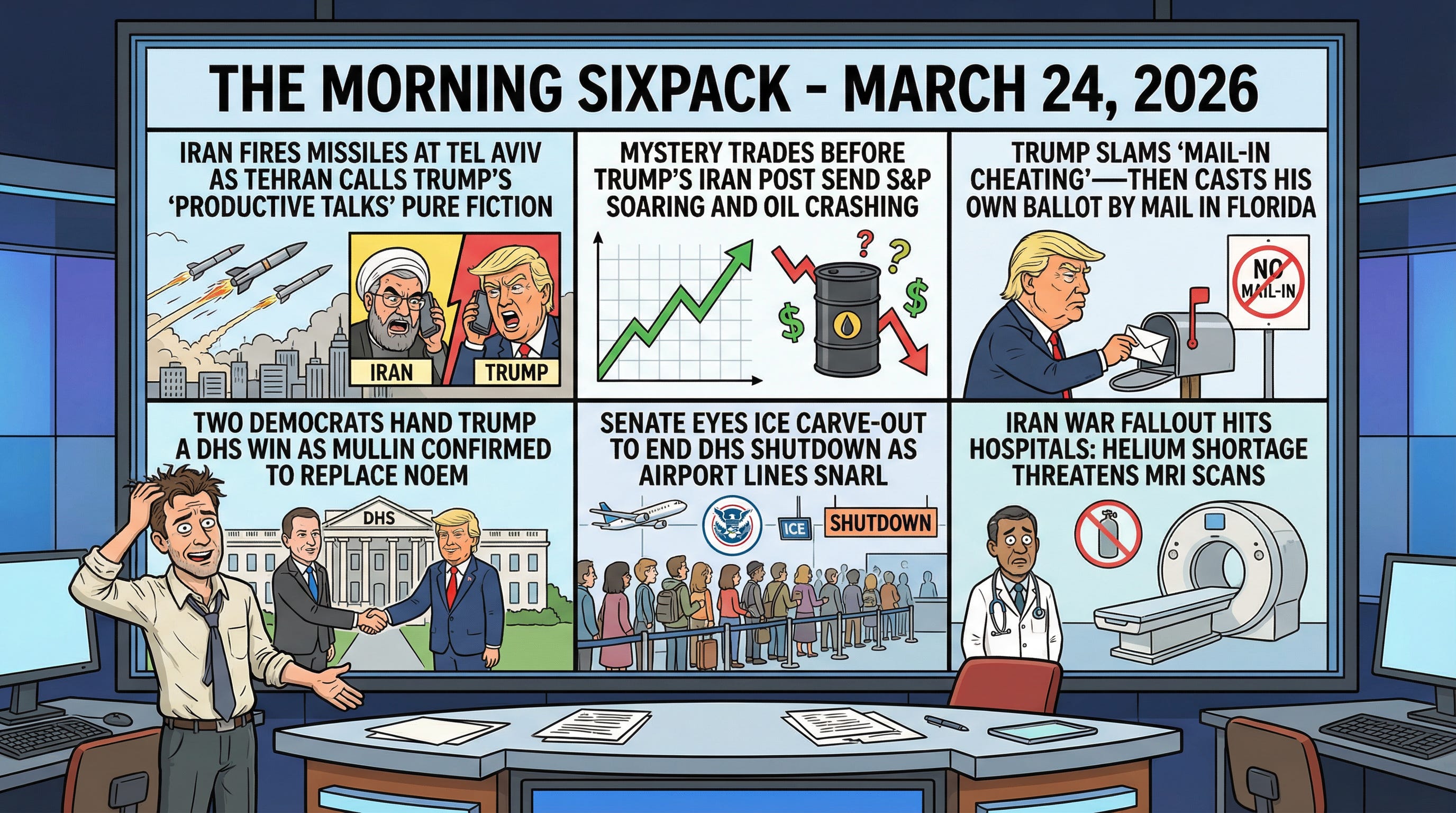
Iran Fires Missiles at Tel Aviv as Tehran Calls Trump’s ‘Productive Talks’ Pure Fiction
Iran launched waves of missiles into Israel while publicly dismissing President Trump’s claim of “very good and productive” negotiations as “fake news.” The war isn’t cooling off—it’s widening.
Missiles over Tel Aviv. Craters in the street. And apparently, talks that only one side says happened.

Iran triggered air raid sirens across Tel Aviv, sending residents scrambling as missiles punched through Israel’s sophisticated air defenses. One strike carved a massive crater into a neighborhood road and blasted apart part of a multi-story apartment building. There were no reported deaths, but the message was unmistakable: Tehran can still reach Israel’s commercial heart.
Meanwhile, President Donald Trump said the U.S. had held “very good and productive” conversations with Iran aimed at a “complete and total resolution of hostilities in the Middle East.” He even said he postponed bombing Iranian electricity plants because diplomacy was gaining traction.
Tehran’s answer? Hard no.
Iranian parliament speaker Mohammad Baqer Qalibaf called reports of direct talks “fake news.” Iranian officials insisted no negotiations had taken place. That denial came as Israel continued airstrikes in Tehran and other Iranian cities, targeting command centers and missile infrastructure. At least eight people were killed in a strike on a residential area in Tabriz, according to Iranian officials.
Oil markets felt every headline. After Trump threatened to hit Iran’s power grid, Brent crude spiked as high as $114.43 before settling back near $103—still elevated as Iran effectively shuttered the Strait of Hormuz, the chokepoint for roughly a fifth of the world’s oil and LNG. That’s not a regional problem. That’s everybody’s gas pump.
Pakistan’s prime minister even offered to host talks—if both sides agree. That’s still a big “if.” Israeli officials say Trump appears determined to strike a deal, but they doubt Tehran will accept U.S. demands to curb its nuclear and ballistic programs. Iranian sources say their negotiating position has only hardened since the war began.
On the ground, nothing looks like de-escalation. Israel says it struck more than 50 targets overnight, including ballistic missile storage sites. Iran keeps firing. Lebanon simmers. The UAE says it intercepted incoming missiles and drones. This isn’t diplomacy taking hold. It’s a region bracing for the next round.
Source: Reuters
Editor: If these are “productive talks,” I’d hate to see what unproductive looks like. Oil’s spiking, missiles are flying, and someone’s apparently negotiating with a mirror.
Mystery Trades Before Trump’s Iran Post Send S&P Soaring and Oil Crashing
A sudden burst of futures trading hit stocks and oil minutes before President Trump posted that the U.S. would halt strikes on Iran—moves that paid off almost instantly. Someone moved early. Then the market moved big.
Fifteen minutes can be a lifetime when you’re on the right side of a 2.5% spike.
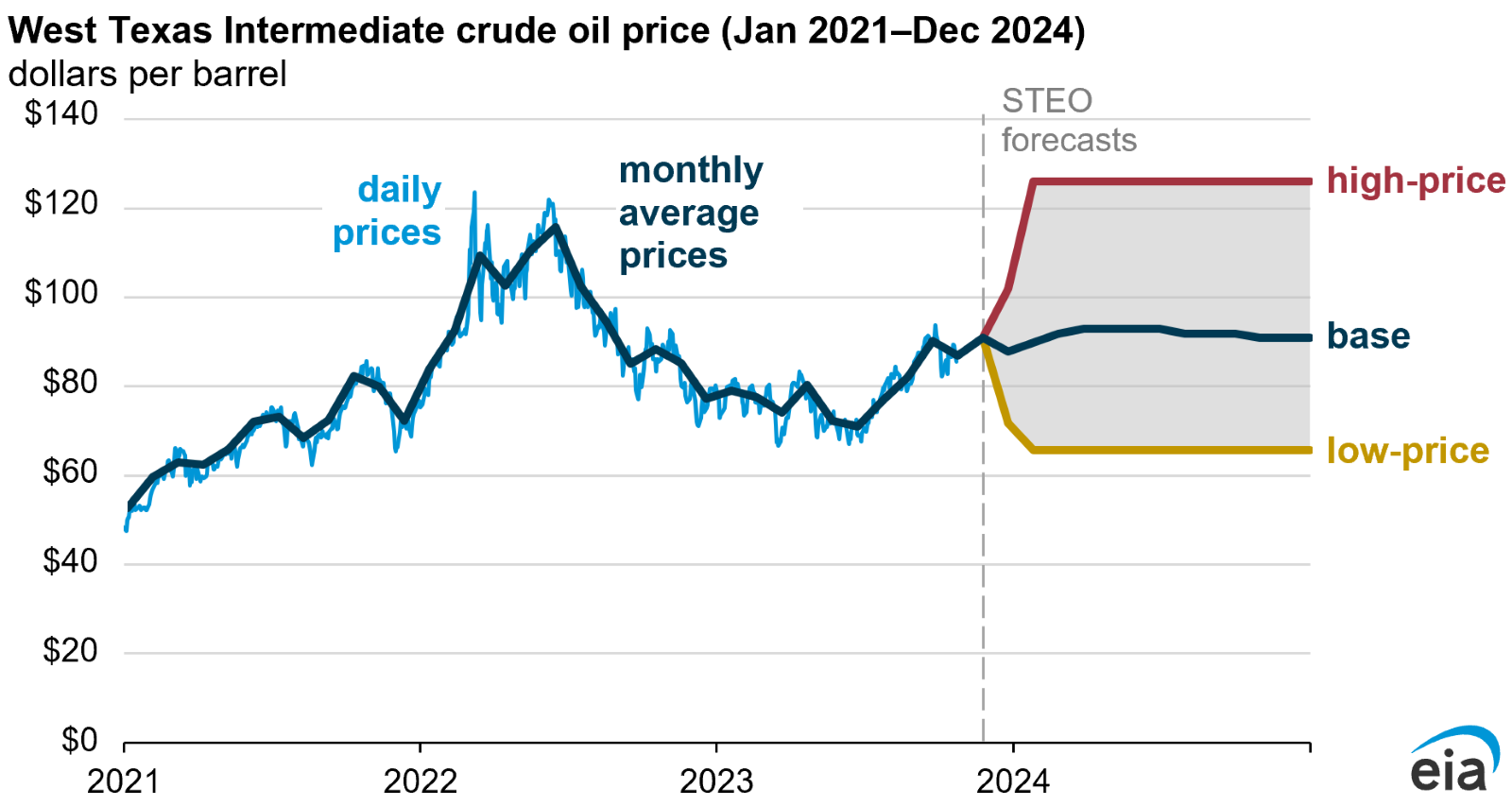
At about 6:50 a.m. New York time, S&P 500 e-Mini futures on the CME lit up with a sharp, isolated jump in volume—well above the sleepy premarket backdrop. Early hours are thin. Liquidity is light. That kind of burst sticks out.
Oil flashed the same signal. West Texas Intermediate May futures saw a noticeable spike in trading activity at roughly the same moment, interrupting otherwise quiet conditions.
Then came the catalyst.
At 7:05 a.m., President Donald Trump posted on Truth Social that the U.S. and Iran had held talks and that he was halting planned strikes on Iranian power plants and energy infrastructure. Markets reacted instantly. S&P 500 futures ripped more than 2.5% higher before the opening bell. WTI crude tumbled nearly 6%.
Do the math. Anyone who bought stock futures and shorted crude minutes before the post did very well—very quickly.
There was no obvious headline at 6:50 a.m. No scheduled data. No breaking news. Just a well-timed surge in volume ahead of a market-moving announcement. The SEC and CME Group declined to comment. And yes, algorithmic or macro strategies can trigger rapid cross-asset flows without a single identifiable spark. But traders noticed the timing.
Early markets can exaggerate moves. Thin books make splashes look bigger. Still, when futures jump before a social media post that flips risk sentiment on its head, people ask questions. That’s how this works.
Source: CNBC
Editor: Markets hate uncertainty—unless you happened to know exactly when it was about to disappear. Funny how that works.
Trump Slams ‘Mail-In Cheating’—Then Casts His Own Ballot by Mail in Florida
President Trump blasted mail-in voting as “mail-in cheating” this week—while records show he cast his own ballot by mail in a Florida special election. You really can’t script this stuff.
He says mail ballots are a threat to democracy. He just used one.
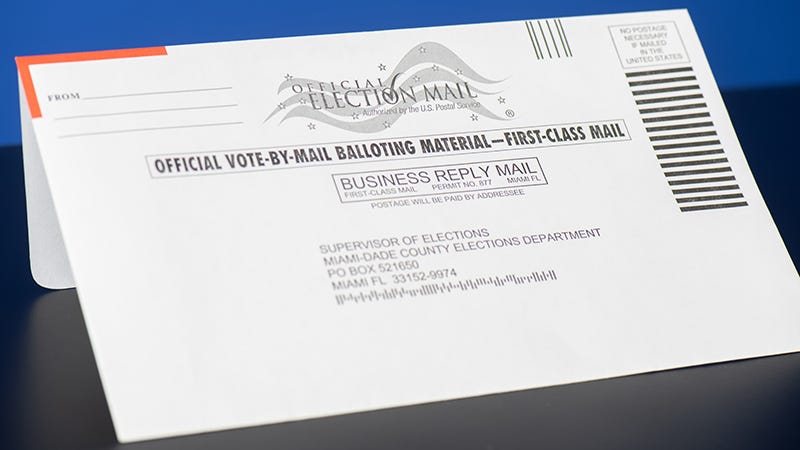
According to voter records from Palm Beach County, Trump voted by mail in the special election that will determine whether Democrat Emily Gregory or Republican Jon Maples—whom Trump endorsed—will represent his district in the Florida state house. The ballot has already been counted.
This comes as Trump torpedoed negotiations to end the partial government shutdown in order to push the SAVE Act, legislation that would tighten voter ID rules and make mail-in voting significantly harder. On Monday in Memphis, he doubled down: “Mail-in voting means mail-in cheating,” he said. “I call it mail-in cheating, and we got to do something about it all.”
The White House insists the SAVE Act doesn’t eliminate mail voting entirely. “The SAVE America Act has common-sense exceptions for Americans to use mail-in ballots for illness, disability, military, or travel — but universal mail-in voting should not be allowed,” the statement read. It also noted that Trump is a Palm Beach resident who “obviously primarily lives at the White House.”
Trump has been registered to vote in Palm Beach County since 2019 and previously voted by mail in 2020. What’s unclear is why he chose to do so again this week. He spent the past two weekends in West Palm Beach during early voting, and his polling place is reportedly within a 15-minute drive of both Mar-a-Lago and his golf club.
Meanwhile, the Supreme Court appears poised to weigh in on a Mississippi mail-in ballot case that could reshape how states handle absentee voting nationwide—just months before hotly contested congressional races.
Trump has repeatedly claimed widespread voter fraud tied to mail ballots, despite studies showing very little fraud in states that vote primarily by mail. He has called the SAVE Act one of the most consequential bills in American history.
He just also happens to be a satisfied user of the system he’s trying to rein in.
Source: The New York Times
Editor: Apparently mail-in voting is dangerous—unless it’s your ballot. Then it’s just efficient time management.
Two Democrats Hand Trump a DHS Win as Mullin Confirmed to Replace Noem
The Senate confirmed Sen. Markwayne Mullin as Homeland Security secretary after two Democrats crossed the aisle to back Trump’s pick. In a 54-45 vote, loyalty carried the day.
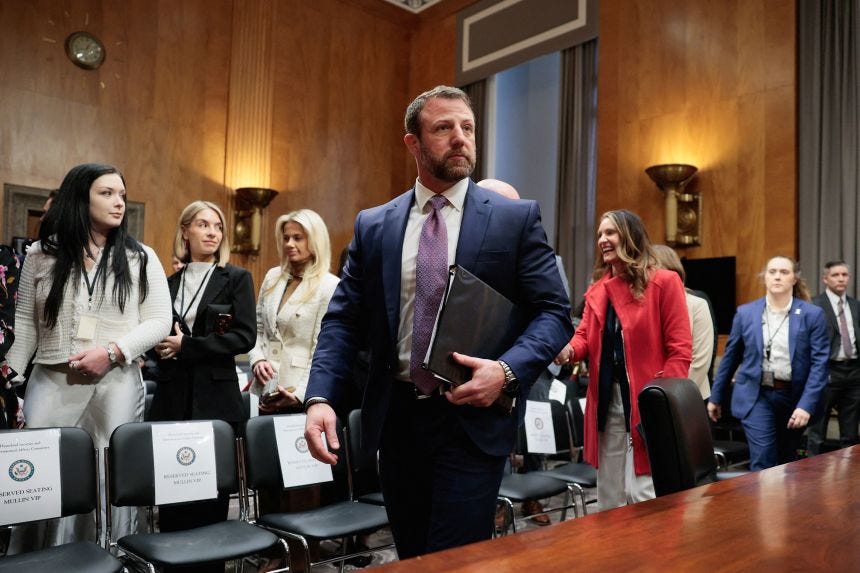
The Senate confirmed Republican Sen. Markwayne Mullin of Oklahoma as Homeland Security secretary Monday, giving President Trump a loyalist to replace the ousted Kristi Noem at a department already battered by controversy.
Mullin cleared the chamber 54-45, with nearly all Republicans voting yes. The two Democrats who helped push him across the line: John Fetterman of Pennsylvania and Martin Heinrich of New Mexico. Republican Sen. Rand Paul broke with his party and voted no after a public clash with Mullin during last week’s confirmation hearing.
Mullin, a former mixed martial arts fighter and plumbing company owner, steps into a department facing a credibility crisis. Recent polling shows Americans increasingly believe immigration agents have gone too far, especially after the fatal shootings of two U.S. citizens in Minneapolis earlier this year. Add in a partial government shutdown that has left thousands of Homeland Security employees working without pay, and this isn’t exactly a smooth transition.
At his confirmation hearing, Mullin pledged that immigration officers would no longer enter homes without judicial warrants and hinted at scaling back sweeping enforcement operations in Democratic-led cities. Whether that signals a tactical shift or just softer rhetoric remains to be seen.
The vote also underscores something bigger: Trump can still peel off Democrats when it counts, even on one of the most politically combustible posts in Washington.
Source: Raw Story
Editor: Nothing says “party unity” like handing the other team a cabinet seat and hoping no one notices. Washington’s favorite sport isn’t baseball—it’s selective outrage.
Senate Eyes ICE Carve-Out to End DHS Shutdown as Airport Lines Snarl
Senators are closing in on a deal to fund most of Homeland Security—while sidelining ICE’s enforcement arm at the center of the immigration fight. After weeks of gridlock, the outlines of a truce are finally emerging.
Fund TSA. Fence in ICE. Keep the planes moving.
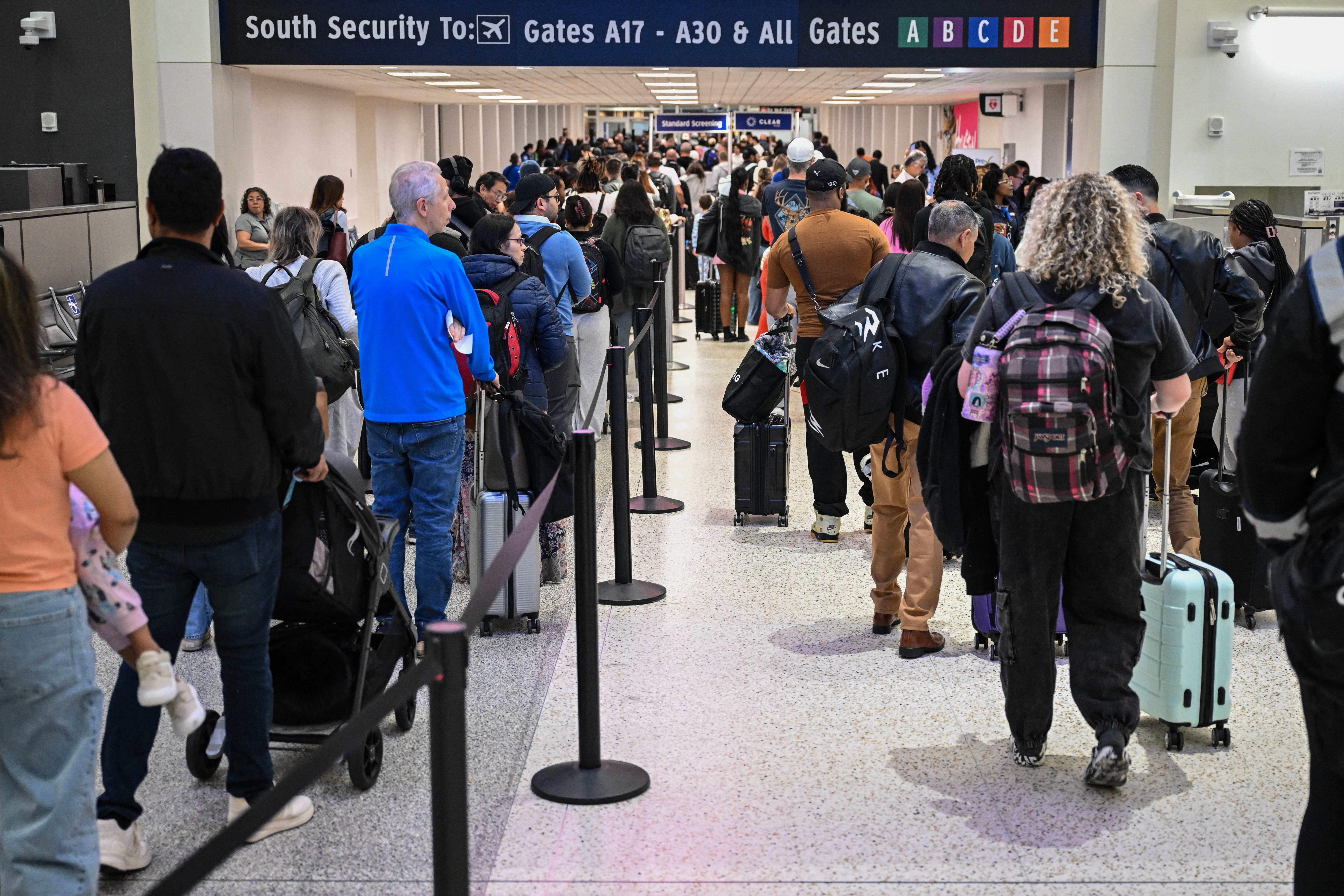
Late Monday, a group of Republican senators trekked to the White House to meet with President Trump, searching for a way out of the Homeland Security funding stalemate that has left TSA workers unpaid and airports jammed during peak spring travel. By night’s end, lawmakers were cautiously optimistic.
“All I can say is that the discussions have been very positive and productive, and hopefully headed in the right direction,” Senate Majority Leader John Thune said. Senate Democratic Leader Chuck Schumer added: “Both sides are working in a serious way.”
The framework under discussion would fund most of the Department of Homeland Security—including TSA, Customs and Border Protection, and ICE’s Homeland Security Investigations—but exclude ICE’s enforcement and removal operations, the core of Trump’s mass deportation agenda and the flashpoint of the dispute. Democrats have refused to fully fund DHS without restraints after the deaths of two U.S. citizens during ICE protest clashes in Minneapolis.
Under the floated proposal, new guardrails would require immigration officers to wear body cameras and identification, and reinforce that home searches require judicial warrants—not just administrative paperwork. Even operations funded through Trump’s tax-cut law would face those new limits, senators said.
“I’m going to be working through the night,” said Sen. Katie Britt, a chief GOP negotiator, expressing hope they could “land this plane.” Independent Sen. Angus King said the first step is getting the proposal in writing: “I want to see exactly what that means.”
Over the weekend, Trump ordered ICE officers to assist with airport security, a move that rattled some lawmakers who warned it could escalate tensions. The urgency is obvious—TSA staffing shortages have stretched security lines nationwide, turning a budget fight into a public spectacle.
The talks come just hours after the Senate confirmed Markwayne Mullin as Homeland Security secretary, replacing Kristi Noem, whose tenure became synonymous with the aggressive enforcement tactics now under scrutiny. “This is significant,” Sen. Peter Welch said of the progress toward changes. “Noem is gone. That’s a big deal.”
Whether this carve-out can satisfy both parties—and the White House—will determine if the shutdown eases or if the stalemate drags deeper into the travel season.
Source: Associated Press
Editor: Washington finally found urgency when the airport lines hit Instagram. Nothing motivates Congress like a delayed boarding group.
Iran War Fallout Hits Hospitals: Helium Shortage Threatens MRI Scans
A leading virologist warns the Trump-Iran war has slashed U.S. helium supplies—putting MRI machines and critical medical care at risk. The battlefield just reached the radiology wing.
No helium, no MRIs. It’s that simple.
Marc Johnson, a virologist at the University of Missouri, said his institution was notified that its helium supply for the year will be cut by at least half. The reason: Qatar—the world’s largest producer of liquefied helium—has shut down production amid the widening U.S.-Israel war with Iran.
“I hope no one needs an MRI this year,” Johnson posted on X. “The world’s largest producer of liquified helium is in Qatar and is shut off. We just got a notice that our supply for the year will be at least cut in half. No one could have predicted this (unless they thought about it).”
Helium isn’t just party balloons. It’s essential to MRI scanners because of its extremely low boiling point, which keeps the machines’ superconducting magnets cold enough to function. No helium means no imaging. And no imaging means delayed diagnoses, postponed surgeries, and real-world consequences for patients.
Johnson added in a follow-up post: “We got a notification from our gas supplier that they would be able to fulfill less than 50% of our regular consumption, and a message from the University hospital saying that this is particularly problematic for MRIs. The helium shortage is real and there will be consequences.”
Qatar supplies roughly a third of the world’s helium. Production halted after Iran struck the country, which hosts Al Udeid Air Base—the largest U.S. military base in the Middle East. The Trump administration launched Operation Epic Fury late last month, igniting a conflict that has already sent oil prices surging. Now the ripple effects are moving beyond energy markets and into hospital corridors.
Sen. Chris Murphy reacted bluntly: “It’s just unreal how little thought or planning went into starting a new massive war in the Middle East.”
Oil shocks were expected. A helium crunch that sidelines MRI machines? That’s the kind of supply chain reality nobody puts in the war briefing slides.
Source: Raw Story
Editor: We can debate geopolitics all day—but if your MRI gets delayed because someone didn’t think about helium, that’s not abstract. That’s personal.