


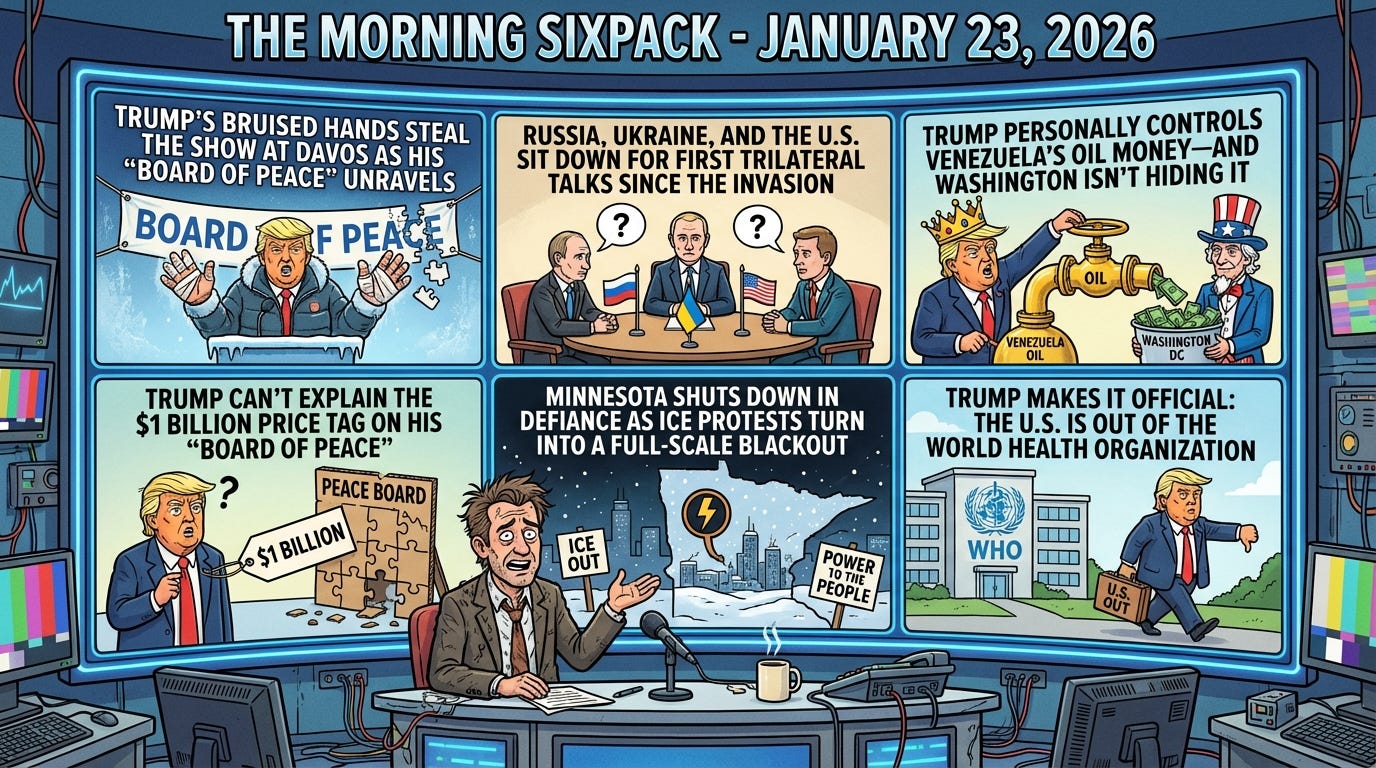
Trump’s Bruised Hands Steal the Show at Davos as His “Board of Peace” Unravels
Donald Trump’s hands—darkly bruised and impossible to ignore—ended up telling a louder story than his new “Board of Peace” rollout in Davos.
At the World Economic Forum in Davos, the 79-year-old president unveiled his controversial peacekeeping panel while visible bruising marked both hands—one lightly, the other more ominously—despite efforts to keep them hidden behind a lectern.
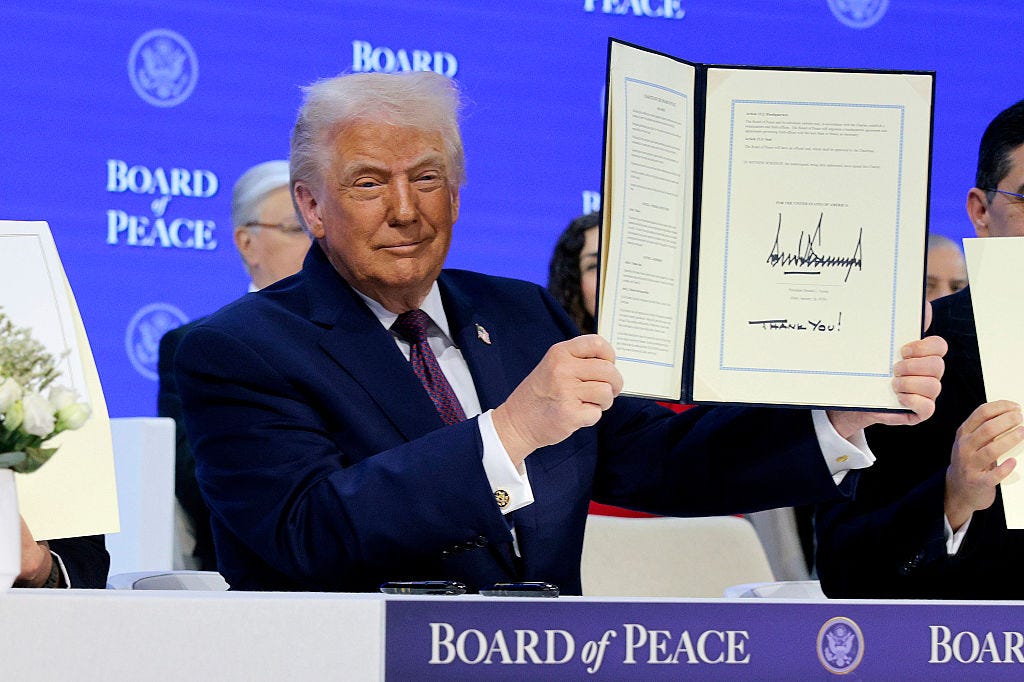
Trump touted an international lineup that includes Saudi Arabia, Bahrain, Vietnam, and Azerbaijan, but the snub was the headline: key NATO allies like Canada and the U.K. passed after Trump invited Vladimir Putin, even as Russia continues its war in Ukraine. That decision alone hollowed out the pitch of a body meant to signal credibility.
On stage, Trump rambled and drifted, praising attendees as “friends of mine,” then pausing to double-check who stood beside him. “This board has the chance to be one of the most consequential bodies ever created,” he said, before undercutting the moment with asides about who he likes—and doesn’t.
The White House again blamed the bruising on handshakes and daily aspirin, but that explanation strains credibility when marks appear on both hands. Trump has acknowledged taking more aspirin than advised and told The Wall Street Journal his skin is so fragile it bled after a ring nicked him during a high-five with Pam Bondi—and that he uses makeup when he gets “whacked.”
Trump says he applies makeup to his hands whenever he gets “whacked” by something. “I have makeup that’s, you know, easy to put on. Takes about 10 seconds,” he said. We can tell. It’s on your face, too.
Source: DNyuz report
Editor: You can invite the world to a peace table, but when your allies won’t sit—and your hands need concealer—the message lands with a thud. Davos noticed. Voters will too.
More on the “Bored of Peace” debacle below.
Russia, Ukraine, and the U.S. Sit Down for First Trilateral Talks Since the Invasion
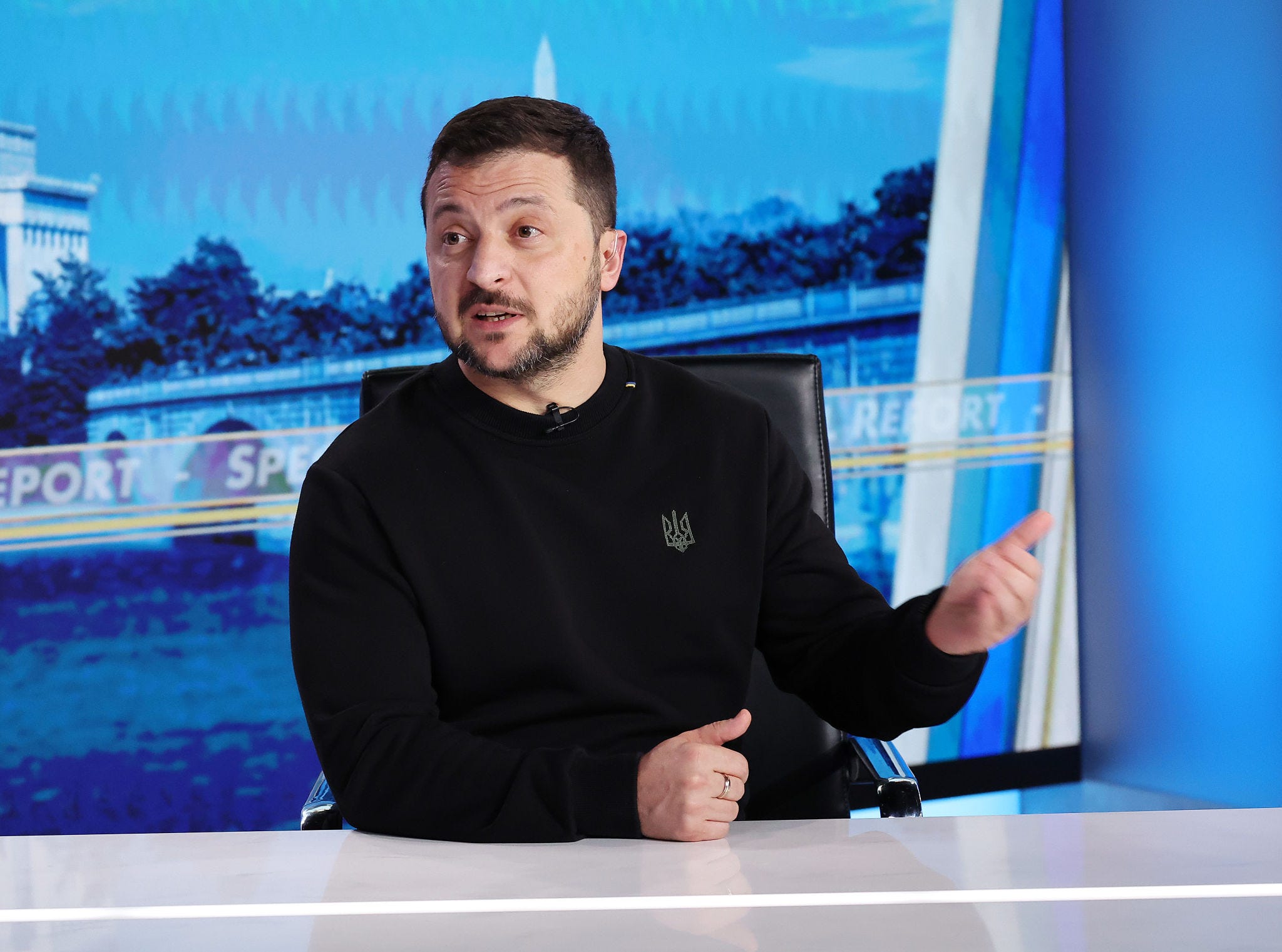
For the first time since Russia rolled tanks into Ukraine in 2022, Moscow, Kyiv, and Washington are all showing up in the same room—and the stakes couldn’t be higher.
Senior negotiators from Russia, Ukraine, and the United States are meeting Friday in Abu Dhabi, marking the first trilateral talks since the war began. The discussions follow a quiet U.S. envoy visit to Vladimir Putin in Moscow and a parallel agreement between Washington and Kyiv on postwar security guarantees.
The seriousness is real—at least on paper. All three sides are sending top-level officials, which the BBC called “a measure of the seriousness of the talks.” But the fault lines are already clear, starting with the Kremlin’s demand that Ukraine surrender 25% of the Donetsk region, territory still partly controlled by Kyiv.
Ukraine’s president Volodymyr Zelenskyy enters the talks under pressure at home and abroad, while Washington is trying to thread an increasingly narrow needle—pressing for an endgame without appearing to reward aggression or fracture Western backing.
Meanwhile, Europe is already planning for a future that may—or may not—arrive. The European Commission says it is close to an agreement on a multibillion-dollar plan to rebuild Ukraine and integrate it into the EU single market, signaling that Brussels is betting on diplomacy eventually sticking.
The meeting underscores how much the war’s center of gravity has shifted—from the battlefield to conference rooms in the Gulf—while the hardest questions remain unanswered.
Source: Semafor
Editor: Everyone loves the symbolism of a table and name cards, but Donetsk isn’t a rounding error. If “serious talks” start with Ukraine giving up land it’s still defending, this is less peace process and more opening bid.
PREDICTION: Trump pulls the US out of NATO. NATO pulls in Ukraine.
Trump Personally Controls Venezuela’s Oil Money—and Washington Isn’t Hiding It
Donald Trump is personally deciding when—and if—Venezuela gets access to its own oil money.
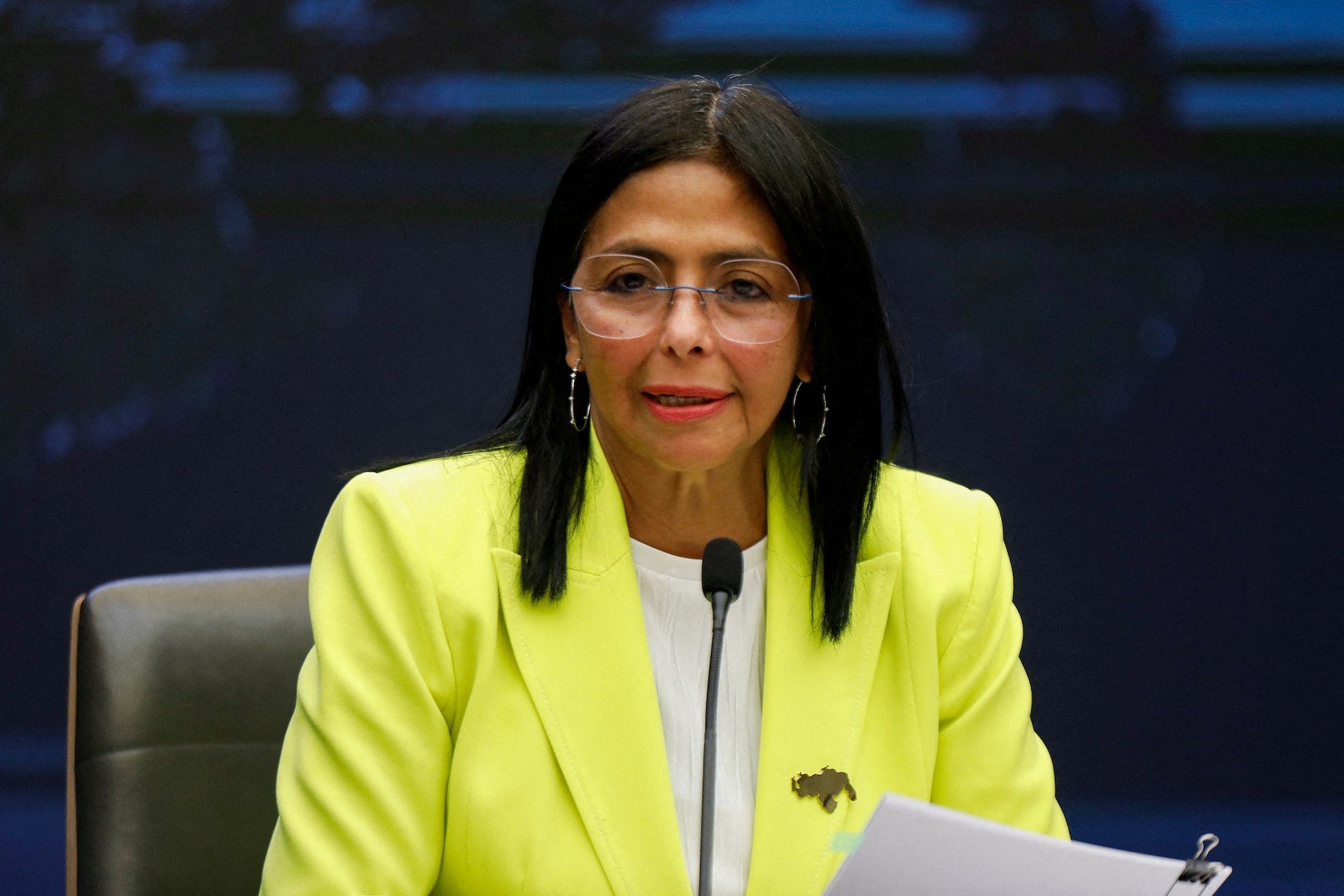
According to Semafor, the president is directly controlling the release of hundreds of millions of dollars generated from U.S.-managed Venezuelan oil sales, underscoring just how tight Washington’s grip has become on Caracas after regime change. The first sale brought in $500 million, with funds initially held in Qatar before selective releases.
Venezuela’s interim president Delcy Rodríguez confirmed $300 million was released this week, but a Trump administration official made clear the spigot remains firmly in Trump’s hands. Proceeds from future sales, the official said, “will first settle in U.S.-controlled accounts at globally recognized banks”—a reminder of who’s really running the balance sheet.
The White House insists all funds from the initial sale will eventually go to Venezuela because the current government has “fully cooperated” with the U.S. But that cooperation now comes with conditions, timelines, and Trump’s personal sign-off, effectively turning oil revenue into a geopolitical allowance.
Behind the scenes, Trump’s advisers are already courting energy giants. White House spokeswoman Taylor Rogers said the administration is in “positive discussions” with oil companies prepared to make “unprecedented investments” in Venezuela—investments that now depend less on Caracas than on Trump himself.
This is leverage politics in its purest form: oil flows, cash pauses, and Washington decides when the meter runs.
Source: Semafor
Editor: When a foreign country’s oil revenue needs a green light from one man in the Oval Office, let’s drop the pretense—this isn’t partnership, it’s probation with a very large price tag.
I wonder how big a cut Trump is personally taking for himself?
Trump Can’t Explain the $1 Billion Price Tag on His “Board of Peace”
Donald Trump is charging countries $1 billion to join his “Board of Peace”—and when asked what the money is actually for, he flat-out dodged the question.
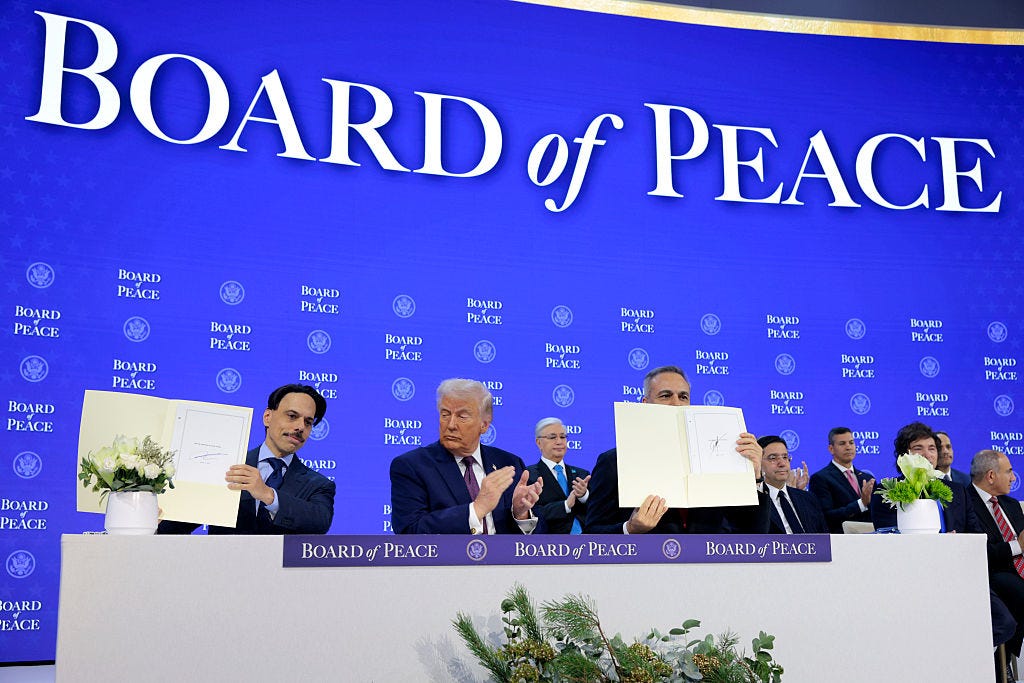
A reporter pressed Trump aboard Air Force One about the eye-popping membership fee for permanent seats on the Board of Peace, originally pitched as a post-ceasefire reconstruction effort for Gaza. “Is that money supposed to be for Gaza?” the reporter asked. Trump’s answer went everywhere except there.
“Some of the countries have already put up much more than that,” Trump said, repeating the claim twice, as if volume could substitute for clarity. When asked again what the money would fund, Trump waved it off with a platitude: peace, he said, is priceless—even if the invoice says otherwise.
“That’s a lot of money, but it’s nothing compared to the value of peace,” Trump declared, neatly sidestepping any explanation of where the cash goes, who controls it, or what guardrails—if any—exist. Notably absent was any mention of oversight, governance, or accountability.
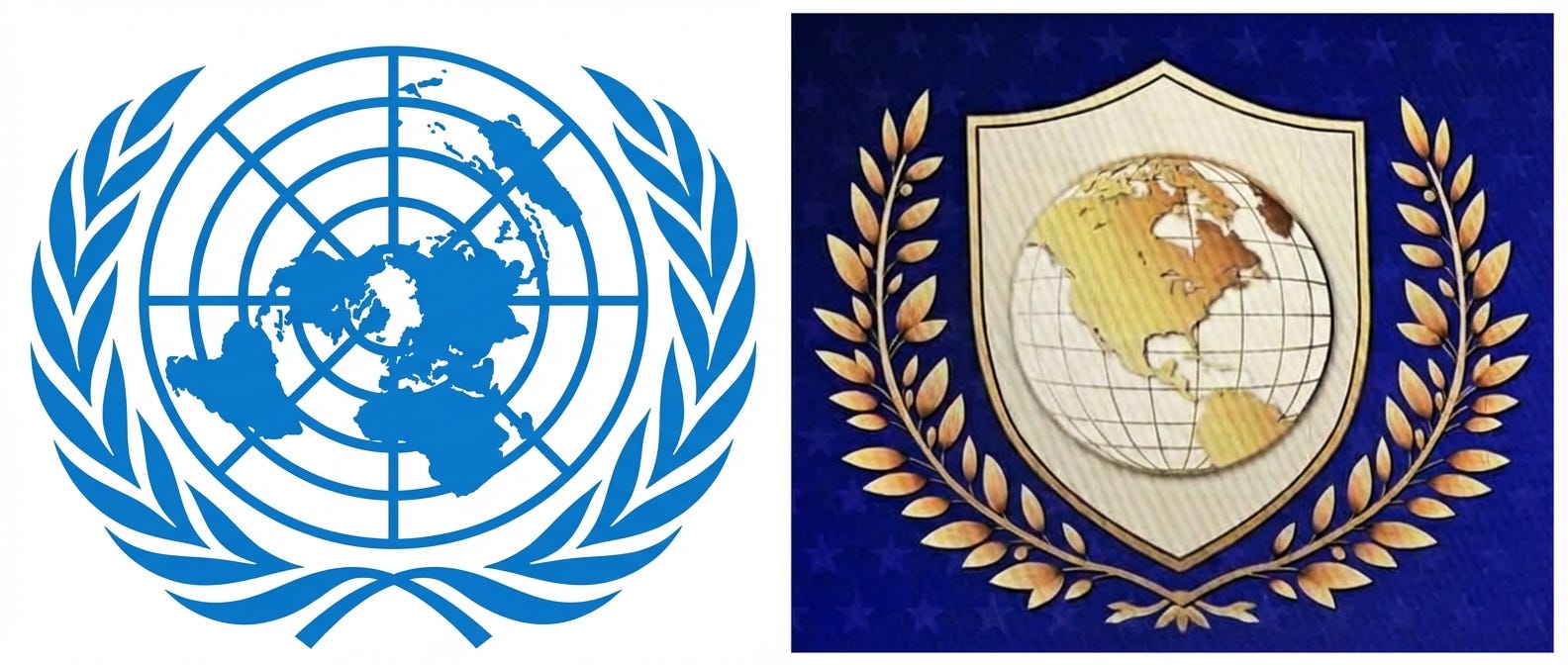
The opacity is especially rich given Trump’s track record and the expanding scope of the Board of Peace, which now looks less like a Gaza-specific effort and more like a Trump-run alternative to the United Nations—complete with buy-in fees and selective invitations. It also comes as Trump’s inner circle, including his son-in-law Jared Kushner, has floated glossy redevelopment visions that critics say exist mostly on PowerPoint slides.
If there’s a detailed use-of-funds document, a public ledger, or even a vague budget outline, Trump didn’t mention it. What he offered instead was a familiar pitch: trust me, it’s worth it.
Source: The New Republic
Editor: A billion dollars for “peace” with no receipts, no structure, and no answers sounds less like diplomacy and more like a cover charge for access—payable up front, questions discouraged.
Minnesota Shuts Down in Defiance as ICE Protests Turn into a Full-Scale Blackout
Minnesota is deliberately grinding to a halt to send a message to ICE—and it’s happening in brutal subzero cold.
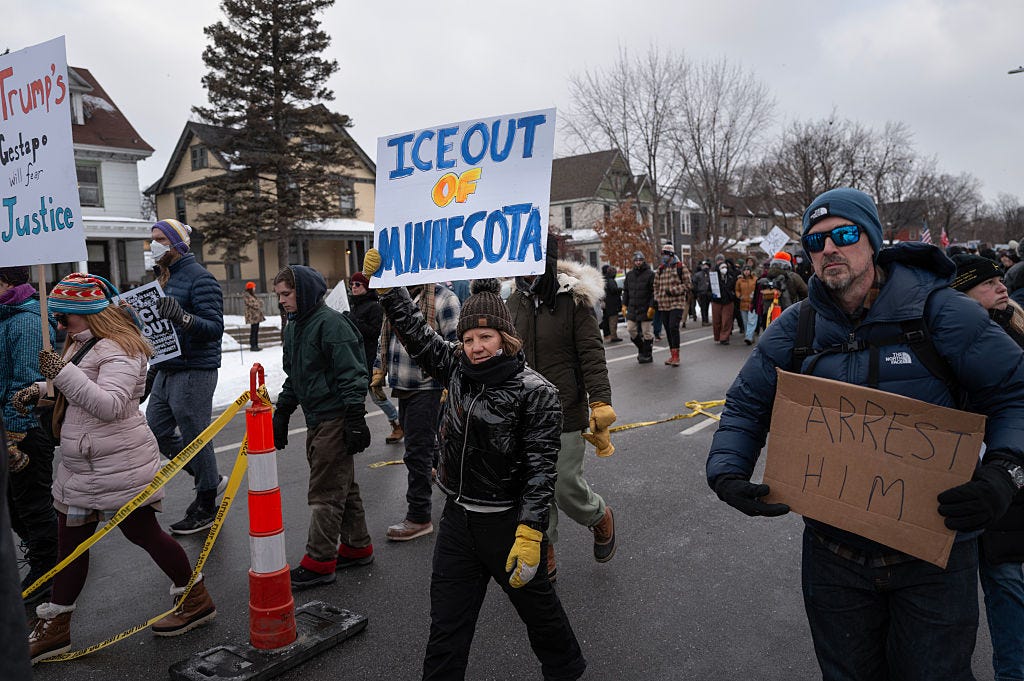
Community leaders, faith groups, and labor unions launched a statewide “no work, no school, no shopping” economic blackout Friday, calling it the “Day of Truth & Freedom.” The protest follows the killing of Renee Good, an unarmed woman shot by a federal immigration officer earlier this month in Minneapolis, and reflects growing fury over the Trump administration’s immigration crackdown.
The demands are blunt: ICE out of Minnesota, legal accountability for the officer who killed Good, an end to expanded federal funding for ICE, and a full investigation into alleged human rights and constitutional violations. Dozens of local businesses closed in solidarity, while the Minneapolis City Council formally endorsed both the day of action and the general strike.
The protest culminates with a downtown Minneapolis march at 2 p.m.—despite life-threatening temperatures. “We are going to be having dangerously cold weather on Friday—-10F with wind chills of up to -20F,” said Chelsie Glaubitz Gabiou of the Minnesota AFL-CIO. “We are built for the cold, and we are going to show up.”
More than 1,000 affiliated unions have backed the action, including Communications Workers of America locals. “The government in the state of Minnesota has not offered any path towards stopping these attacks, this violence,” said Kieran Knutson of CWA Local 7250. Childcare centers, retail shops, and service providers also shut down after families—many of them immigrants—overwhelmingly supported the move.
The federal response has been escalation, not restraint. The Department of Homeland Security claims 3,000 arrests in six weeks, while the Trump administration dispatched 3,000 immigration officers to the state and put 1,500 U.S. Army soldiers on standby (elite Arctic paratroopers from Alaska). DHS dismissed the blackout as protecting “criminals,” even as nationwide data shows immigrants without criminal records remain the largest group in ICE detention.
Source: The Guardian
Editor: When people are willing to freeze, close their businesses, and risk retaliation just to be heard, it’s not “activism theater”—it’s a sign the system is breaking. Washington keeps calling this enforcement. Minnesota is calling it enough.
Trump Makes It Official: The U.S. Is Out of the World Health Organization
The Trump administration has officially completed America’s exit from the World Health Organization—cutting funding, staff, and ties in a move critics warn will leave the U.S. more isolated and less prepared for the next pandemic.
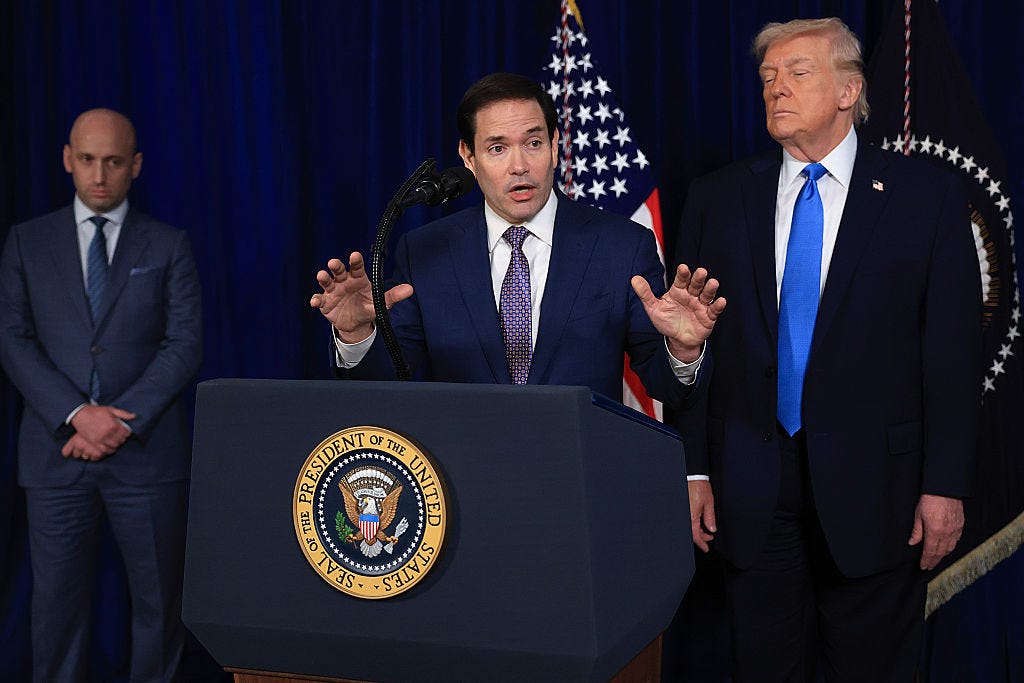
One year after triggering the withdrawal process, the administration confirmed Thursday that the United States is done with the WHO, the U.N.’s global health body led by Tedros Adhanom Ghebreyesus. Secretary of State Marco Rubio and Health and Human Services Secretary Robert F. Kennedy Jr. accused the organization of abandoning its mission and acting “against the interests of the United States.”
“Like many international organizations, the WHO abandoned its core mission and acted repeatedly against the interests of the United States,” Rubio and Kennedy said in a joint statement, claiming the group pursued a “politicized, bureaucratic agenda driven by nations hostile to American interests.”
The administration also complained that the WHO refused to return the American flag that once flew outside its Geneva headquarters, blaming unresolved financial obligations. Rubio and Kennedy declined to say whether the U.S. actually paid what it owed, instead insisting that “the WHO tarnished and trashed everything that America has done for it.”
Trump first ordered the withdrawal on day one of his second term, reviving a fight he began during COVID-19. He has argued the WHO enabled China’s early pandemic cover-up and demanded “unfairly onerous payments” from the U.S. President Joe Biden reversed that decision in 2021—but Trump reversed Biden in 2025.
Health experts are alarmed. Ronald Nahass of the Infectious Diseases Society of America called the move “scientifically reckless,” warning that “global cooperation is not a luxury; it is a biological necessity.” Meanwhile, U.N. Ambassador Mike Waltz cheered the break, saying, “We stand proud in our commitment to American sovereignty.”
Source: UPI
Editor: America just walked away from the world’s disease early-warning system because it hurt our feelings and wanted its flag back. Sovereignty is great—right up until the next virus needs a passport.
Trump really couldn’t have handled COVID-19 any worse. What is Act II going to look like? How many will die this time?