


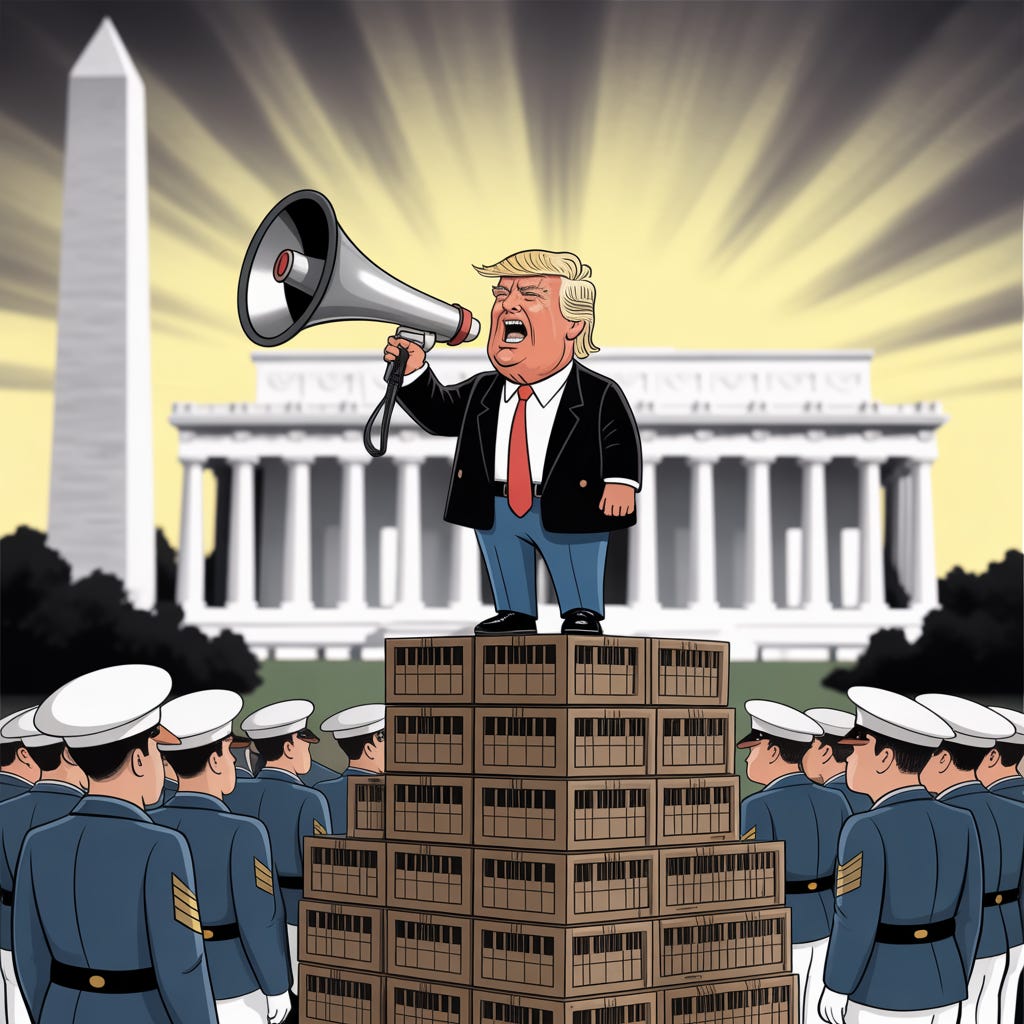
Trump is sending 800 National Guard troops into Washington, D.C., while asserting control over the city’s policing and citing crime and homelessness as justification. Officials say only 100 to 200 soldiers will be active at any time and won’t directly police civilians. Critics warn this looks less like safety and more like a test of how far a president can push domestic military power in peacetime.
President Trump is rolling armored symbolism down Pennsylvania Avenue. He announced a deployment of 800 National Guard troops to Washington, D.C., arguing the city has been “overtaken by violent gangs and bloodthirsty criminals.” He paired the move with an effective federal takeover of D.C. policing, slotting the department under his administration’s control. It is the boldest expansion yet of his willingness to use military muscle on U.S. soil for domestic issues that are normally handled by, you know, civilian government.
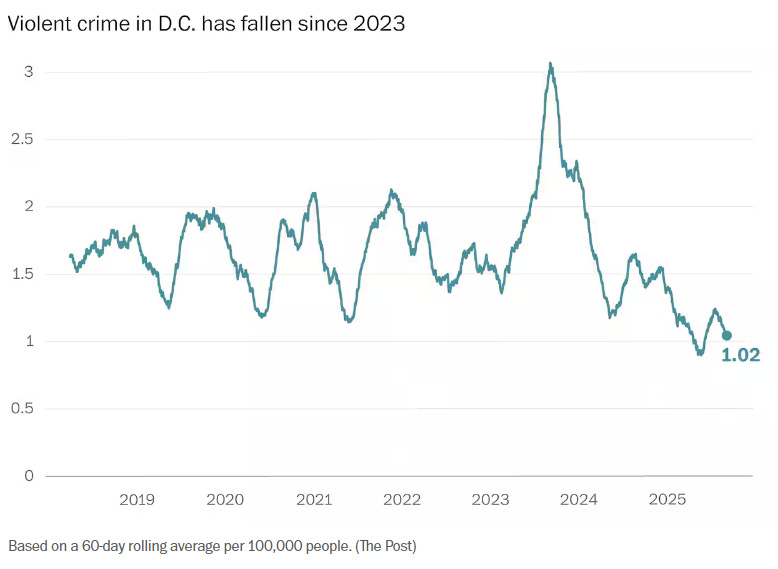
The Army says only 100 to 200 Guard members will be on duty at any time, providing deterrence, logistics, and admin support. Army spokesman Dave Butler adds they won’t directly interact with civilians. D.C. officials note violent crime last year hit a 30-year low. If this is an emergency, it is the quietest one in recent memory.
The larger project is not quiet at all. This deployment sits alongside a growing list of at-home military experiments: Active-duty troops and Guard units at the southern border, detainees moved by U.S. Air Force planes, and military bases repurposed as migrant detention hubs from Fort Bliss to Guantanamo. In Los Angeles, what began as “protect federal buildings” morphed into escorting ICE agents during arrests.
The clock was supposed to run 60 days. Then it didn’t. The mission got extended and only a few hundred of the original nearly 5,000 remain, concentrated around federal sites. That is how “temporary” becomes policy.
Even inside the national security world, the eyebrow raise is visible from space.
“The most benign interpretation is that this is an attempt to gain a public-relations victory by claiming credit for the already historically low crime rates in D.C. The worst-case interpretation is that it is a test run for more legally dubious uses of military forces in other American cities.”
That is Carrie Lee, a senior fellow at the German Marshall Fund and former U.S. Army War College professor, saying the quiet part out loud.
Legally, there are guardrails. The Posse Comitatus Act has constrained the military’s role in domestic law enforcement for nearly 150 years. The Insurrection Act exists for true breakdowns of order, as in 1968 after Dr. King’s assassination, when President Johnson sent National Guard and active-duty troops to restore calm.
D.C., however, is peculiar.
The president directly commands the D.C. National Guard without the federalization steps required in states. As Georgetown law professor Stephen Vladeck puts it, the real risk is normalization.
If you keep parking troops in the capital for disputed “emergencies,” the public stops blinking.
The legal front is already opening. The same day Trump announced the D.C. deployment, a federal trial began in San Francisco over California’s challenge to his attempt to federalize that state’s Guard units two months earlier.
If you were looking for a clean test case on presidential power over domestic military tools, congratulations, you are living in it.
Inside the administration, the appetite has been there for a while. Former chief of staff John Kelly reportedly spent a good chunk of the first term waving off Trump’s repeated desire to use the military domestically. Back in office, Trump’s focus on D.C. crime and homelessness hardened, aided by motorcade views of encampments and a July 4 crime news cycle. Policy by windshield tour is not a great way to write doctrine.
Experts are nervous about the “how,” not just the “what.” Duke’s Peter Feaver nails the operational trap: Success or failure depends on implementation.
The more this looks like traditional police work, the more it becomes a legal and practical mess for the military. That is how you get mission creep, legal gray zones, and bad headlines when the inevitable misstep happens in front of a smartphone camera.
Bottom line: If this is about optics, it is an expensive photo op with uniforms. If it is about policy, it is a stress test of American norms on the use of troops at home. Either way, the precedent does not stay in D.C.
What you normalize in the capital becomes a playbook for cities everywhere.
Source: WSJ
“Mission creep” IS the mission here. Bank on it.