


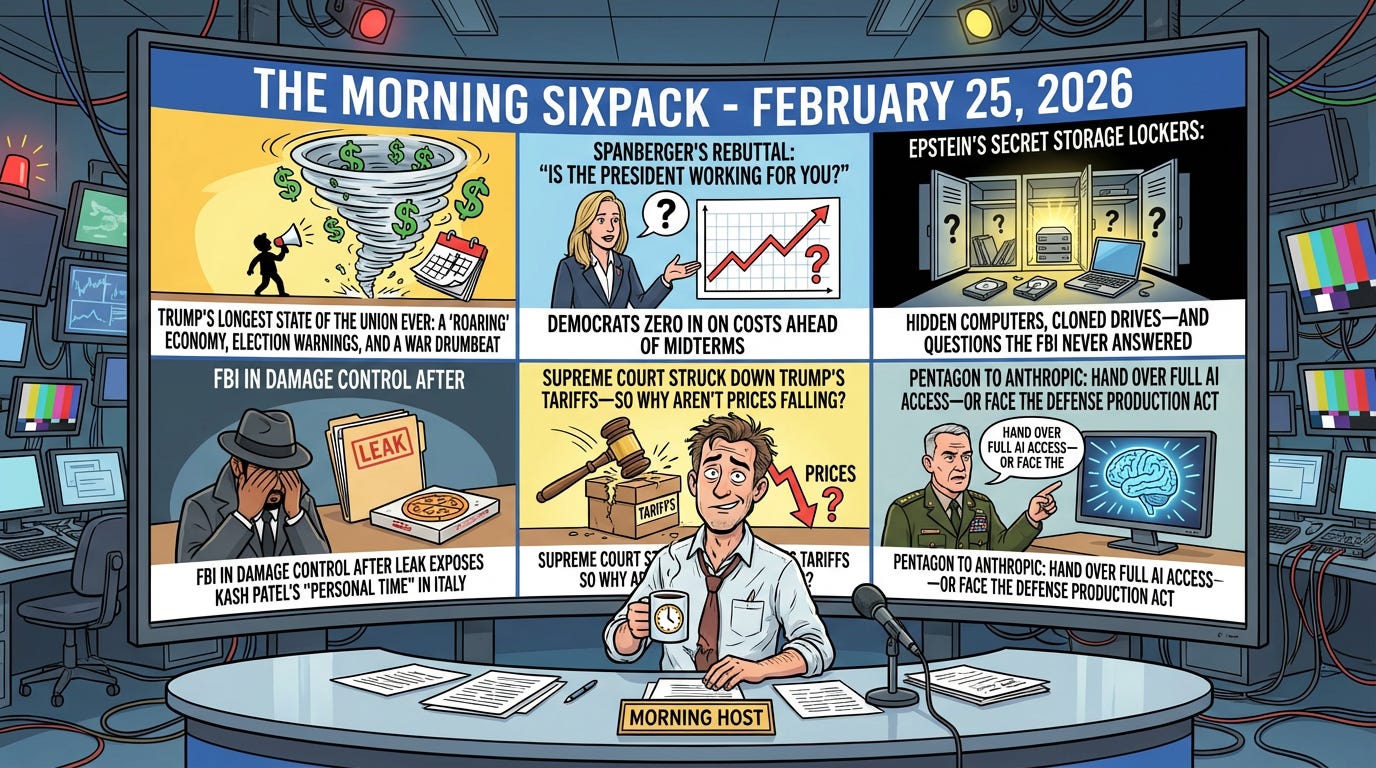
Trump’s Longest State of the Union Ever: A “Roaring” Economy, Election Warnings, and a War Drumbeat
President Donald Trump declared the economy “roaring like never before”—even as most Americans say they’re still struggling.
In a marathon State of the Union that stretched nearly one hour and 48 minutes, Trump painted a picture of prosperity—lower gas prices, cheaper prescriptions, rising markets—while polling shows just 39% approve of his handling of the economy. “The roaring economy is roaring like never before,” he said, insisting “Millions and millions of Americans are all gaining.” The problem? Voters don’t seem to feel it. With midterms looming, Republicans want the spotlight on growth. The public mood suggests something closer to anxiety.
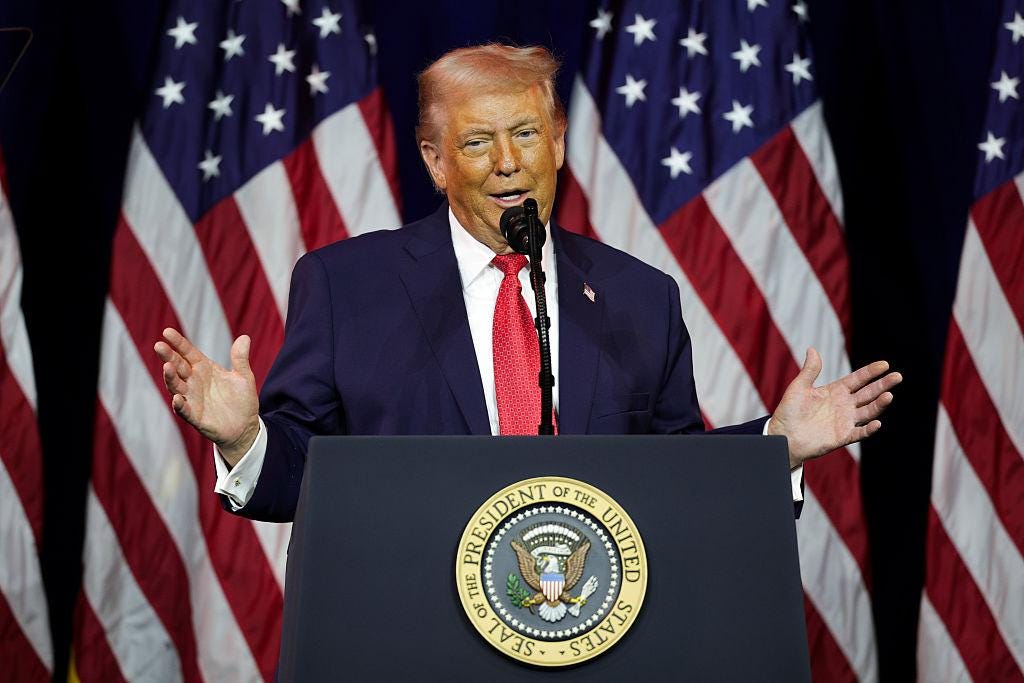
Trump also wrapped himself in red, white, and blue moments—honoring the U.S. men’s Olympic hockey team and awarding the Medal of Honor to a 99-year-old World War II Navy pilot. It was classic Trump optics: emotional, patriotic, built for social media replay. Yet the unity didn’t last. Within minutes he pivoted to torching Democrats, blaming them for health care costs, Social Security concerns and the broader affordability crunch. “You caused that problem,” he said, glaring across the aisle. Later: “These people are crazy, I’m telling you, they’re crazy. Democrats are destroying this country.”
When it came to the Supreme Court, Trump dialed back the heat—slightly. After blasting the justices last week over a ruling striking down his tariff policy, he called the decision merely “unfortunate.” He repeated his claim that tariffs are paid by foreign countries and could one day replace income taxes. “As time goes by, I believe the tariffs paid by foreign countries will, like in the past, substantially replace the modern day system of income tax, taking a great burden off the people that I love,” he said. That would require more than optimism—the income tax is grounded in the 16th Amendment and controlled by Congress.
On elections, Trump revived his long-running claims of fraud—“Cheating is rampant in our elections”—despite repeated court rejections of those allegations. He urged Congress to require voter photo ID and hinted at executive action. The timing—months before voters decide control of Congress—was no accident. He also hammered immigration but skipped mention of controversial enforcement tactics and the deaths of two U.S. citizens in Minneapolis, an omission Democrats like Rashida Tlaib were quick to spotlight.
Then came the foreign policy edge. Trump said he prefers diplomacy with Iran but warned, “I will never allow the world’s number one sponsor of terror—which they are, by far—to have a nuclear weapon.” With U.S. forces already heavily positioned in the Middle East, the rhetoric felt less theoretical and more preparatory. Add it all up and the night followed a familiar arc: optimism, grievance, defiance—and endurance. He even set a record for the longest State of the Union ever. Of course he did.
Source: AP News
Editor: A “roaring” economy that 60% of the country doesn’t feel, tariffs that rewrite the Constitution by vibes alone, and election fraud claims on repeat. If this was a campaign speech, it worked. If it was meant to calm a divided country, we’re going to need a longer clock.
Spanberger’s Rebuttal: “Is the President Working for You?” Democrats Zero In on Costs Ahead of Midterms
Abigail Spanberger used her State of the Union rebuttal to puncture President Trump’s “golden age” claim with one pointed question: Is your life actually better?
Speaking from Colonial Williamsburg, Spanberger framed her 13-minute response around affordability—arguing that more than a year into Donald Trump’s second term, families are still squeezed by high costs. “Democrats across the country are laser-focused on affordability,” she said, adding that Americans “deserve to know that their leaders are focused on addressing the problems that keep them up at night.” It’s a message Democrats plan to export nationwide ahead of November’s midterms.
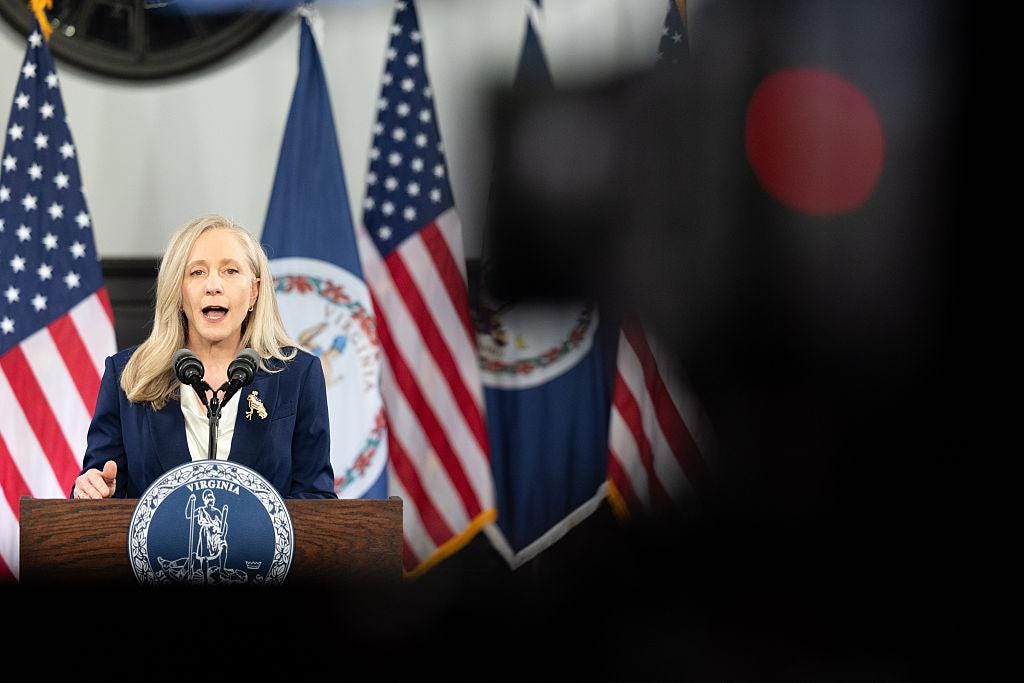
Spanberger structured her speech around a trio of blunt questions: “Is the president working to make life more affordable for you and your family? Is the president working to keep Americans safe, both at home and abroad? Is the president working for you?” Her answer: “We all know the answer is no.” She accused Trump of sending “poorly trained federal agents into our cities” and trying to “pit us against one another” while “enriching himself, his family, his friends.”
The contrast with Trump’s record-setting, 1-hour-and-48-minute address was stark. He declared, “This is the golden age of America,” and repeatedly baited Democrats in the chamber, calling them “crazy.” Outside, counterprogramming was already underway. At a “People’s State of the Union,” Chris Van Hollen warned, “We know our state of the union. We know it is under attack.”
Democrats see momentum. Spanberger’s double-digit win in Virginia last fall was followed by a special election upset in Texas. In a Spanish-language response, Alex Padilla urged voters to “prepare, starting today, for your voice to reverberate this November,” adding: “If you fall seven times, get up eight. I am still here. Standing. Still fighting.” The through line is clear—tie Republicans to Trump, hammer tariffs and prices, and make November a referendum on kitchen-table economics.
Source: AP News
Editor: When one side says “golden age” and the other asks if you can afford groceries, that’s not just messaging—that’s a midterm blueprint. Thirteen minutes versus nearly two hours, but Spanberger understood the assignment: keep it simple, keep it about money, and keep asking the question Republicans don’t want on a yard sign.
Epstein’s Secret Storage Lockers: Hidden Computers, Cloned Drives—and Questions the FBI Never Answered
Jeffrey Epstein quietly stashed computers and photographs in secret storage units across the country—units federal authorities may never have searched.
New documents reveal Epstein paid private detectives to remove equipment from his Florida mansion before a police raid in the mid-2000s, then squirrel it away in lock-ups from Palm Beach to Manhattan. Credit card receipts show he rented at least six storage units, with payments stretching from 2003 until 2019—the year he died. Some allegedly held computers shipped from Little Saint James, his private island in the Caribbean.
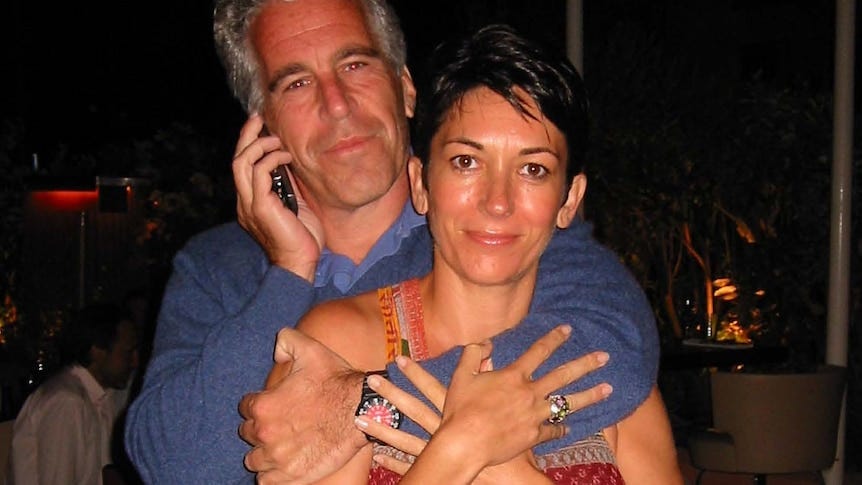
Emails reviewed by The Telegraph show a private investigator telling Epstein in 2009: “Over the weekend I learned that plaintiff’s counsel are looking to get from me the computers and paperwork I took from Jeff’s house prior to the Search Warrant. I have them locked in storage and would like to know what to do with them.” The message added that hard drives were to be copied—or “cloned.” What became of those copies is unclear. The FBI declined to say whether any of the external units were ever raided.
The revelations land amid renewed scrutiny of Epstein’s powerful circle, including Andrew Mountbatten-Windsor and Peter Mandelson. Thousands of files released by the Justice Department in December triggered Mandelson’s resignation from the Labour Party and the House of Lords, and led to Mountbatten-Windsor’s arrest on suspicion of misconduct in public office. Officials have long denied shielding elites, and both the DOJ and FBI have said there is “no credible evidence” Epstein blackmailed prominent individuals or maintained a “client list.”
Still, questions linger. Authorities seized dozens of devices from Epstein’s homes in 2019, yet warrants make no mention of outside storage units. Internal FBI memos say they found no videos depicting abuse by anyone other than Epstein and Ghislaine Maxwell. Yet victims have long suspected hidden cameras were used for blackmail. The existence of lock-ups packed with computers, CDs and “excess equipment” only deepens the mystery—especially when some units were within minutes of his Palm Beach estate.
Epstein even discussed paying to store guns near his New Mexico ranch. Meanwhile, Florida storage companies say they would only disclose information if subpoenaed. If rent lapsed for 60 days, contents could legally be auctioned. Whether any evidence was destroyed, relocated, or remains sitting behind a red roller shutter somewhere is unknown. His brother says he had no knowledge of the units.
Source: The Telegraph
Editor: Six storage units (at least), cloned hard drives, and investigators who may never have checked the lockers? If there’s nothing there, fine—open the doors. Until then, every unanswered question fuels the vacuum. And vacuums in cases like this don’t stay empty for long.
FBI in Damage Control After Leak Exposes Kash Patel’s ‘Personal Time’ in Italy
An internal schedule leak shows Kash Patel had hours of “personal time/cultural activities” during a taxpayer-funded trip—prompting the FBI to call the disclosure a “criminal act.”
The trip to Italy, which ended with Patel chugging beer alongside the U.S. men’s hockey team at the Winter Olympics, was billed as official business focused on “strengthening joint counterterrorism coordination.” But after The New York Times obtained Patel’s internal itinerary, it revealed long stretches reserved for leisure—raising fresh questions about how the FBI director is spending public money.
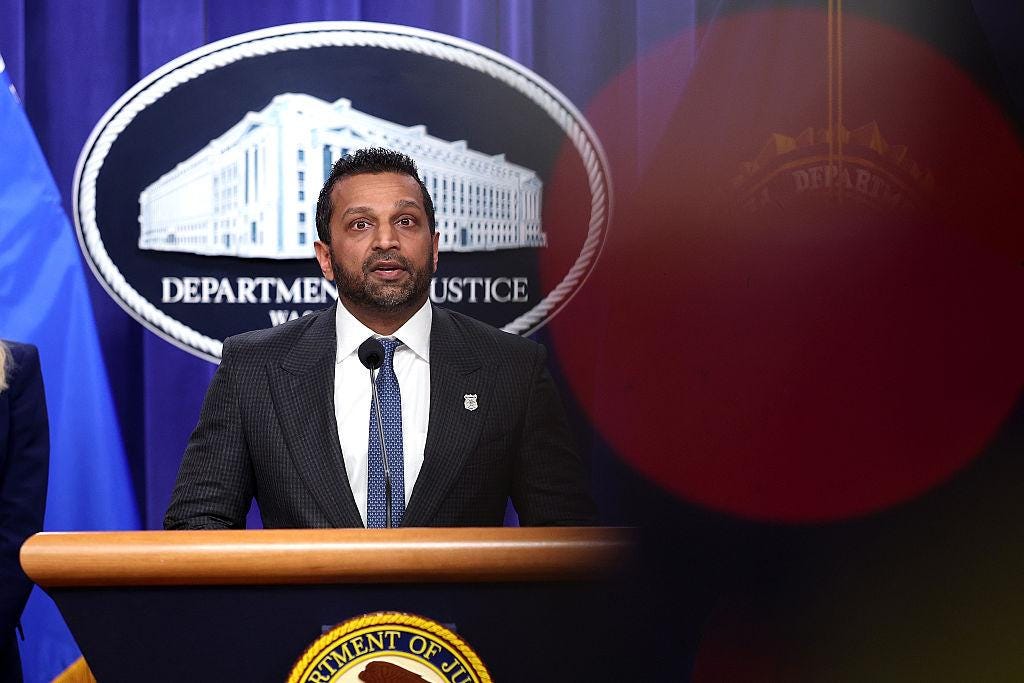
According to the report, one day’s agenda included a 20-minute briefing with Olympic security officials, a short tour of a joint security center, a private lunch with an unnamed guest—and then four and a half hours blocked off as “personal time/cultural activities,” followed by a private dinner with unspecified companions. The FBI did not dispute the authenticity of the schedule but blasted its release. “The leaking of his minute-by-minute schedule is a criminal act that jeopardizes security and will not be taken lightly,” said Ben Williamson, assistant director for public affairs.
Patel has already faced scrutiny over his use of government aircraft, including allegations that flights on FBI jets delayed responses to a mass shooting at Brown University and that he used a bureau jet to attend his girlfriend’s country music performance in Nashville. In a letter to the Justice Department, Richard Durbin wrote that Patel has “seemingly engaged in what amounts to irresponsible joyriding on DOJ and FBI-operated aircraft at the expense of the American taxpayer.”
The broader tension isn’t just about leisure hours in Milan. It’s about optics. The FBI director attending the Olympics on official business while blocking off large chunks of downtime—and then threatening criminal consequences over a leak—creates a narrative that’s hard to spin. When you’re running the nation’s top law enforcement agency, even “cultural activities” come with a spotlight.
Source: Raw Story
Editor: Four and a half hours of “personal time” sandwiched between a 20-minute briefing and a private dinner? If that’s counterterrorism strategy, someone should update the manual. And calling the leak the crime—while taxpayers foot the travel bill—isn’t exactly the transparency tour either.
Supreme Court Struck Down Trump’s Tariffs—So Why Aren’t Prices Falling?
Even after the Supreme Court clipped one of President Trump’s tariff powers, shoppers shouldn’t expect cheaper groceries or mall deals anytime soon.
Last week, the Supreme Court ruled that Donald Trump couldn’t use the 1977 International Emergency Economic Powers Act to impose sweeping tariffs. Within hours, Trump pivoted—announcing he’d reimpose import taxes under a different statute. Bottom line: the legal pathway may shift, but the tariff policy isn’t going anywhere.
Trump now says he’s invoking Section 122 of the Trade Act of 1974 to set global tariffs at 15%, calling the move “fully allowed, and legally tested.” Economists aren’t convinced this will translate into relief at checkout. Goldman Sachs analysts say the “bulk” of tariff costs passed on to consumers has already happened. The Peterson Institute echoes that view: overall tariff levels will likely remain similar to pre-ruling levels—meaning consumers will keep feeling the squeeze.
And even if some tariffs eventually ease, there’s another force at work: price stickiness. Businesses don’t instantly adjust prices every time costs fluctuate. When tariffs drove costs up, many companies raised prices. Now that consumers have shown they’ll pay those higher prices, firms have little incentive to reverse course. As Harvard Business School professor emeritus Robert Dolan put it, tariffs became “a broad set of experiments” revealing whether previous prices were too low.
There’s also timing. Some companies stockpiled goods before tariffs hit and are still adjusting what they pass on to customers. Rolling back prices while still absorbing higher costs? Unlikely. Add in the fact that Trump can also lean on other trade laws—like Sections 301 and 232—to keep tariffs alive, and the bigger picture comes into focus: the courtroom drama doesn’t equal a clearance sale.
Source: NPR
Editor: A court ruling made headlines. Your grocery bill didn’t notice. When Washington plays tariff ping-pong, it’s businesses that set the final price—and they rarely volunteer to make less money once you’ve proven you’ll pay more.
Pentagon to Anthropic: Hand Over Full AI Access—or Face the Defense Production Act
The Pentagon has given Anthropic days to grant full military control of its Claude AI model—or risk being forced to comply.
In a tense Tuesday meeting, Defense Secretary Pete Hegseth reportedly told CEO Dario Amodei to deliver a signed agreement by 5 p.m. Friday granting the Defense Department unrestricted access to Claude. Officials are even weighing whether to invoke the Defense Production Act to compel compliance—a rare and aggressive move that would put Washington squarely in charge.
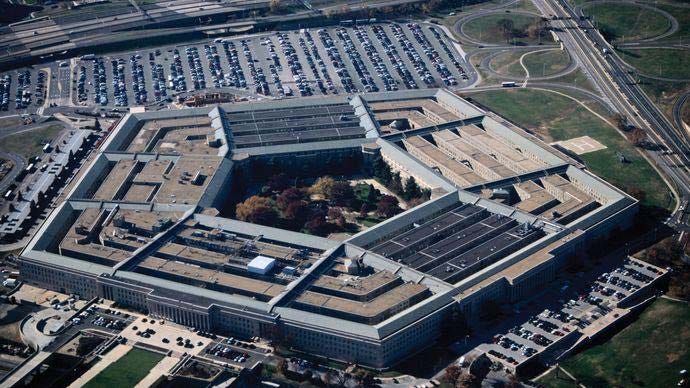
At the heart of the standoff: guardrails. Anthropic has asked the Pentagon to agree that Claude won’t be used for mass surveillance of Americans or for final autonomous targeting decisions in combat without human involvement. Defense officials insist those fears are misplaced, saying the military only issues lawful orders and isn’t seeking to deploy autonomous weapons. “This has nothing to do with mass surveillance and autonomous weapons being used,” a senior official said.
The Pentagon’s position is blunt. If the government buys Boeing aircraft, it decides how they’re flown. The same logic, Hegseth argued, should apply to AI. Anthropic, however, maintains Claude isn’t immune from hallucinations and shouldn’t be trusted with life-or-death decisions without a human in the loop. The friction exposes a bigger tension in Silicon Valley’s national security pivot—how much control companies retain once their technology enters classified networks.
The stakes are significant. Anthropic holds a $200 million Pentagon contract to advance AI for national security and was the first tech firm cleared to operate on classified military systems. But officials are reportedly considering labeling it a “supply chain risk” if trust erodes further—effectively pushing it out of government work. Meanwhile, competitors like xAI’s Grok are said to be more amenable to classified use.
Anthropic says it’s negotiating in good faith. The Pentagon says time’s up soon. The question now isn’t just about one AI model—it’s about who ultimately controls the most powerful tools of the AI age: the companies that build them, or the government that funds and deploys them.
Source: CBS News
Editor: When the Defense Department starts floating the Defense Production Act over an AI contract dispute, that’s not a casual nudge—that’s a shot across the bow. Silicon Valley wants guardrails. The Pentagon wants the keys. Welcome to the next front in the AI arms race.