


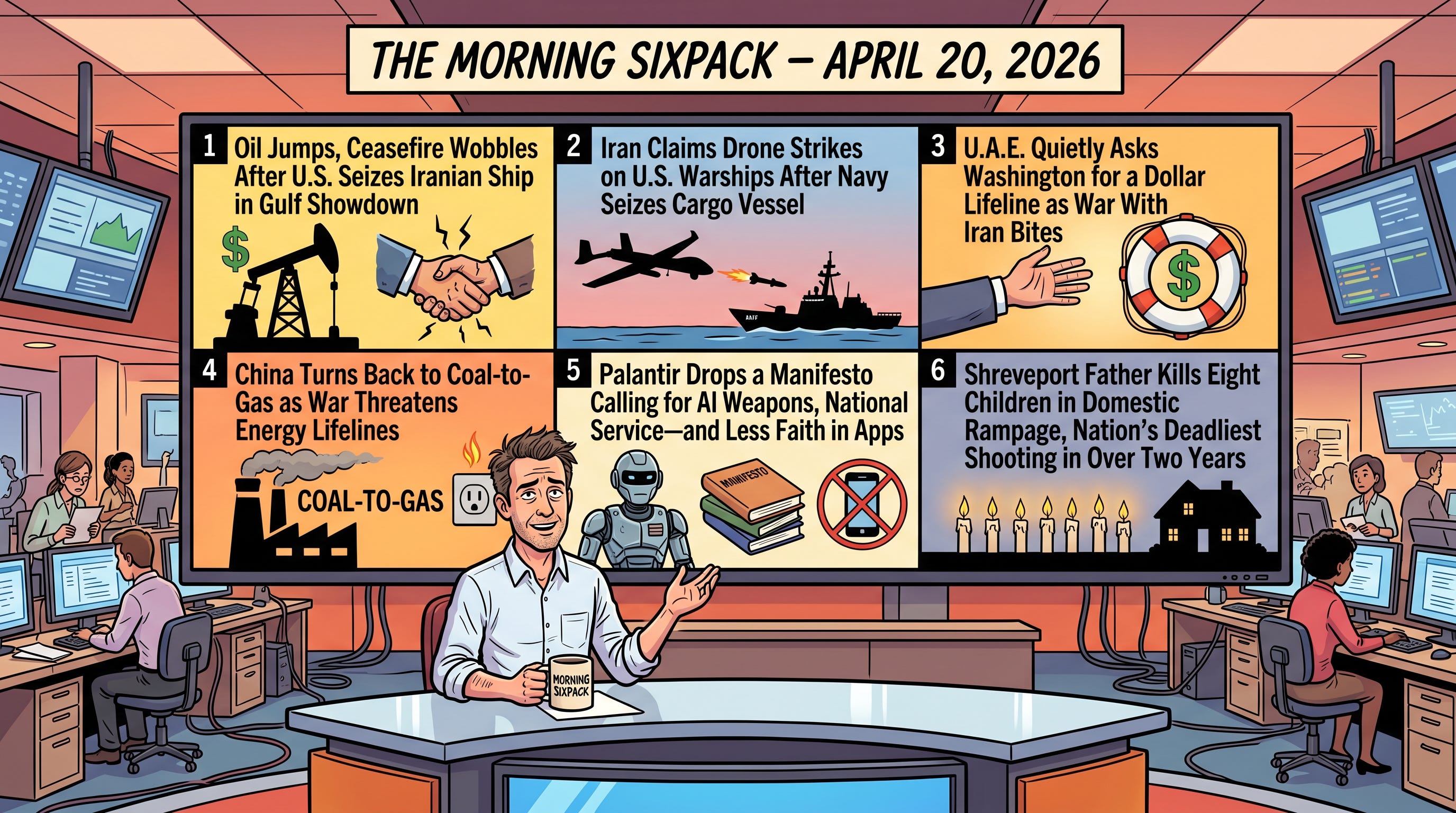
Oil Jumps, Ceasefire Wobbles After U.S. Seizes Iranian Ship in Gulf Showdown
The U.S. military seized an Iranian cargo vessel in the Gulf of Oman, sending oil prices up 5% and throwing already shaky Iran talks into fresh doubt.
With a ceasefire set to expire Wednesday, Washington just turned up the heat at sea—and Tehran is openly threatening payback.
The boarding of the Iranian-flagged ship Touska marked the first seizure since President Donald Trump’s naval blockade kicked in April 13. According to U.S. Central Command, Marines fast-rope boarded the vessel after hours of warnings and disabled it with 5-inch gunfire when it refused to turn back. Twenty-five other vessels have already been forced to change course. Oil traders noticed. So did Tehran.
Iran’s military command called the seizure “piracy.” Foreign Ministry spokesman Esmaeil Baqaei said Tehran has not “made any decisions regarding the next round of negotiations,” casting doubt on whether Iranian officials will show up in Pakistan for talks the White House says are imminent. Vice President JD Vance, envoy Steve Witkoff, and nepo baby Jared Kushner are reportedly en route. Confidence is not.
President Trump, meanwhile, is doing diplomacy in all caps. “We’re offering a very fair and reasonable DEAL,” he wrote on Truth Social. “If they don’t, the United States is going to knock out every single Power Plant, and every single Bridge, in Iran. NO MORE MR. NICE GUY!” That’s one way to keep negotiations warm.
The Strait of Hormuz remains a choke point—and a pressure valve. Energy Secretary Chris Wright said “it is not safe to go through the Strait of Hormuz right now,” adding, “We can open it one way or the other.” Translation: the blockade stays until a deal materializes. The question is whether Iran shows up—or shows force.
Source: Washington Post (gift)
Editor: Oil up, warships circling, and talks hanging by a thread—just another calm week in global energy markets. Buckle up. Keep reading. It gets better worse.
Iran Claims Drone Strikes on U.S. Warships After Navy Seizes Cargo Vessel
Iran says it launched drone strikes against U.S. military vessels after American forces seized an Iranian container ship, pushing the Gulf standoff closer to open conflict.
The ceasefire clock is ticking—and now both sides are trading fire instead of handshakes.
Tehran’s state-run Tasnim News Agency reported that Iranian forces “launched drone strikes toward several U.S. military vessels in the area” in retaliation for Sunday’s U.S. boarding of the 965-foot Touska. Iran’s Khatam al-Anbia Central Headquarters warned it would “soon respond to and retaliate for this act of piracy and armed aggression by the US military.”
The U.S. Navy hasn’t confirmed any drone hits. But U.S. Central Command released video showing the guided-missile destroyer USS Spruance warning the Touska to “vacate your engine room” before firing 5-inch rounds that disabled the ship. Marines from the 31st Marine Expeditionary Unit later boarded and seized the vessel. It remains in U.S. custody.
Iran claims it delayed a “decisive response” out of concern for crew members’ families aboard the ship. “Iran’s operational action was delayed in order to protect their lives and security,” the statement said. Meanwhile, Washington says 25 vessels have already been turned back under the blockade imposed April 13.
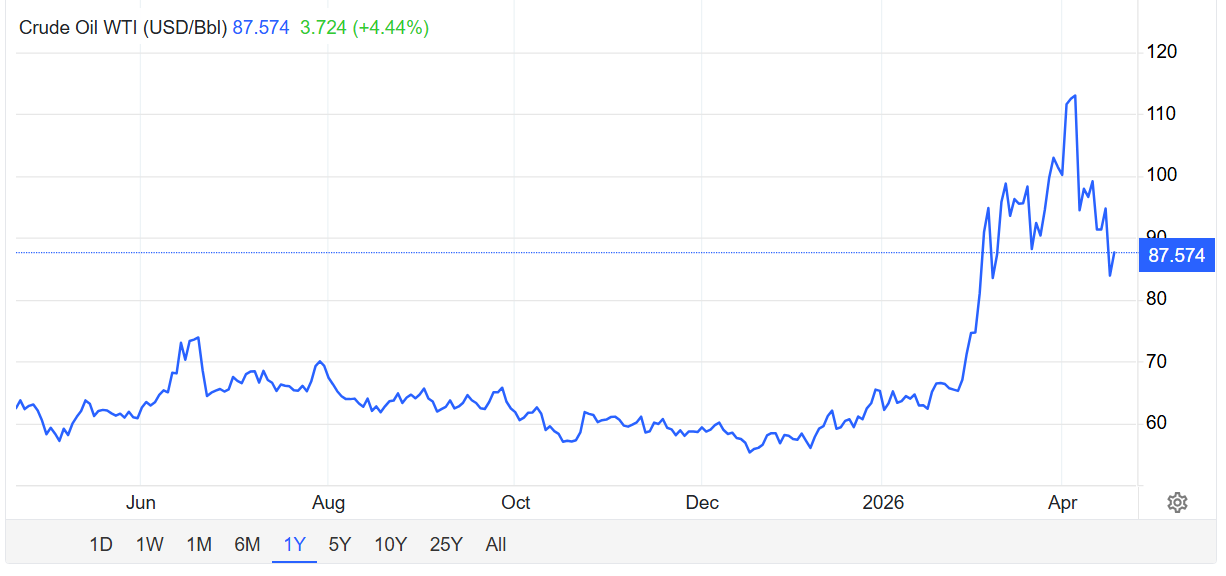
All this unfolds as peace talks are supposed to resume in Islamabad. Tehran says it hasn’t decided whether to attend. Oil prices, after swinging wildly, were holding near $95 Brent and $88 WTI in London trading. Markets hate uncertainty. The Strait of Hormuz is peak uncertainty.
Source: UPI
Editor: When “retaliation” and “negotiations” show up in the same headline, you’re not watching diplomacy—you’re watching a literal crazy man flip flop with his bipolar shriveled up “brain”.
U.A.E. Quietly Asks Washington for a Dollar Lifeline as War with Iran Bites
The United Arab Emirates has opened talks with U.S. officials about securing a wartime dollar backstop if the Iran conflict drains its reserves and rattles its financial hub status.
When one of the Gulf’s richest states starts asking about emergency swap lines, you know the war’s economic tremors are real.
According to The Wall Street Journal, U.A.E. Central Bank Governor Khaled Mohamed Balama raised the idea of a currency swap line in meetings with Treasury Secretary Scott Bessent and other U.S. officials. Emirati leaders insist this is precautionary—for now. But oil infrastructure has been hit, tanker routes through the Strait of Hormuz have been disrupted, and dollar revenues are under pressure. That’s not theoretical.
The dirham is pegged to the dollar and backed by roughly $270 billion in foreign reserves. Still, prolonged conflict risks capital flight, stock-market volatility, and a hit to Dubai’s prized status as a global financial hub. Emirati officials have reportedly warned that if dollar access tightens, they may be forced to use Chinese yuan or other currencies for oil sales. That’s more than bookkeeping—it’s a subtle nudge at dollar dominance and a tale of what’s really coming down the pike.
The Petrodollar Myth — Why War Won’t Kill the Dollar (But Might Change It Forever)

Every few years, the same headline resurfaces: “The dollar is about to collapse.”
The Federal Reserve typically reserves swap lines for major financial partners, and the U.A.E. isn’t in the usual club. Treasury has used alternative mechanisms before—Argentina secured a $20 billion swap via the Exchange Stabilization Fund last year. Whether Abu Dhabi gets similar treatment may hinge as much on geopolitics as liquidity metrics.
Here’s the irony: Emirati officials have suggested it was President Trump’s decision to attack Iran that pulled them deeper into the conflict now straining their economy. The war has nudged the U.A.E. closer to Washington even as it exposes how fragile “safe haven” status can be when missiles start flying.
Source: WSJ (gift)
Editor: Oil money buys a lot of security—but apparently not peace of mind. When the Gulf calls Washington about a credit line, Wall Street should be listening. And they are. Oh, believe it.
China Turns to Coal as War Threatens Energy Lifelines
China is reviving long-dormant coal-to-gas mega projects to cut reliance on foreign fuel as war in the Middle East rattles global energy flows.
When Beijing starts betting big on coal again, you know energy security just trumped climate optics.
A $3.7 billion coal-to-gas plant in Fuxin—shelved since 2014 over pollution and cost concerns—is back on track, with state-owned China Datang Corp aiming to bring it online in October. The project is part of a broader push that could expand China’s synthetic gas output nearly sevenfold to more than 52 billion cubic meters a year, about 12% of national supply.
The pivot comes as the Iran War (yes, it’s official if not from Congress) disrupts gas shipments from major Middle Eastern producers. Beijing is looking to cheap domestic coal to blunt exposure to volatile LNG markets, where spot prices recently spiked as high as $25 per million British thermal units before easing. Xinjiang, home to much of the new development, offers ultra-cheap coal that could translate to production costs between $5 and $9 per mmbtu.
There are 13 new coal-to-gas projects under construction or in planning stages. Chinese consultancy OilChem estimates output could hit 12 bcm by year’s end. For context: Qatar alone supplied China with 28 bcm of gas in 2025. That’s the gap Beijing is racing to close.
The technology, once criticized as too polluting and financially risky, now looks politically convenient. Energy independence plays well in Beijing’s five-year plans—especially when global supply chains start looking like tripwires.
Source: Bloomberg
Editor: Nothing says “net zero” like firing up the coal plants again. When push comes to shove, geopolitics beats green every time.
Palantir Drops a Manifesto Calling for AI Weapons, National Service, and Less Faith in Apps
Palantir published a 22-point manifesto arguing Silicon Valley must embrace hard power, build AI-driven weapons, and rethink everything from national service to Germany’s pacifism.
It reads less like a tech blog post and more like a rallying cry for a software-fueled superstate—because that’s exactly what it is.
The document, titled “The Technological Republic,” lays out a sweeping worldview from Palantir CEO Alexander C. Karp and co-author Nicholas W. Zamiska. Silicon Valley, they argue, owes a “moral debt” to America and must help defend it. “The question is not whether A.I. weapons will be built; it is who will build them and for what purpose.” In other words: Build them first—or someone else will.
The manifesto takes aim at what it calls the “tyranny of the apps,” arguing consumer tech has distracted the engineering elite from national defense. It pushes for universal national service, a reduced reliance on an all-volunteer military, and a harder-edged embrace of software as the backbone of modern deterrence. “The atomic age is ending,” the authors write. “One age of deterrence, the atomic age, is ending, and a new era of deterrence built on A.I. is set to begin.”
Read that again.
There’s more. The piece calls for undoing the “postwar neutering of Germany and Japan,” criticizes elite intolerance of religion, defends billionaire ambition—yes, Elon Musk gets a nod—and warns that soft power and rhetoric won’t cut it in the current geopolitical climate. It’s a full-spectrum argument that American dominance depends on technological supremacy backed by will.
Whether you see it as patriotic realism or techno-corporate chest-thumping likely depends on how comfortable you are with a defense contractor framing the future of civilization. But one thing’s clear: Palantir isn’t pitching ad tech anymore. It’s pitching war.
Source: Engadget
Editor: When your corporate blog starts outlining the end of the atomic age and the dawn of AI deterrence (which almost ALWAYS morphs into provocation), maybe it’s time to log off the apps and check who’s writing the next chapter.
And unsurprisingly, those writing our future history are just as bad as the men who wrote our past. Maybe worse because they are 12-year old boys in fragile men’s bodies.
Shreveport Father Kills Eight Children in Domestic Rampage, Nation’s Deadliest Shooting in Over Two Years
A 31-year-old Louisiana man shot and killed seven of his own children and a cousin Sunday morning before being killed by police, marking the deadliest mass shooting in the U.S. in more than two years.
Eight children are gone—and an entire city is left asking how this was allowed to spiral so far.
Police say Shamar Elkins first shot his wife at a home in Shreveport’s Cedar Grove neighborhood, then went to a second residence where he opened fire on eight children and another woman. The youngest victim was just 3 years old. A 13-year-old boy survived after jumping from a roof. Officers later shot and killed Elkins after he allegedly carjacked a vehicle and fled across the Red River.
Authorities described the rampage as “domestic in nature.” Mayor Tom Arceneaux called it “maybe the worst tragic situation we’ve ever had in Shreveport.” Family members told reporters Elkins had been struggling amid a separation and dark thoughts. Just days earlier, he had reposted a prayer asking for strength to “reject” depression, anger, and anxiety.
Investigators are examining whether this was a case of family annihilation—a deliberate attempt to wipe out one’s family. Elkins had prior arrests, including a 2019 incident in which he fired a handgun near a schoolyard. He previously served in the Louisiana Army National Guard but was never deployed.
There have been at least 114 mass shootings in the U.S. so far this year, according to the Gun Violence Archive. But statistics feel hollow here. This was nine people, including eight children, in one community, in one morning. The kind of horror that doesn’t stay local.
Source: CNN
Editor: We debate geopolitics and oil markets all day—but sometimes the greatest threat isn’t across an ocean. It’s behind a closed door no one opened in time.