

The U.S. struck Iranian military targets near Bandar Abbas after Tehran allegedly threatened a U.S. oil tanker in the Strait of Hormuz, triggering immediate retaliation from Iran against a U.S. air base.
Trump Escalates Iran Fight As Missiles Fly Over Hormuz
The overnight exchange marks the second direct U.S. strike on Iran this week and another step toward a wider regional war nobody seems capable of backing away from. Iran’s Revolutionary Guard called its retaliation a “serious warning” and promised harsher consequences if attacks continue.
Iranian state media reported explosions near Bandar Abbas after the U.S. operation. Tehran claimed the strikes followed an incident in which the Iranian Navy fired on a U.S.-bound oil tanker accused of trying to transit the Strait of Hormuz with its radar turned off. The tanker reportedly turned around before crossing the choke point.
Trump doubled down Wednesday on the administration’s position that Hormuz belongs to nobody. “It’s international waters. Nobody’s going to control it,” he said during a Cabinet meeting. Then came the line that probably made diplomats across the Gulf reach for antacids: “And Oman will behave just like everybody else or we’ll have to blow them up.”
The Strait of Hormuz remains the center of the standoff, with Iran restricting passage and the U.S. responding with a blockade of Iranian ports. Oil markets are watching every missile launch like it’s attached to a gas pump nozzle.
Source: UPI
Editor: World leaders keep talking about “de-escalation” while conducting foreign policy like two drunk guys arguing over a jet ski at 2 a.m.
The Trump administration is building an Ebola quarantine facility in Kenya instead of bringing exposed Americans back to the United States, marking a major break from past outbreak policy.
Trump’s Ebola Plan: Americans Stay Overseas
Washington spent years promising Americans abroad they’d be brought home in a crisis—until the crisis actually showed up.
The move comes as a fast-growing Ebola outbreak in the Democratic Republic of Congo has already produced nearly 1,000 suspected cases and more than 220 suspected deaths. The outbreak involves the Bundibugyo strain, which currently has no approved vaccine or treatment.
Administration officials say the Kenya facility will provide “high-quality care” closer to the outbreak zone while avoiding long evacuation flights back to the U.S. Secretary of State Marco Rubio made the administration’s priority crystal clear: “We cannot and will not allow any cases of Ebola to enter the United States.”
Critics say the policy effectively strands Americans overseas. Lawrence Gostin of Georgetown University called the plan “unprecedented” and warned it sends a brutal message to aid workers and diplomats risking exposure abroad. “If you deploy on a health and humanitarian mission, you can’t count on the United States to save you,” Gostin said.
The administration has already tightened travel restrictions tied to Congo, Uganda and South Sudan while ramping up airport screening at major U.S. hubs. Meanwhile, health experts warn the outbreak could spiral further as conflict and aid cuts weaken containment efforts in central Africa.
Source: The Hill
Editor: Nothing boosts morale for doctors volunteering overseas quite like learning your evacuation plan now includes “good luck in Kenya.”
The U.S. military killed two more people in a strike on a suspected drug boat in the eastern Pacific, marking the second fatal attack in just two days and pushing the reported death toll near 200.
Trump’s Drug War Turns Deadly at Sea—AGAIN!
U.S. Southern Command said the boat was operating along “known narco-trafficking routes” and tied to cartel activity. A short aerial video released by the military showed the vessel sitting in the water before exploding into flames. Officials offered little additional detail about who was aboard or whether any evidence was recovered afterward.
The operation—dubbed Joint Task Force Southern Spear—has become one of the most aggressive military anti-drug campaigns in modern U.S. history. The Trump administration argues the cartels qualify as terrorist organizations and says America is in an “armed conflict” with them. Critics say that’s a legal workaround for turning law enforcement into battlefield executions.
Editor: “Armed conflict” = War. Where is Congress?
The backlash is growing internationally. Colombian President Gustavo Petro has accused Trump of murder over earlier strikes that reportedly killed civilians, while U.N. human rights officials have condemned the attacks as unlawful “extrajudicial killings.” Ben Saul, the U.N.’s special rapporteur on counterterrorism, called Trump’s narcoterrorism war “phoney” and warned the strikes violate the right to life under international law.
Meanwhile, the administration shows no signs of slowing down. Wednesday’s strike was reportedly the 59th operation in the campaign so far, with nearly 200 people now believed dead since the effort began.
Source: UPI
Editor: We used to seize drug boats. Now we vaporize them and call it policy innovation. It’s MURDER.
Federal Reserve officials and other global central bank leaders are warning that the Iran conflict could lock in long-term inflation just as economies were hoping for relief.
Central Banks Brace for Inflation Fallout from Iran War
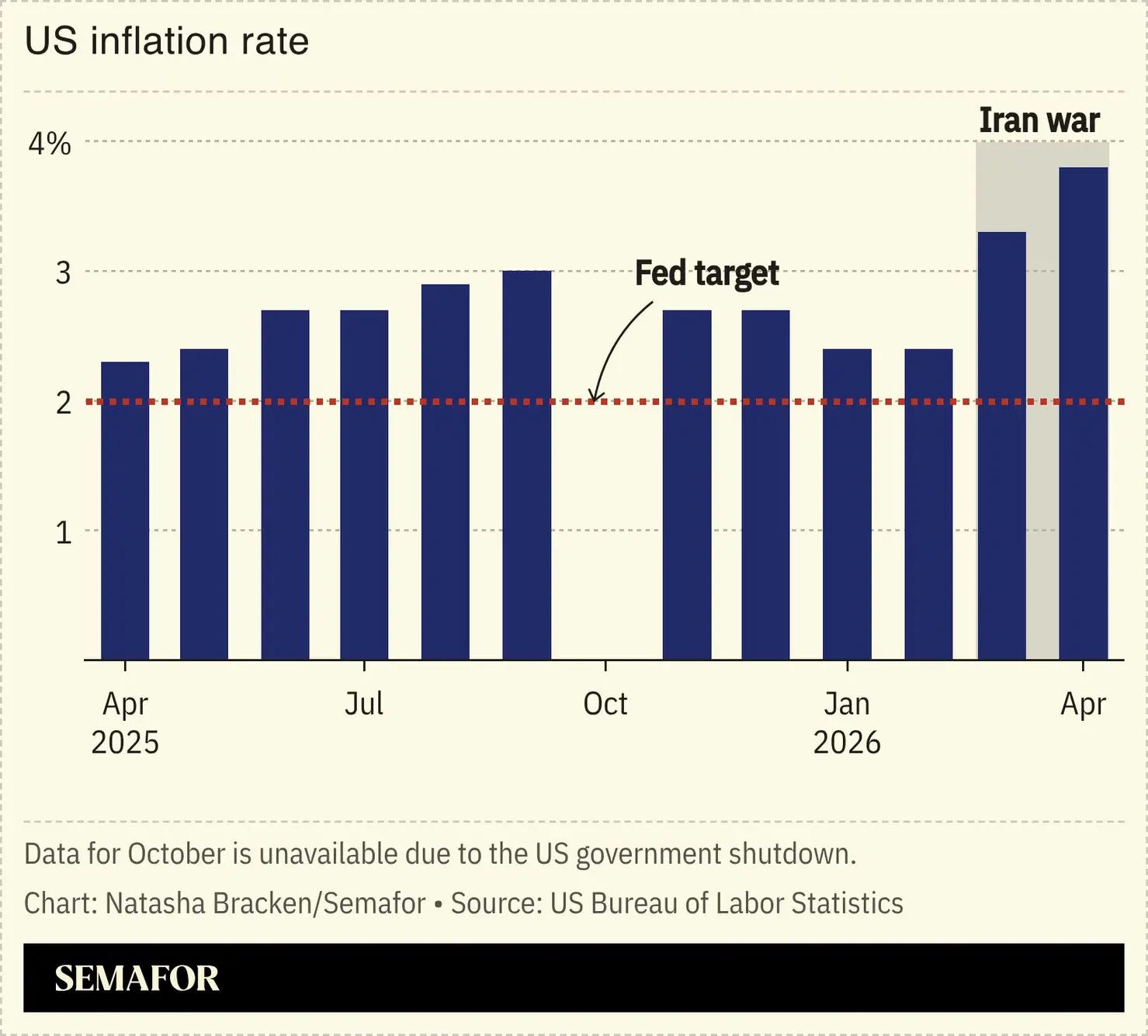
Markets are already reacting. Traders who expected rate cuts a month ago are now betting the Fed may raise interest rates again this year as oil shocks and supply disruptions ripple through the global economy. A Chicago Fed official admitted “inflation has not proved as temporary as was advertised.”
The concern isn’t just about gas prices spiking for a few weeks. Officials at the Bank of Japan and European Central Bank warned the war could permanently alter wages, consumer expectations, and pricing behavior—exactly the kind of economic spiral central bankers dread. Once businesses and workers assume inflation is here to stay, it becomes brutally difficult to stop.
The economic damage is already spreading worldwide. Asian currencies are getting hammered, African growth forecasts are weakening, and emerging markets are dealing with rising fuel costs and supply chain chaos tied to tensions around the Strait of Hormuz. Even countries far from the Middle East are getting dragged into the fallout.
Meanwhile, policymakers who spent the last year promising inflation was cooling are suddenly back in crisis mode. Consumers hoping for cheaper borrowing costs, lower grocery bills and a break from economic whiplash may want to keep waiting.
Source: Semafor
Editor: Amazing how every “temporary disruption” somehow ends with your rent, groceries, and utility bills permanently climbing into orbit.
Trump administration officials reportedly pushed the Bureau of Engraving and Printing to create a $250 bill featuring Donald Trump’s portrait—even though federal law currently bans living people from appearing on U.S. currency.
Trump Team Pushes $250 Bill Featuring His Face
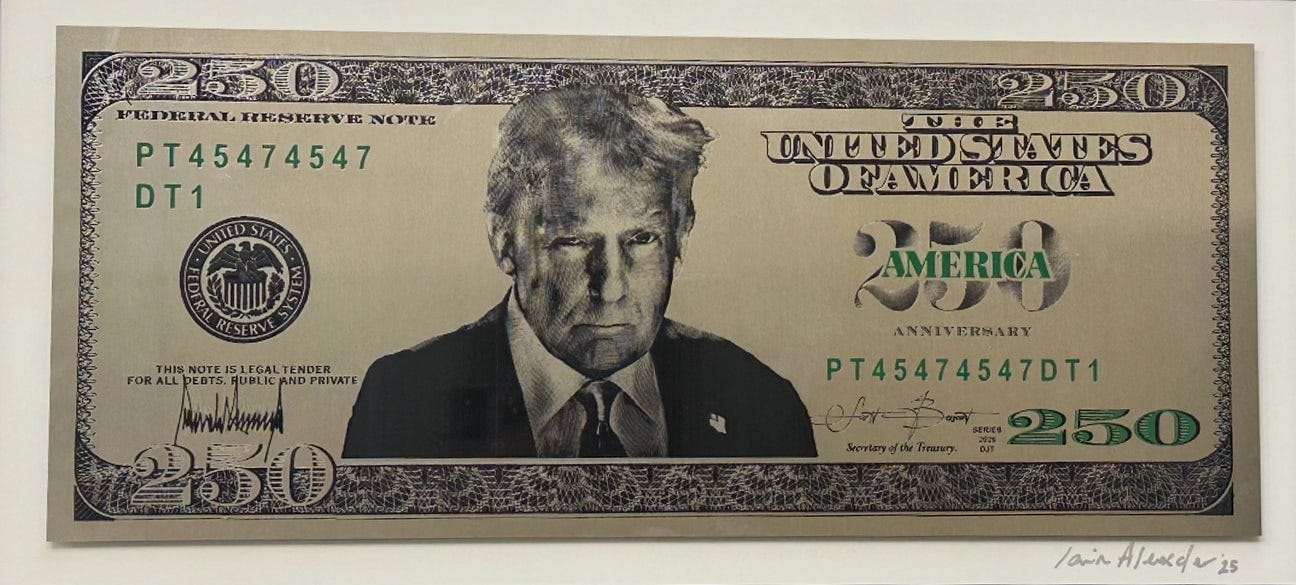
According to a Washington Post report, Treasury appointees repeatedly pressured career staff to produce prototype designs for the bill as part of the administration’s America 250 celebration plans. One mock-up reportedly showed Trump’s face front and center with his signature alongside Treasury Secretary Scott Bessent’s.
The bureau’s director, Patty Solimene, reportedly pushed back, warning officials the proposal wasn’t legal and would take years to execute even if Congress approved it. Soon after, she was reassigned against her wishes. In a farewell email to staff, she dropped the kind of line screenwriters wish they’d written first: “The buck stopped here.”
The administration insists it’s only preparing in case Congress authorizes the commemorative bill, but critics see something else entirely—a government increasingly treating Trump branding as official state business. Meanwhile, the bureau is already printing $100 bills carrying Trump’s signature, the first time a sitting president’s signature will reportedly appear on U.S. currency.
Even currency experts sounded exhausted explaining basic reality. Designing a new note takes years of security testing, coordination with the Federal Reserve and anti-counterfeiting measures. But apparently some officials thought the Mint works like a campaign merch store.
Source: The Washington Post (gift)
Editor: At this rate we’re about three executive orders away from Trump commemorative casino chips becoming legal tender.
The Trump administration is reportedly preparing for the possible collapse of Cuba’s communist government this summer while escalating sanctions designed to squeeze Havana into crisis.
Trump Team Quietly Prepares for Cuba Regime Collapse
According to Axios, administration officials describe the strategy as “accelerationism”—ratcheting up economic pressure slowly enough to destabilize the regime without triggering outright chaos too quickly. One official put it bluntly: “We don’t want to kill off the regime just yet. There’s a method to this. It’s in stages.”
The administration has already targeted Cuba’s lifeline by cutting off Venezuelan oil support after the reported U.S. capture of Venezuelan leader Nicolás Maduro earlier this year. New sanctions aimed at Cuba’s military-linked business empire, GAESA, are now driving foreign companies and shipping firms out of the country, deepening shortages and economic misery across the island.
Behind the scenes, U.S. Southern Command reportedly conducted tabletop exercises last month to prepare for possible military contingencies if unrest explodes in Cuba during the brutal summer heat and ongoing blackouts. Officials discussed drones, civil unrest and how quickly demonstrations could spiral if food spoils and power grids fail. One adviser warned, “It’s a quagmire in the making.”
Secretary of State Marco Rubio has emerged as one of the policy’s key architects, pairing sanctions with aggressive messaging aimed at undermining Havana’s legitimacy. But administration officials admit there’s still no clear post-collapse plan or obvious replacement leadership waiting in the wings if the Cuban government actually falls apart.
Source: Axios
Editor: Every administration promises it won’t get dragged into another messy regime-change experiment right up until somebody opens the military PowerPoint labeled “just in case.”