


Over the weekend, the United States carried out a sudden military operation in Venezuela, removing President Nicolás Maduro from power and transporting him and his wife to the U.S. to face federal criminal charges. The action was ordered by Donald Trump, who described it as a law-enforcement mission, while critics immediately labeled it an invasion and a breach of international law.
By Monday, Venezuela’s leadership was in flux, security forces held real power on the ground, and global attention turned to why Washington acted—raising doubts about drug-crime explanations and renewed focus on the country’s vast oil reserves.
WHO
At the center is Donald Trump, who ordered U.S. military action, and Nicolás Maduro, Venezuela’s long-time leader, along with First Lady Cilia Flores.
The stage is Venezuela—home to the world’s largest proven oil reserves and years of political and economic crisis.
WHAT
According to reporting cited by AP, Reuters, WSJ analysis, and other news outlets, U.S. forces carried out a military operation on Venezuelan soil that resulted in Maduro’s removal from power and his transfer to the United States to face federal criminal charges.
Washington frames the operation as a law-enforcement action tied to drug-trafficking indictments. Caracas and multiple international voices describe it as a violation of sovereignty—in plain terms, an invasion and forcible seizure of a head of state.
The legal status is actively disputed.
WHEN
The operation unfolded in early January 2026, followed immediately by:
Maduro’s appearance in U.S. court (per AP),
Emergency diplomatic reactions,
Competing claims over who now governs Venezuela,
And urgent questions about control of security forces and oil infrastructure.
HOW
The operation was fast, tightly contained, and military in nature. According to reporting cited by AP, Reuters, and others, U.S. forces entered Venezuelan territory over the weekend using aircraft and special operations units, targeting key government and security locations rather than launching a broad ground invasion.
The objective was narrow: secure President Nicolás Maduro and remove him from the country. There was no attempt to occupy cities or replace the state wholesale. Instead, U.S. forces seized Maduro and his wife, moved them rapidly out of Venezuela, and transferred them to U.S. custody, where criminal indictments were already in place.
Washington emphasized that the mission was not a war and not an occupation, framing it as a targeted action against an individual. But the method—using military force inside a sovereign country without consent, UN authorization, or Congressional approval—is what triggered accusations of an invasion.
Inside Venezuela, the aftermath was immediate: civilian institutions were sidelined, while armed forces and security services became the decisive power. See Venezuela’s Men With Guns Remain the Ultimate Power After Maduro’s Ouster for more.
WHY (the central debate)
The official justification: drugs
U.S. officials point to cocaine and narcotics indictments.
But this explanation has gaps that critics highlight:
Fentanyl: Venezuela is not a producer or exporter; major fentanyl routes run elsewhere.
Cocaine: Venezuela has long been a transit corridor, but that alone has never before triggered an invasion.
Selective enforcement: Trump has pardoned or eased punishment for other foreign leaders convicted of major drug crimes—undercutting the claim that drugs alone explain the action. See Maduro faces drug charges in U.S. even as Trump freed others convicted of trafficking for more details.
The alternative explanation: OIL
A picture says a thousand words:
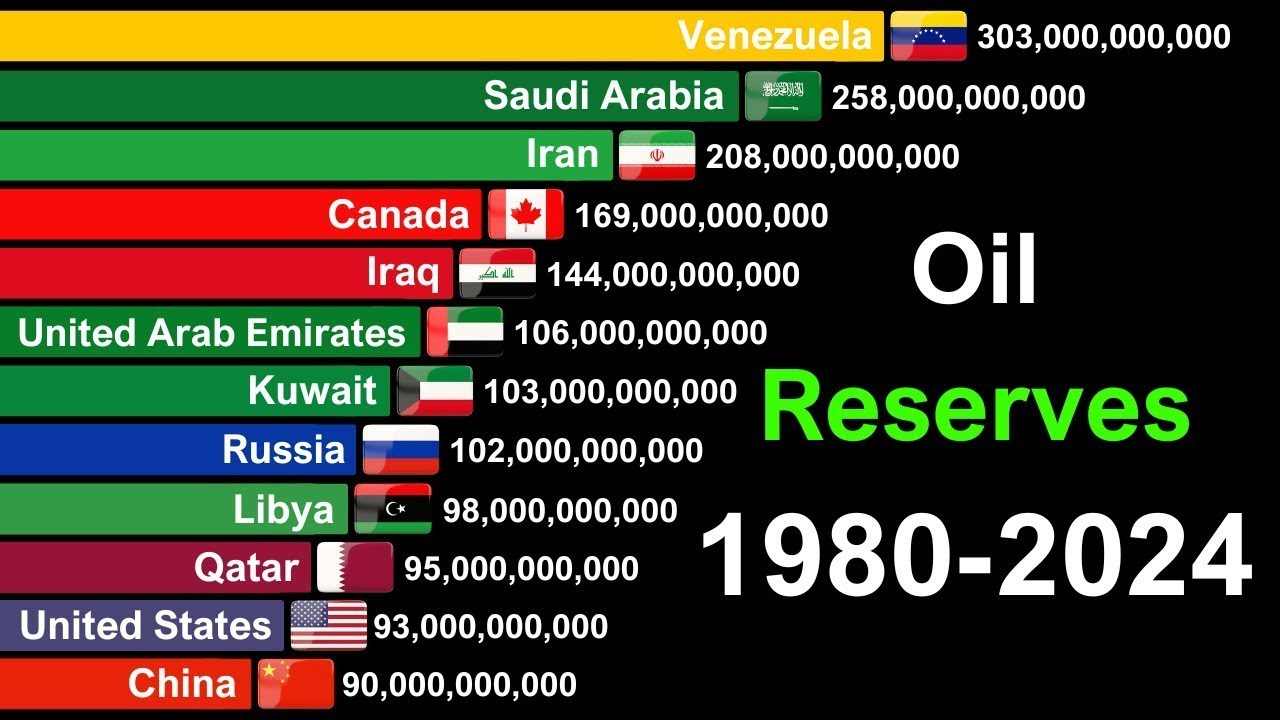
Venezuela holds the largest proven oil reserves on Earth, especially heavy crude in the Orinoco Belt.
Trump repeatedly emphasized oil in post-operation remarks (far more than drugs), signaling priority to markets, refiners, and allies.
Control over PDVSA (the state oil company), export routes, and contracts can reshape global energy flows without a full occupation. See this Bullionbite.com article for repercussions, especially for China and Canada.
The timing aligns with tight global energy markets, making Venezuelan oil uniquely valuable.
See this Wired article for more about oil.
Pattern match:
The language used—“stabilizing,” “protecting infrastructure,” “temporary control,” “getting production back online”—is historically associated with resource-driven interventions, not drug enforcement.
WHAT’S LEGAL — AND WHAT’S NOT CLEAR
International law: Many legal scholars argue the operation violates the UN Charter’s ban on using force against another state absent self-defense or UN authorization.
Sovereign immunity: Sitting heads of state typically cannot be prosecuted abroad; the U.S. disputes Maduro’s legitimacy to argue immunity doesn’t apply.
U.S. law: Critics say Congress did not authorize the action, raising war-powers questions.
Bottom line: legality is contested, not settled. But it’s pretty clear this was not appropriate.
WHAT HAPPENS NEXT
Inside Venezuela: Armed actors—not civilian institutions—are likely to decide stability in the short term.
Oil: Any move to reopen production, rewrite contracts, or manage exports will be the clearest signal of motive. Trump has already implored US oil companies (“the biggest oil companies in the world” according to Trump) to go to Venezuela and rebuild their infrastructure. Do read that Bullionbite piece; it paints a much more difficult picture for easy oil access by the U.S.
International response: Expect UN debates, legal challenges, and long-term consequences for norms against regime change by force. Way to lead!
THE TAKEAWAY FOR READERS
This is not just a story about one leader’s arrest. It’s about power, precedent, and resources.
The drug rationale explains the charges—but not the scale of force.
The oil explanation best fits the incentives, rhetoric, timing, and likely outcomes.
Whether the world ultimately labels this law enforcement or invasion will shape how far major powers believe they can go next.
That question—who controls oil, and by what right—is the real fault line running through Venezuela’s crisis.