


The Morning Sixpack stays free because the news that shapes your life should not be hidden behind a paywall. Paid subscribers are not paying for access. They are helping fund the research, writing, and independent voice that goes into every issue. Become a paid subscriber and help keep smart, honest news analysis free for everyone.
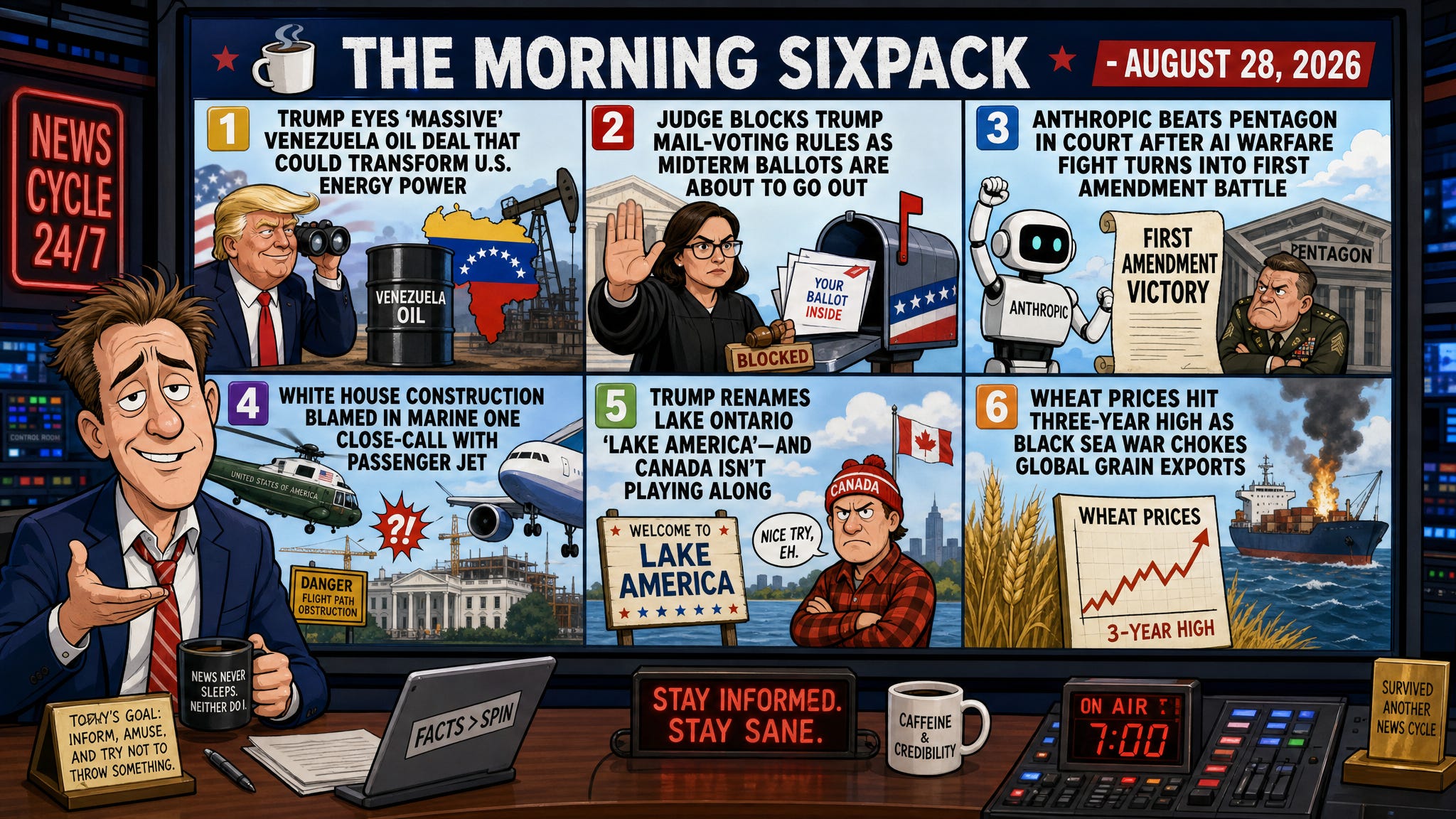
Six stories, one wild morning—oil, ballots, AI, aircraft, a lake, and your grocery bill.
Grab your coffee, because Washington is trying to plant a flag in one of the biggest oil reserves on the planet. The Trump administration is negotiating for a U.S. ownership stake in Venezuelan oil fields holding roughly 90 billion barrels of proven reserves. Secretary of State Marco Rubio and Venezuela’s acting president, Delcy Rodriguez, have led the talks, with the arrangement designed to bring in American and other private companies to rehabilitate an oil industry battered by decades of mismanagement. Energy Secretary Chris Wright may even travel to Venezuela next week as officials weigh boosting production, all while one U.S. official called the deal nothing short of “massive.” It fits neatly into Trump’s “Donroe Doctrine” push for energy dominance across the hemisphere — and if it goes through, it could reshape America’s energy leverage for generations.
Source: Axios
Meanwhile, the midterms just got a legal plot twist. A federal judge has temporarily blocked the Trump administration’s new mail-voting rules just as states prepare to send out ballots. U.S. District Judge Indira Talwani ruled that states simply don’t have the time or money to redesign ballots, retrain officials, and update systems before the midterms hit. The order lasts two weeks, with a hearing set for September 3 — meaning the legal clock and the election calendar are now racing each other toward what could be another Supreme Court showdown. New York’s attorney general called the rule a federal overreach into elections states are supposed to control.
Source: Associated Press
In tech and national security, a fight over AI in warfare just became a fight over free speech. A federal judge ruled that the Pentagon illegally retaliated against Anthropic after the AI company refused to accept unrestricted military uses of its technology. Judge Rita Lin found the government’s supply-chain-risk label was really about punishing Anthropic for publicly criticizing military AI policy — including concerns over mass surveillance and autonomous weapons. Anthropic sued back in March calling it an “unlawful campaign of retaliation,” and the judge agreed the punishment crossed a legal line. The government is expected to appeal, but for now, the ruling raises a bigger question: how much power does Washington really have to punish a contractor for disagreeing with it?
Source: Associated Press
Back on the ground — or rather, in the air — a routine helicopter takeoff turned into a genuine scare. Federal investigators say ongoing White House construction forced Marine One to use a temporary takeoff site that disrupted communications with air-traffic control, contributing to a close call with a passenger jet. The helicopter and the regional jet came within 0.8 miles horizontally and about 700 feet vertically of each other before the jet’s collision-avoidance system kicked in. The culprit: construction including a new granite helipad, Trump’s ballroom project, and a renovated northern entrance, all of which pushed Marine One off its usual South Lawn landing zone. The FAA has since moved an antenna and is reviewing procedures — proof that even presidential home renovations can come with unexpected safety fallout.
Source: The Wall Street Journal (free)
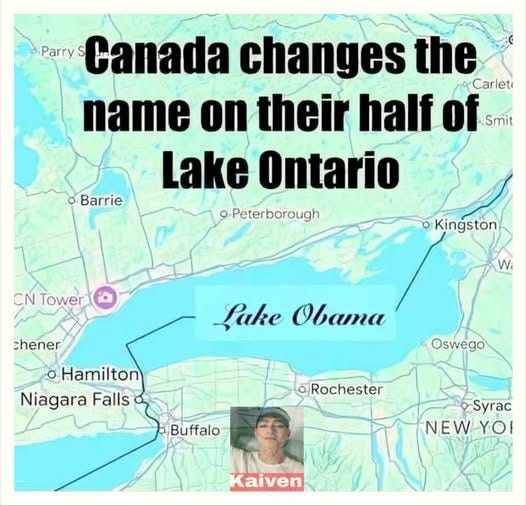
And then there’s the lake with an identity crisis. President Trump has ordered Lake Ontario renamed “Lake America,” and Canada is not on board. Interior Secretary Doug Burgum is already directing the U.S. Geological Survey to make the change on federal maps, while Democratic officials call the move “idiotic” and vow to reverse it. There’s just one small problem: Lake Ontario straddles the U.S. and Canada, and nobody up north plans to start calling it anything new. New York’s governor made clear her state isn’t playing along either — proving that renaming a shared body of water is a lot easier said than internationally recognized.
Source: BBC News
Finally, the story that could hit your grocery bill hardest. Wheat prices have surged to a three-year high as escalating Russia-Ukraine fighting chokes off Black Sea grain exports. Chicago wheat futures are now about 30% above their late-June low, as attacks on grain ships and export terminals leave supply stranded with nowhere to go. Russia and Ukraine together account for roughly a quarter of global wheat production, and with Ukraine saying Russia rejected a proposed grain-shipping truce, analysts warn the disruption is unlike anything the modern grain market has seen. Add in weather risks and lingering fallout from the U.S.-Iran war, and the bottom line is simple: those futures-market numbers are about to show up in your bread, pasta, and grocery bills.
Source: The Wall Street Journal (free)
That’s the Morning Sixpack — oil, ballots, AI, aircraft, a lake, and your grocery bill, all before your first cup of coffee is even cold.
Prefer to read The Morning Sixpack? Do that here:


