



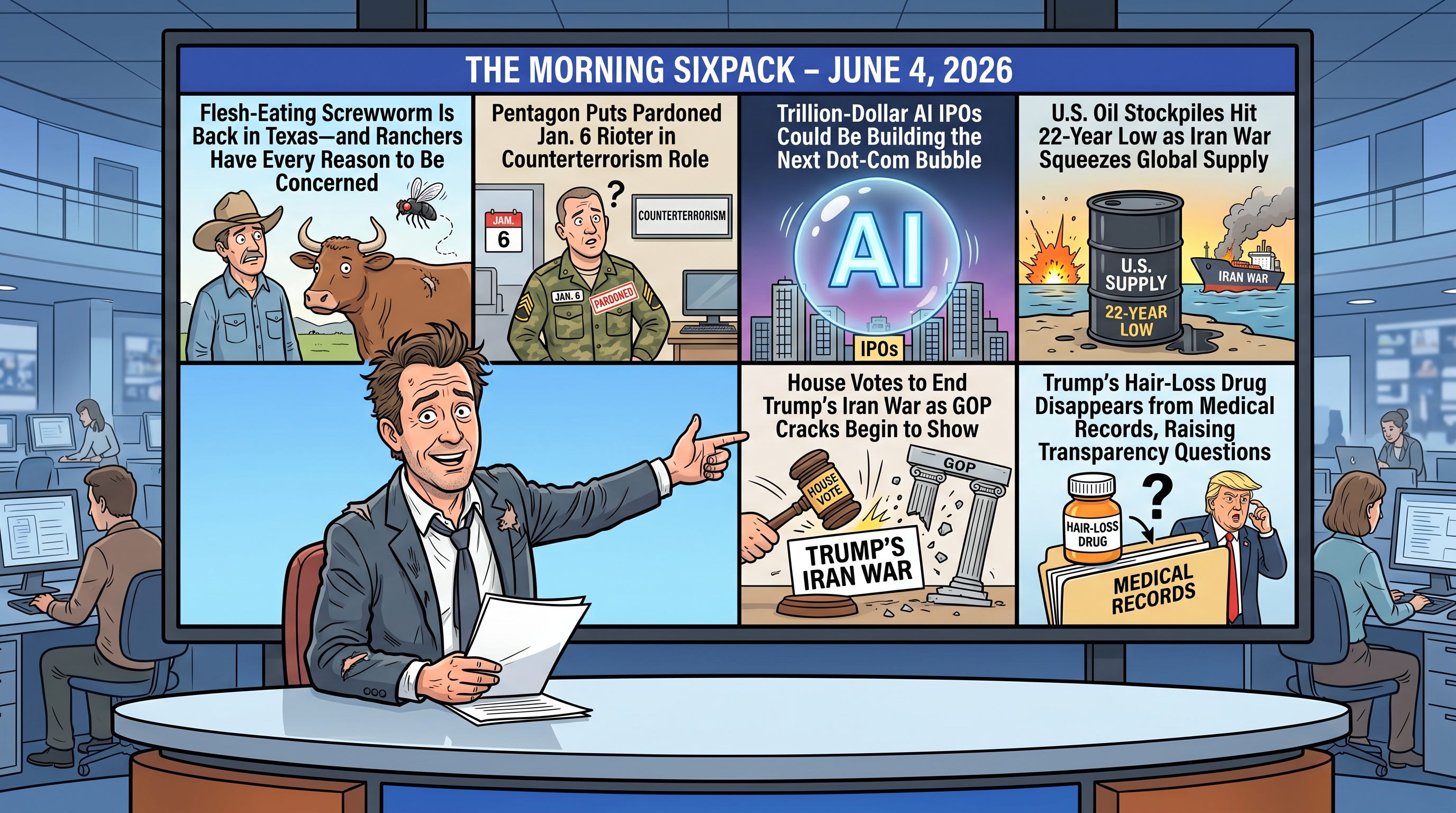
From a flesh-eating parasite reappearing in Texas to Congress pushing back on Trump’s Iran war, today’s stories are a reminder that reality continues to outwork fiction. We’ve got warnings of a potential AI investment bubble, a looming oil supply crunch, questions about presidential transparency, and a Pentagon hiring decision that’s raising eyebrows across Washington.
Flesh-Eating Screwworm Is Back in Texas—and Ranchers Have Every Reason to Be Concerned
A flesh-eating parasite once eradicated from the United States has resurfaced in Texas, triggering a rapid federal response. Officials discovered New World screwworm larvae in a calf in Zavala County, reviving concerns about a pest that devastated livestock before its elimination decades ago. While the USDA insists the food supply remains safe, ranchers are watching closely as containment efforts ramp up. One infected calf may not sound like much, but agricultural disasters rarely announce themselves with flashing lights.
Pentagon Puts Pardoned Jan. 6 Rioter in Counterterrorism Role
The Pentagon has hired a pardoned Jan. 6 participant for a role tied to counterterrorism and sensitive military operations. Elias Irizarry, who later described the Capitol riot as “the largest attack on our democracy since the Civil War,” now works in a division overseeing some of the military’s most delicate missions. Supporters call him a patriotic young professional. Critics wonder how involvement in the Capitol breach became compatible with a top-level national security portfolio.
Trillion-Dollar AI IPOs Could Be Building the Next Dot-Com Bubble
Wall Street’s next great AI boom may also be setting the stage for its next great correction. Analysts are warning that potential trillion-dollar IPOs from companies like Anthropic could force massive portfolio shifts across index funds while driving valuations even higher. Veteran investor John Hussman compares speculative bubbles to hippos: they look harmless until they suddenly aren’t. Investors may be right about AI’s future and still be wildly wrong about what it’s worth today.
U.S. Oil Stockpiles Hit 22-Year Low as Iran War Squeezes Global Supply
America’s oil inventories have fallen to their lowest level since 2004 as global markets scramble for supply. With disruptions tied to the Iran conflict and the ongoing pressure on the Strait of Hormuz, U.S. exports have surged while reserves continue to shrink. Some analysts warn oil could reach $200 per barrel if supply constraints persist. The U.S. has become the world’s emergency oil supplier, but even emergency suppliers eventually run low on inventory.
House Votes to End Trump’s Iran War as GOP Cracks Begin to Show
Congress delivered a symbolic rebuke to President Trump by voting to end U.S. involvement in the Iran war. Four Republicans joined Democrats in supporting the measure, citing constitutional concerns and growing voter frustration over the economic costs of the conflict. The resolution faces significant hurdles before becoming law, but the vote highlights increasing divisions within the Republican Party as midterm election pressures build.
Trump’s Hair-Loss Drug Disappears from Medical Records, Raising Transparency Questions
A medication once routinely disclosed in Trump’s medical reports has quietly disappeared from recent White House health summaries. Finasteride, commonly used to prevent hair loss, was acknowledged by multiple Trump physicians during his first term. Its omission has sparked debate among medical ethicists who argue that even seemingly minor health disclosures can affect public trust. The story may be about hair, but the larger issue is transparency.
The common thread running through today’s six stories is trust. Trust that a parasite won’t spread. Trust that sensitive government positions are filled wisely. Trust that markets aren’t repeating old mistakes. Trust that energy supplies will remain stable. Trust that military action follows constitutional rules. And trust that leaders are telling the public the whole story. As always, trust is easy to spend and a lot harder to replenish.
Thanks for listening to The Morning Sixpack Podcast. We’ll see you tomorrow with six more stories that prove the news cycle has no interest in slowing down.


