



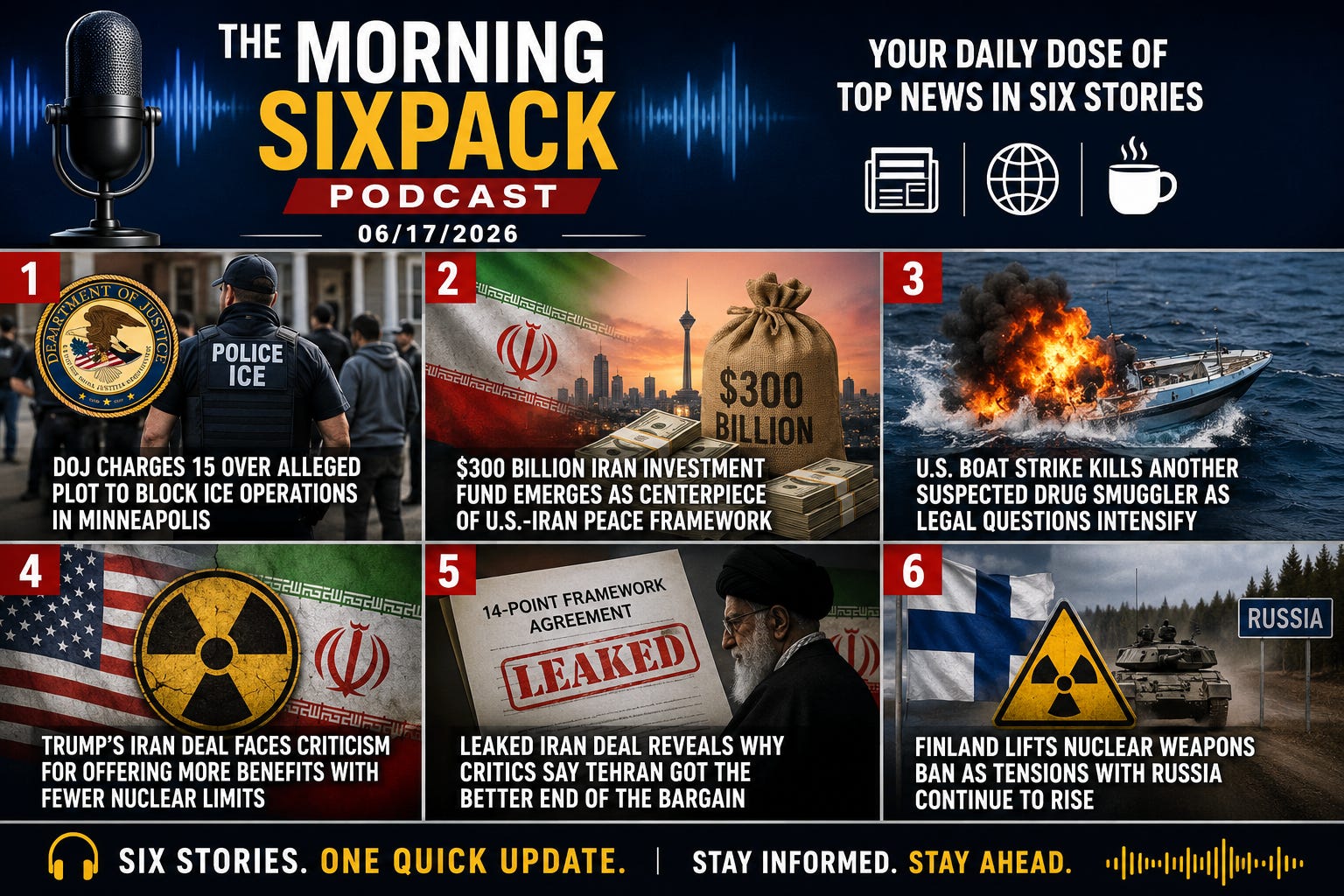
Today’s podcast takes you from federal courtrooms in Minneapolis to nuclear negotiations in Switzerland, with a stop in the Baltic region where Finland is sending Moscow a message. The common thread? Governments are making major moves in the name of security—and not everyone is convinced they’re getting it right.
DOJ Charges 15 Over Alleged Plot to Block ICE Operations in Minneapolis
Federal prosecutors have charged 15 Minneapolis activists with conspiring to interfere with ICE operations during the administration’s immigration crackdown. Authorities allege coordinated efforts to block federal agents and disrupt enforcement actions, while critics argue the case risks criminalizing protest activity. The Justice Department says this is about organized obstruction. Opponents say it’s about free speech. A jury may eventually decide where that line sits.
$300 Billion Iran Investment Fund Emerges as Centerpiece of U.S.-Iran Peace Framework
A proposed $300 billion private investment fund could become the economic foundation of a new U.S.-Iran peace agreement. More than half the money is reportedly already committed, with investors betting that stability in Iran could unlock enormous economic opportunities. The fund isn’t government aid—it’s private capital wagering that peace will be profitable.
U.S. Boat Strike Kills Another Suspected Drug Smuggler as Legal Questions Intensify
The U.S. military’s anti-cartel campaign at sea has now resulted in more than 200 reported deaths. The latest strike killed one suspected smuggler and reignited questions about how targets are identified and whether the operations are legally justified. Supporters say the strikes are necessary to combat narcoterrorism. Critics say the evidence remains frustratingly thin.
Trump’s Iran Deal Faces Criticism for Offering More Benefits With Fewer Nuclear Limits
President Trump’s emerging Iran agreement is facing criticism from both political opponents and some allies. The concern is that Iran may receive significant economic relief while key questions about enriched uranium and long-term nuclear restrictions remain unresolved. The White House argues the deal is stronger than Obama’s. Critics aren’t convinced.
Leaked Iran Deal Reveals Why Critics Say Tehran Got the Better End of the Bargain
A leaked 14-point framework agreement has intensified debate over who benefits most from the proposed peace deal. Iran appears positioned to gain sanctions relief, oil exports, frozen assets and access to a massive development fund. Meanwhile, many of the toughest nuclear enforcement details are being deferred to future negotiations. That’s fueling claims that Tehran negotiated from a position of surprising strength.
Finland Lifts Nuclear Weapons Ban as Tensions With Russia Continue to Rise
Finland has removed a decades-old legal ban on nuclear weapons, giving NATO new strategic flexibility on Russia’s doorstep. Helsinki says it has no immediate plans to host nuclear weapons, but the law change reflects growing concern about Russian military activity near the border. After decades of neutrality, Finland is making it clear that the security environment has changed.
The headlines may be different, but today’s stories all point to the same reality: governments around the world are redrawing old rules, testing new alliances, and making bets on security that could shape the next decade. Whether those bets pay off—or create new problems—is the story we’ll all be following next.


