



Power Plays, Paper Trails, and the Pushback Tour
The Trump administration is throwing elbows across courts, markets, and borders—and running headfirst into judges, economists, and its own paperwork. From Latin America to the Supreme Court, from crypto wallets to banana boats, here’s how this week exposed the limits of governing by force, leverage, and vibes.
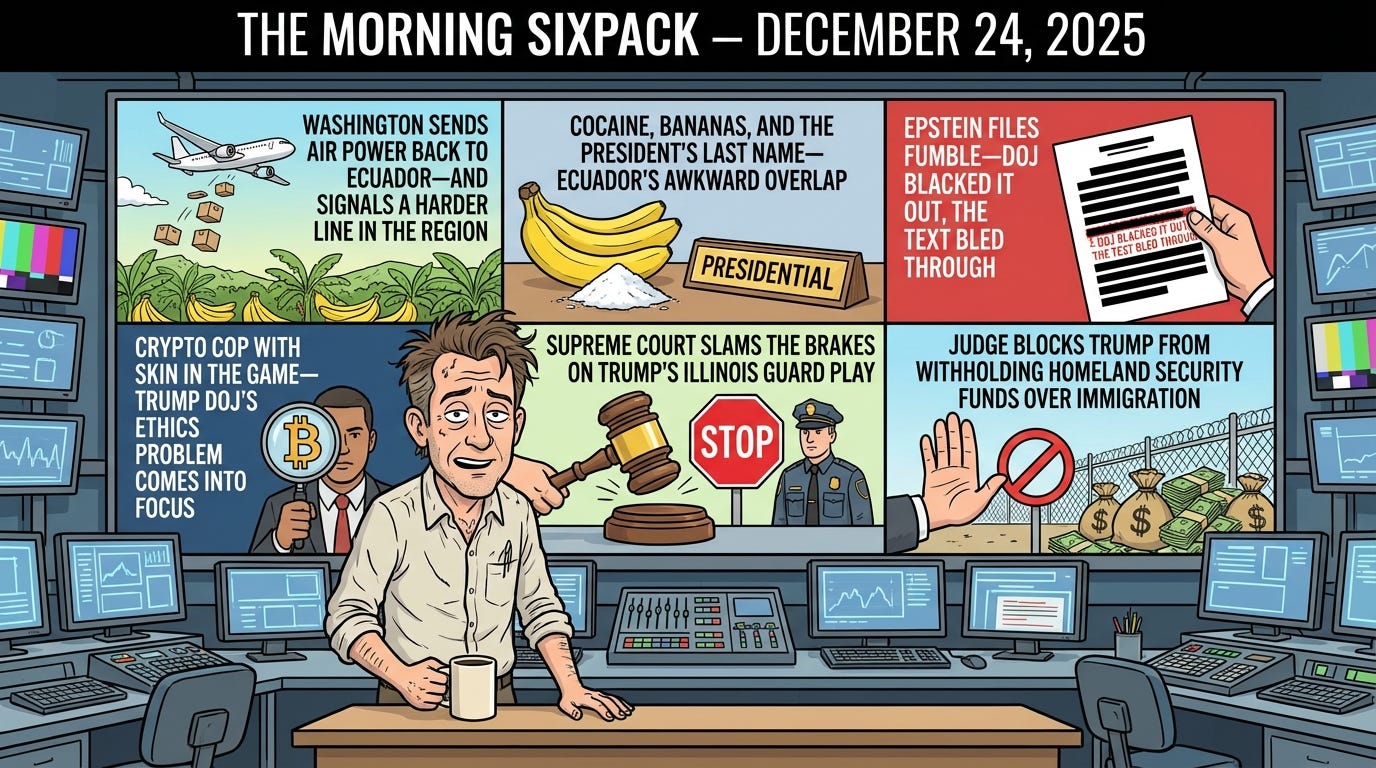
The U.S. quietly returned military muscle to Ecuador, signaling a tougher regional posture that goes well beyond drug interdiction. Framed as a temporary anti-narcotics mission, the redeployment to Manta reopened a strategic footprint Washington once abandoned—while sending a clear message to Venezuela and the rest of the region that the gloves are off again.
Ecuador’s anti-cartel president found his toughest optics problem wasn’t gangs—it was his family business. Reporting traced cocaine-laced banana shipments back through a web of companies tied to President Daniel Noboa’s family, underscoring how corruption risks thrive where political power and export empires overlap.
The Justice Department managed to botch basic redactions in the Epstein files, letting hidden text bleed through with copy-and-paste ease. No new bombshells about elite connections—but plenty of fresh evidence that even now, institutions handling the most sensitive material still can’t be trusted with the basics.
Trump’s crypto crackdown reversal came with a glaring conflict: the DOJ official ordering it still owned crypto. Todd Blanche shut down major enforcement efforts while holding digital assets, then “divested” by gifting them to family—legal on paper, ethically radioactive, and emblematic of a broader administration-wide crypto coziness.
The Supreme Court slapped down Trump’s attempt to deploy the National Guard into Illinois, drawing a hard legal line. The justices made clear that “Commander in Chief” isn’t a free pass to federalize troops for domestic law enforcement—especially when there’s no rebellion, invasion, or statutory authority.
TrumpRx promised cheaper drugs now, but economists warned the long-term bill may come due in lost innovation. Lower prices feel great at the pharmacy counter, but price caps risk thinning the pipeline of future treatments—turning today’s savings into tomorrow’s shortages.
And a federal judge blocked DHS from punishing ‘sanctuary’ states by yanking homeland security funds. The court called the cuts arbitrary, political, and unlawful—reminding the administration that counterterrorism and disaster funding aren’t bargaining chips.
Across all of it runs the same theme: aggressive moves, fast rollouts, and constant pushback. Trump is testing how far power can stretch—courts, markets, and math keep snapping it back.


