


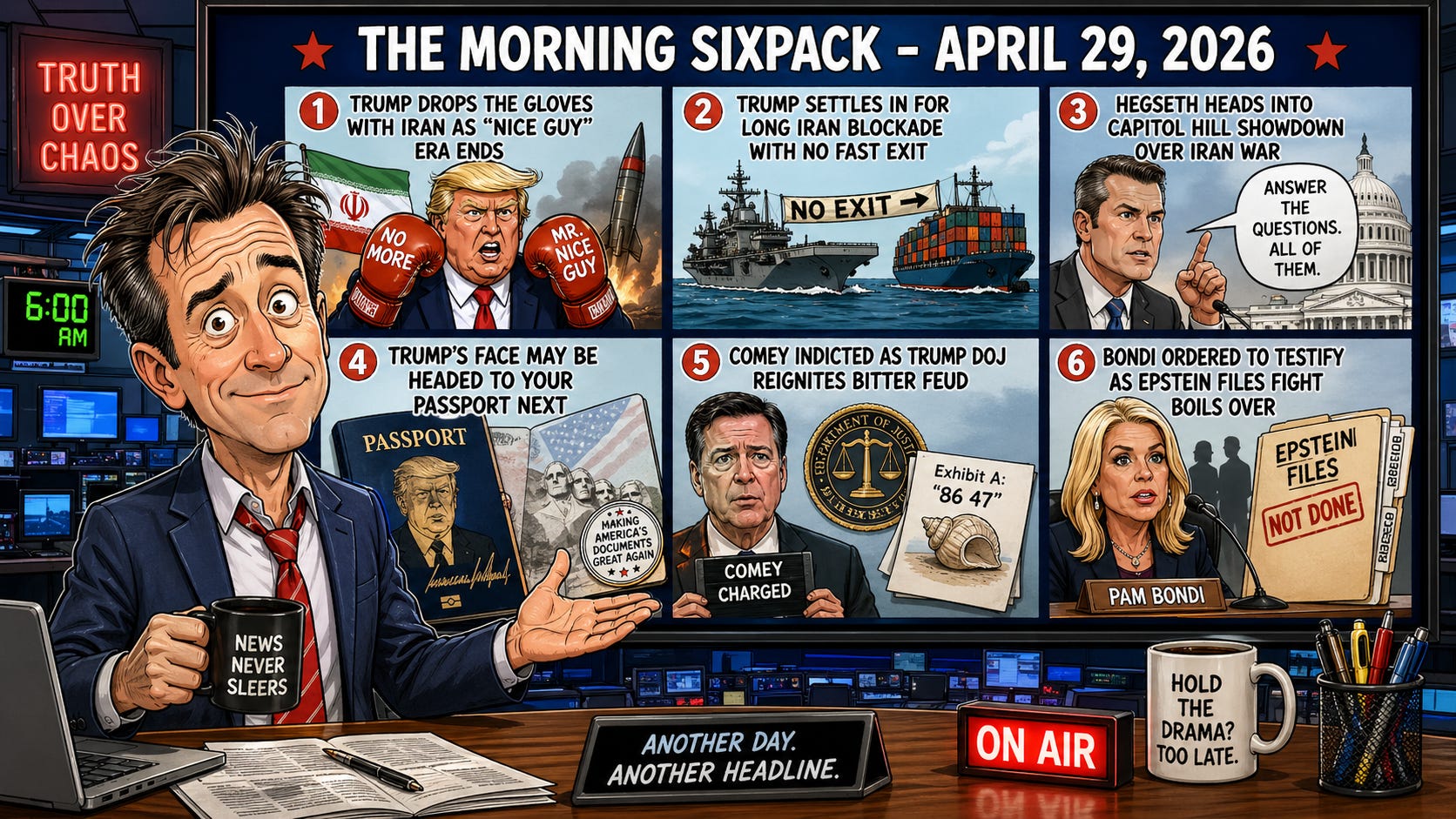
Trump Turns Up the Heat on Iran with “No More Mr. Nice Guy” Warning
Donald Trump is escalating rhetoric against Iran as nuclear talks stall, pairing threats with a not-so-subtle show of force. The president blasted Tehran for delaying a deal and made it clear patience is running thin.
“They better get smart soon!”
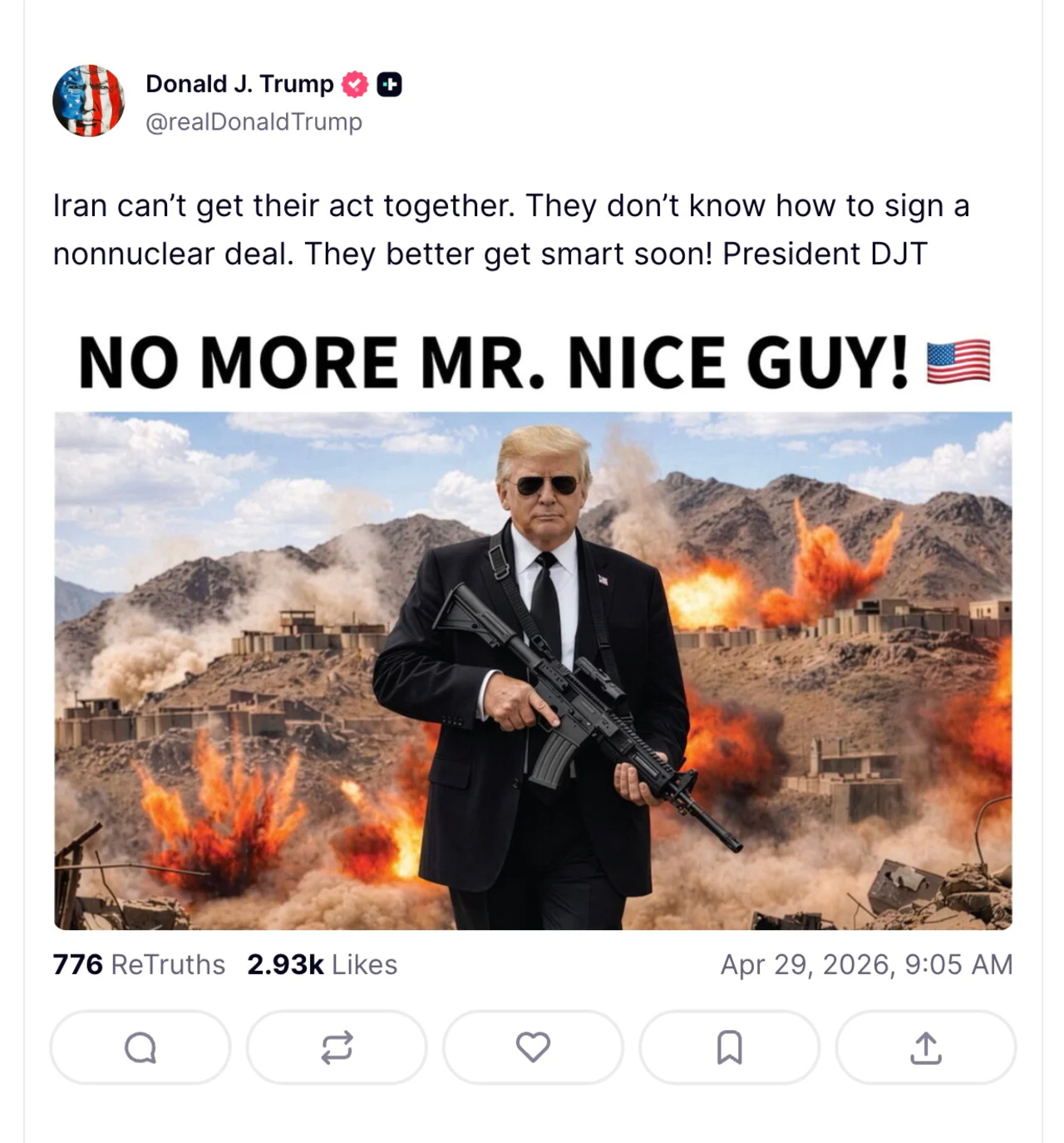
Trump took to Truth Social to accuse Iran of dragging its feet on a nonnuclear agreement, saying the country “can’t get their act together.” He didn’t stop at words—he posted an AI-generated image of himself wielding an assault rifle with explosions in the background under a banner reading “NO MORE MR. NICE GUY!” Subtlety is not on the menu.
The tough talk comes as already fragile negotiations wobble further. Washington is reviewing Tehran’s proposal to delay key issues, but the response so far has been lukewarm, with the White House signaling it won’t rush and reiterating a hard line: Iran cannot have a nuclear weapon.
Experts say this isn’t about immediate war—it’s about leverage. Rob Geist Pinfold of King’s College London described the situation as “intense competition,” with both sides trying to prove they can outlast the other. Iran wants to punt the hard decisions; the U.S. wants to keep pressure high enough that punting isn’t an option.
Meanwhile, that pressure is very real. The U.S. Treasury is targeting Iran’s financial networks, oil trade, and shipping operations, claiming to have wiped out tens of billions in revenue. The Iranian rial is sliding fast, hitting record lows, while inside the country authorities are cracking down hard—executions, arrests, and disappearances are climbing as unrest simmers.
Source: Al Jazeera
Editor: Nothing says delicate diplomatic moment like posting an action-hero version of yourself with a rifle and explosions. If this is “negotiation strategy,” Hollywood agents might want in on the next round of talks.
Trump Quietly Preps Long Iran Blockade as Quick Win Slips Away
Donald Trump is shifting from quick-hit military pressure to a drawn-out economic chokehold on Iran as hopes for a fast resolution fade. The White House is now bracing for a prolonged standoff with no clean exit.
There is no easy win here—and Trump knows it.

Behind the scenes, Trump has told aides to prepare for an extended blockade aimed at crushing Iran’s economy and forcing nuclear concessions the regime has long refused to make. Instead of ramping up bombing or walking away, he’s betting that cutting off oil exports and maritime trade will squeeze Tehran into submission—even if it takes time.
The problem? This isn’t a clean play. The blockade is already dragging down global energy flows, driving up gas prices, and denting Trump’s political standing at home. It’s also reduced traffic through the Strait of Hormuz to its lowest levels since the conflict began, raising the stakes for the global economy.
Iran, for its part, isn’t folding. Analysts say Tehran believes it can outlast U.S. pressure and is willing to let its own population absorb the economic pain. As one expert put it, a regime that crushed protests earlier this year isn’t about to blink now. Meanwhile, internal divisions inside Iran—and inside Trump’s own advisory circle—are making any diplomatic breakthrough harder to pull off.
The result: a grinding stalemate. No deal, no war, and no guarantee the blockade actually forces Iran’s hand. Trump may prefer decisive victories, but right now he’s stuck managing a slow-burn conflict with rising costs and uncertain payoff.
Source: Wall Street Journal (gift)
Editor: So the strategy is to wait Iran out while gas prices climb and voters notice. Not exactly the “mission accomplished” banner moment—but hey, stalemates don’t make campaign ads anyway. AND—I seriously thinks this pushes Trump to escalate to using nukes. It’s the ONLY way to stop Iran from keeping the Strait closed. Mark my words.
Hegseth Heads to Capitol Hill as Iran War Costs—and Questions—Pile Up
Defense Secretary Pete Hegseth is finally facing Congress after a costly Iran war launched without lawmakers’ approval. And this time, the questions won’t be coming from friendly microphones.
Lawmakers are about to ask what this war is really costing—and why they weren’t asked first.
Hegseth and Joint Chiefs Chairman Gen. Dan Caine will testify as part of a hearing on a massive $1.5 trillion defense budget, but don’t expect it to stay on spreadsheets. Democrats are zeroing in on the war itself—civilian casualties, drained munitions, and reports that U.S. defenses failed to stop Iranian drone attacks that killed and injured American troops.
The political headache is bipartisan. While Republicans are largely sticking with Trump—for now—they’re getting uneasy about how long this drags on and what it’s doing to fuel prices and midterm prospects. Iran’s shutdown of the Strait of Hormuz has already sent energy markets into chaos, and the U.S. response—a full naval blockade and three carrier groups in the region—signals this isn’t ending anytime soon.
Then there’s the Pentagon drama. Hegseth hasn’t just been running a war—he’s been cleaning house, ousting top generals and defense officials in rapid succession. Even Republicans are raising eyebrows, with Sen. Thom Tillis openly questioning whether this level of turnover makes sense “in a war posture with Iran.”
The bigger picture? A stalemate abroad and rising scrutiny at home. The ceasefire is shaky, negotiations are stuck, and Congress is now stepping in—late—to demand answers on strategy, authority, and whether this conflict has any clear endgame.
Source: AP News
Editor: Nothing inspires confidence like firing your top brass mid-war and then heading to Congress to explain the plan. If there is one.
Trump’s Face May Be Headed to Your Passport Next
The State Department is weighing a plan to put Donald Trump’s image inside U.S. passports—something no modern president has ever done. And yes, it’s being framed as patriotic.
Your next passport could double as a presidential tribute.
According to sources familiar with the proposal, officials are close to finalizing a redesigned passport that would feature Trump’s likeness on the inside cover, layered over the Declaration of Independence with his signature stamped in gold. The rollout is tied to the 250th anniversary of American independence, with a limited run reportedly under consideration.
This wouldn’t be happening in a vacuum. The administration has already moved to place Trump’s image or name across a growing list of government items—from coins and park passes to federal buildings and even financial products. The passport idea fits neatly into that broader branding push, whether you call it commemoration or something else.
Experts aren’t exactly sold. Historians point out that U.S. passports have never featured a sitting president, and neither have those of other countries. Traditionally, passports are issued in the name of the secretary of state—not as a canvas for presidential imagery.
The State Department has acknowledged plans for a commemorative passport design tied to the anniversary but hasn’t explicitly confirmed Trump’s image will be included. That detail, for now, sits in the “widely reported, quietly confirmed” category.
Either way, it’s another sign of how this administration is redefining what belongs on government property—and who gets front and center billing.
Source: The Bulwark
Editor: At this rate, you won’t need a visa—just a fan club membership.
Comey Indicted Over “86 47” Shell Post as Trump DOJ Revives Old Grudge
Former FBI Director James Comey has been indicted over a beach photo prosecutors claim implied a threat against Donald Trump. The case is quickly becoming a flashpoint in the president’s long-running feud with one of his most vocal critics.
A seashell photo is now a federal case—and that tells you everything about where this is headed.
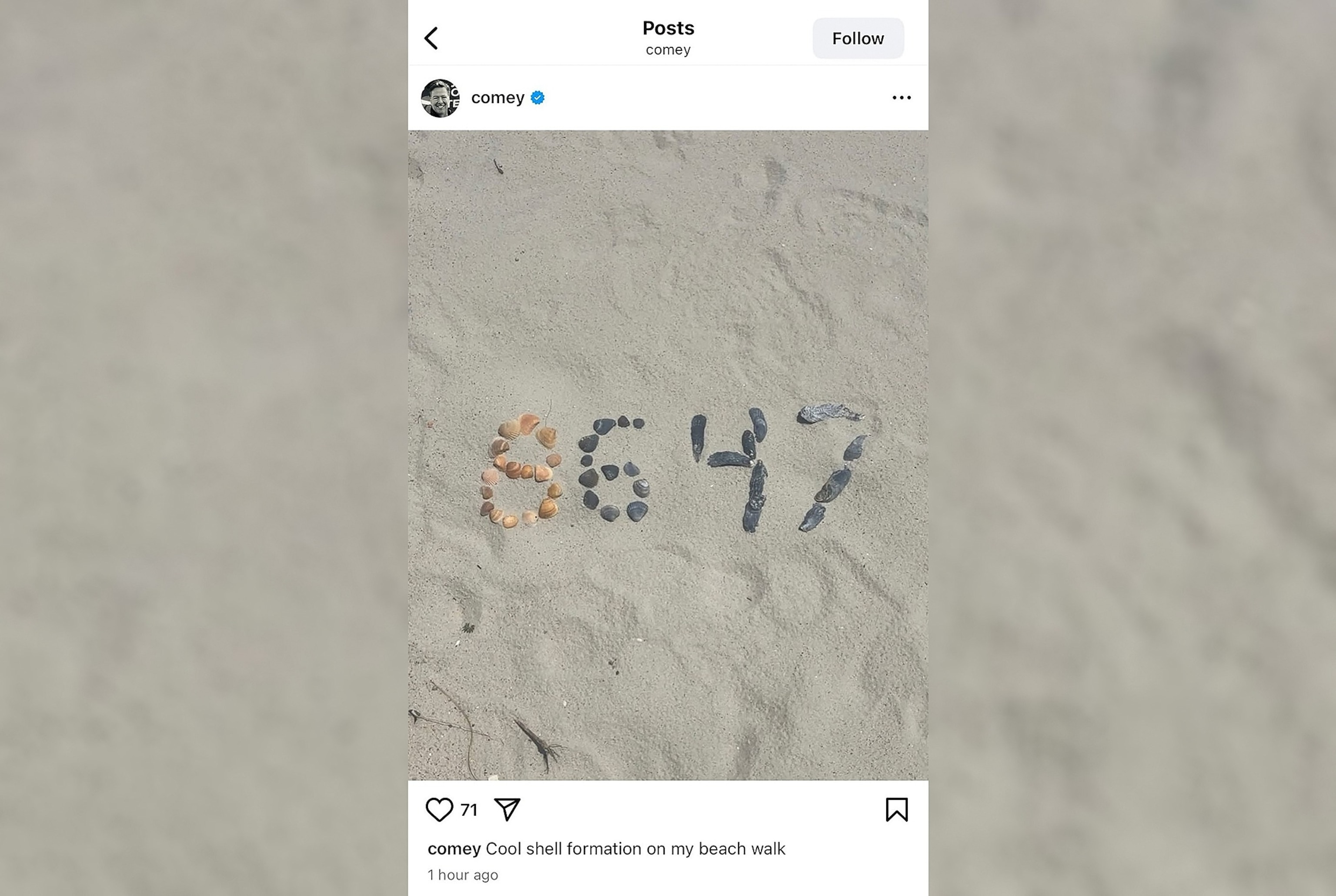
The controversy centers on a now-deleted Instagram post where Comey shared a picture of seashells arranged to read “86 47.” Critics—mostly Republicans and Trump allies—argued the numbers suggested violence against the 47th president, since “86” can be slang for getting rid of someone. Comey said he simply thought it was a “political message” and removed the post once the backlash hit.
That didn’t stop the machinery from moving. The Secret Service hauled Comey in for an hours-long interview, and top officials—including Director of National Intelligence Tulsi Gabbard—publicly called for consequences. Now, Trump’s Justice Department is taking another swing, reviving its efforts to prosecute a man the president has long viewed as a central figure in the so-called “weaponization” of the justice system against him.
Legal experts aren’t exactly convinced. Cases built on vague or interpretive speech—especially something as indirect as numbers in sand—tend to run headfirst into First Amendment protections. Translation: this could be a tough sell in court, even if it plays well politically.
Still, the bigger story is the pattern. This marks the second attempt to bring charges against Comey after a previous case collapsed over procedural issues. The message is clear: the fight between Trump and his former FBI director isn’t fading—it’s escalating, now with indictments attached.
Source: CNN
Editor: We’ve officially reached the point where beach decor requires legal analysis. Next time, maybe just stick to sunsets.
Pam Bondi Forced to Testify on Epstein Files After Dodging Congress
Former Attorney General Pam Bondi will testify before Congress after skipping a deposition and triggering a contempt threat. Lawmakers are demanding answers on how the Epstein files were handled—and why it took this long to get them.
She skipped once—Congress isn’t letting it happen twice.
The House Oversight Committee confirmed Bondi will appear on May 29 after Democrats moved to hold her in civil contempt for refusing to show up earlier this month. Lawmakers say she “illegally defied” a subpoena tied to the Justice Department’s handling of documents related to Jeffrey Epstein.
At the center of the fight: transparency—or lack of it. The DOJ missed a legal deadline to release Epstein-related files, then dropped what it claimed was a complete set weeks later. That didn’t satisfy critics. Lawmakers and victims alike have raised concerns about redactions and whether sensitive personal information was mishandled in the process.
Bondi’s legal dodge didn’t help. After she was removed as attorney general, the Justice Department argued the subpoena no longer applied because she was no longer in the role. Democrats weren’t buying it, saying her “personal knowledge” makes her testimony essential regardless of job title.
Republicans, for their part, say the contempt push was unnecessary now that Bondi has agreed to testify. Democrats see it differently: pressure worked. Either way, the hearing is now set—and it’s shaping up to be a high-stakes airing of how one of the most scrutinized investigations in years was handled behind closed doors.
Source: The Guardian
Editor: Funny how a contempt threat suddenly clears up scheduling conflicts. Congress should try that more often—it seems to get results.