



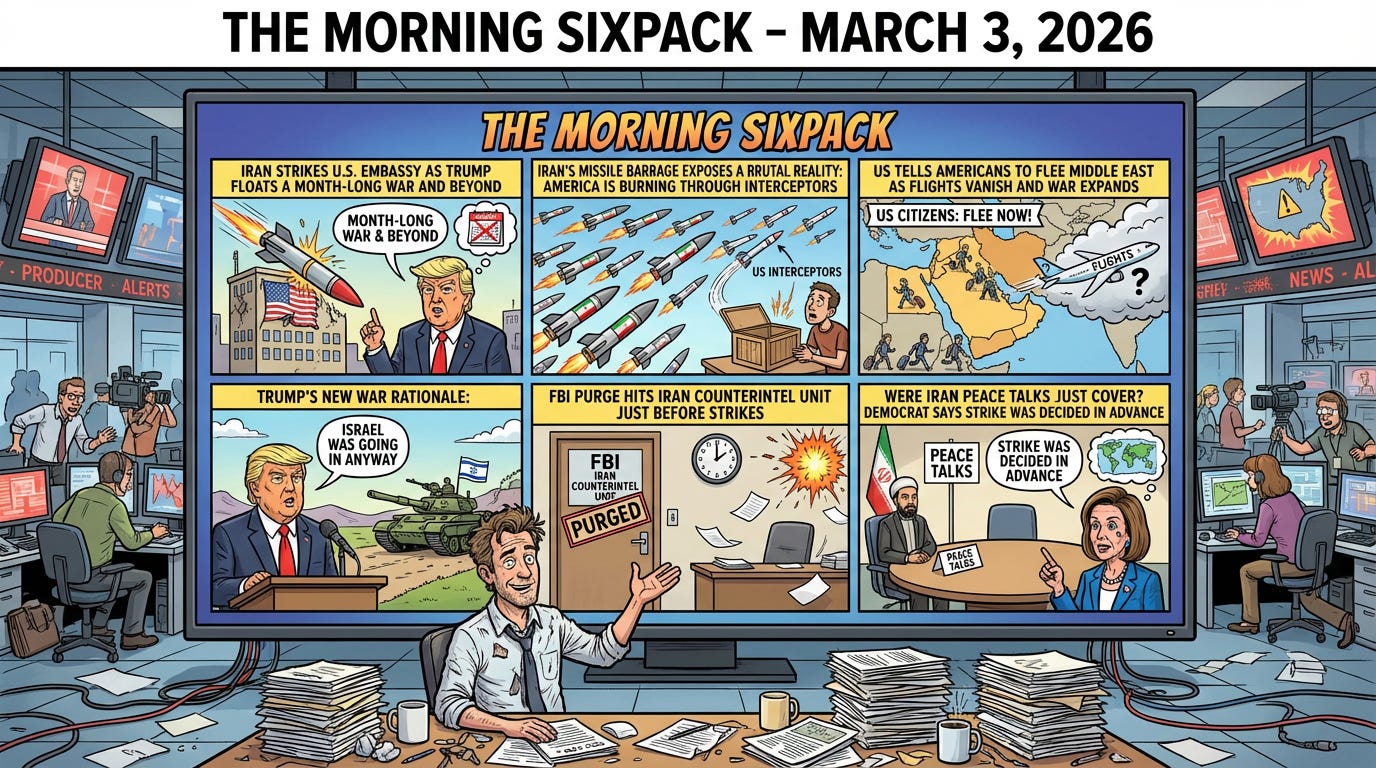
The Middle East just lurched from crisis to full-blown regional war—and Washington is scrambling to keep up. From embassies under fire to missile stockpiles running thin, from Americans fleeing the region to political purges back home, this is bigger than a headline. Here’s your Morning Sixpack, broken down.
Iran expanded the battlefield by striking the U.S. Embassy in Saudi Arabia as President Trump signaled the war could last weeks—or longer. Two drones hit the Riyadh compound, triggering evacuations across the region and raising fears that no American outpost is beyond Tehran’s reach. With hundreds already dead and oil markets rattled, the conflict is no longer contained—it’s spreading by the day.
Iran’s missile barrage is testing whether the U.S. and its allies have enough interceptors left to defend the skies. Military doctrine requires firing two or three interceptors per incoming threat, and experts warn stockpiles could run low fast. At roughly $15 million per high-end interceptor, this is a war measured not just in lives—but in inventory.
The State Department is urging Americans to leave most of the Middle East immediately—but there’s no organized evacuation plan. Flights are suspended, airspace is restricted and embassies are warning they can’t directly assist departures. Hundreds of thousands of U.S. citizens are believed to be in the region, many now stuck refreshing airline apps as missiles fly.
The White House is offering a shifting explanation for the strike on Iran, arguing Israel was prepared to act “with or without” U.S. support. Lawmakers are debating war powers as critics say the rationale has changed multiple times—from imminent threat to regional deterrence. The question hanging over Capitol Hill: Who decides when America goes to war?
Just days before the Iran strikes, FBI leadership fired members of a counterintelligence unit focused on Iranian threats—because they worked on Trump’s documents case. The move sidelined experienced national security personnel as officials brace for possible retaliation at home. Current and former officials warn that thinning the ranks now could carry real risks.
And finally, a Democratic strategist claims the Iran peace talks were a smokescreen and that the decision to bomb had already been made. If negotiations were ongoing when the bombs fell, that raises uncomfortable questions about whether diplomacy was genuine—or merely buying time.
This isn’t one story. It’s six pressure points in a conflict that’s testing military capacity, political accountability and global stability all at once. And if the early signals are right, we’re nowhere near the final chapter.


