



The Morning Sixpack stays free because the news that shapes your life should not be hidden behind a paywall. Paid subscribers are not paying for access. They are helping fund the research, writing, and independent voice that goes into every issue. Become a paid subscriber and help keep smart, honest news analysis free for everyone.
The Air Force’s flagship cloud computing platform has been hacked, putting a whole new spin on the term “air superiority.”
Hackers Breach US Air Force’s Massive Cloud Computing Platform
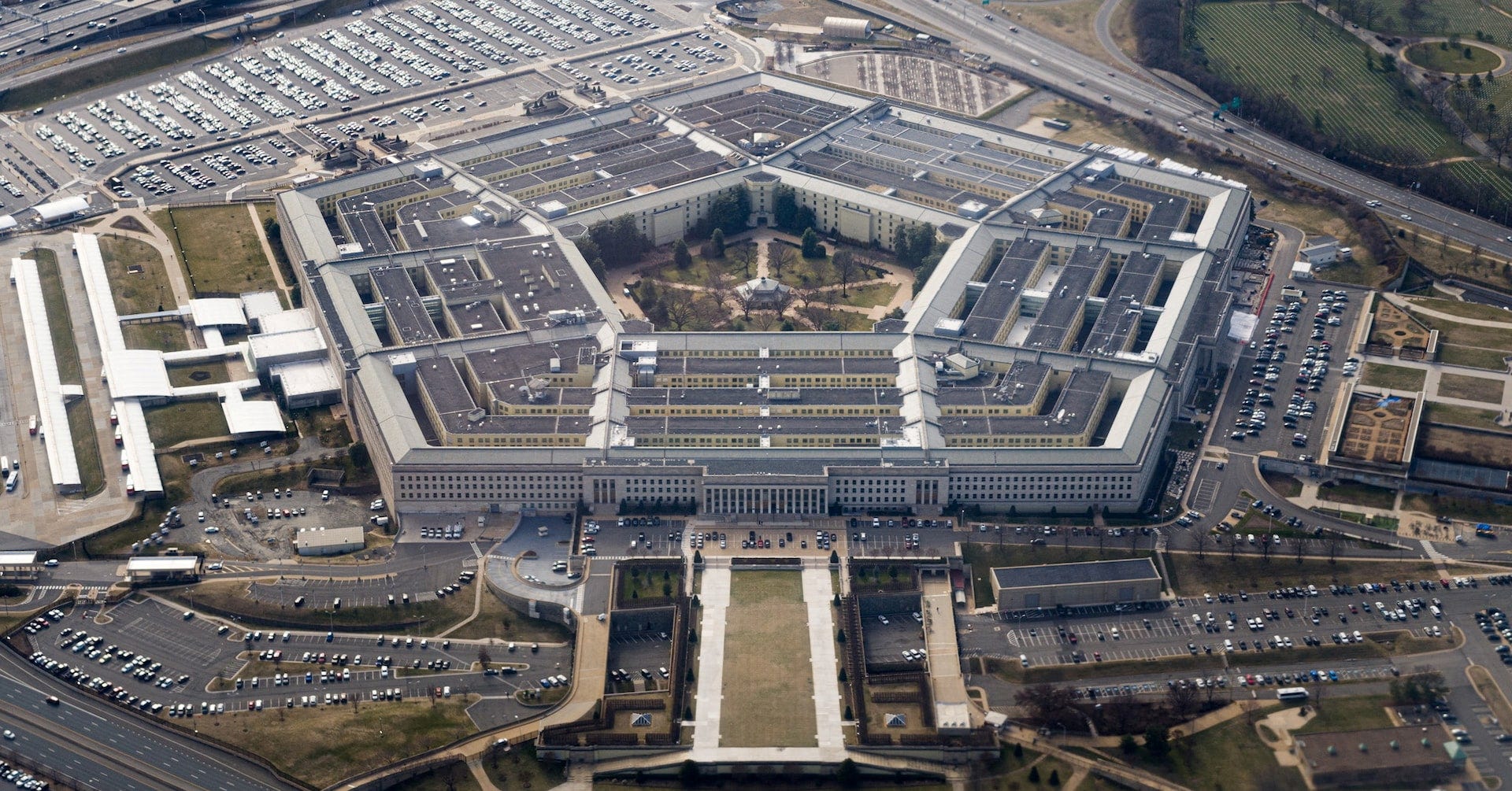
Hackers have breached Cloud One, the US Air Force’s flagship cloud computing platform, potentially exposing sensitive military, personnel, and logistics data. Three sources familiar with the incident confirmed the breach to Reuters. The intrusion was discovered during a system upgrade within the past month. Investigators have yet to publicly identify the hackers, determine the full extent of the breach, or establish whether any data was stolen.
The breach has disrupted military operations involving the platform, forcing the Air Force to suspend several technology initiatives. Efforts to migrate back-office applications to Cloud One have been paused, while updates to existing applications have been blocked. Some users have also lost their administrative privileges. US Cyber Command has reportedly been brought in to assess the damage.
Launched in 2017, Cloud One combines computing resources from Microsoft, Amazon, Oracle, and Alphabet. The platform supports applications handling everything from military personnel records and payroll to aircraft maintenance and weapons inventories. It also houses systems that consolidate North American air defense radar data and track munitions across more than 200 military locations worldwide.
The hackers reportedly exploited a software vulnerability to gain access to the platform’s central management infrastructure. The specific vulnerability remains unidentified, and it is unclear what information the intruders accessed. The incident comes amid growing concerns about AI-powered cyberattacks and a string of recently disclosed breaches involving the FBI, Pentagon, Treasury Department, and US intelligence agencies.
In 2023, Cloud One’s leadership boasted of a perfect success rate in repelling hacking attempts. Its leadership even declared, “There is no room for error when it comes to security.” The Air Force declined to discuss the platform’s current security or operational status, saying it continuously takes measures to protect its information and systems.
Editor: Perhaps bragging about your perfect cybersecurity record should be filed alongside naming a ship “unsinkable.”
Source: Reuters
Mother Nature had other plans for Thanksgiving, leaving nearly a million customers without power and even grounding Snoopy.
Thanksgiving Storms Batter Both Coasts, Force Historic Macy’s Parade Postponement

Powerful Thanksgiving storms unleashed widespread flooding, knocked out electricity to more than 900,000 homes and businesses, and forced the first-ever postponement of Macy’s Thanksgiving Day Parade. High winds and torrential rain battered both coasts, disrupting holiday celebrations and travel. More than 2,200 flights were delayed and another 400-plus were canceled. Macy’s rescheduled its parade for Saturday over concerns that its giant balloons could become dangerous in Manhattan’s high winds.
The East Coast bore the brunt of the storms, with New Jersey and parts of New York declaring states of emergency. Flooding stretched from North Carolina to New Jersey, prompting road closures and numerous water rescues. In New York City, strong winds toppled trees, disrupted train service, and brought down several scaffolding structures.
New York City Mayor Zohran Mamdani offered some sensible advice: “There is no destination worth your safety.”
Coastal communities in New Jersey experienced some of their worst flooding in years as storm surge and heavy rainfall overwhelmed streets. Virginia temporarily closed its Chesapeake Bay Bridge-Tunnel, while seawater breached dunes and covered the only highway connecting North Carolina’s Hatteras Island to the mainland. Nearly two million Maryland water customers were asked to conserve water because of power disruptions. Even Washington state experienced a rare tornado southeast of Seattle.
Meanwhile, the Midwest got buried under heavy snow, with St. Louis recording 7.3 inches and Ste. Genevieve, Missouri, receiving 14 inches. The roof of an ice skating arena in Wentzville, Missouri, collapsed early Thursday morning. Fortunately, nobody was inside the building at the time.
On the West Coast, record tides and powerful waves forced evacuations across parts of California, from Humboldt County to Ventura County. A massive wave tore away a section of the Pacifica pier, which had already been closed because of structural concerns. Amtrak suspended service along multiple stretches of its Southern California rail network after high tides damaged tracks and caused washouts. President Donald Trump signed a disaster declaration for earlier flooding in Florida and said his administration would consider requests for assistance following Thursday’s storms.
Editor: Between the flooding, snowstorms, power outages, and canceled flights, Thanksgiving leftovers might be the only thing getting reheated on schedule this weekend.
Source: Associated Press
A federal judge has reminded the FCC that regulating broadcast frequencies doesn’t mean regulating opinions.
Federal Judge Blocks Trump Administration’s Attempt to Challenge ABC’s Broadcast Licenses
A federal judge has blocked the Trump administration from pursuing early reviews of ABC’s broadcast licenses, finding that the effort constituted unconstitutional retaliation for protected speech. US District Court Judge Loren AliKhan issued a preliminary injunction Wednesday, citing the administration’s hostility toward Jimmy Kimmel’s late-night commentary, criticism from hosts of The View, and ABC’s handling of the September 2024 presidential debate. The ruling also rejected the administration’s attempt to dismiss the lawsuit brought by ABC and its parent company, Disney.
The judge pointed to repeated public threats from President Trump and Federal Communications Commission Chairman Brendan Carr as evidence of retaliation. AliKhan counted 11 instances over the past two years in which Trump called for ABC’s broadcast licenses to be revoked. She concluded that even initiating premature license reviews could discourage broadcasters from exercising their First Amendment rights. AliKhan wrote:
“Chairman Carr has taken President Trump’s rhetoric as his marching orders.”
Carr maintained that the license reviews were connected to an investigation into possible racial discrimination stemming from Disney’s diversity, equity, and inclusion practices. However, the FCC typically reviews broadcast licenses every eight years on a staggered schedule, making the simultaneous early review of Disney’s licenses highly unusual. Justice Department lawyers acknowledged during an October hearing that the FCC had other investigative options, including subpoenas and fines.
The legal battle represents a significant change in strategy for Disney, which paid $16 million, including legal fees, to settle a separate lawsuit brought by Trump against ABC News in December 2024. Under new CEO Josh D’Amaro, Disney has chosen to defend its editorial independence in court. ABC’s lawyers argued that government pressure had already influenced programming decisions involving presidential addresses, political interviews, and appearances by candidates on The View.
The decision marks the second similar judicial rebuke of the administration in six weeks. In October, another federal judge issued a preliminary injunction after CNN, MS NOW, and Politico challenged restrictions on their White House access, finding that the restrictions likely constituted unlawful retaliation for unfavorable coverage. The administration is appealing that ruling, and restrictions on those outlets remain in place. Meanwhile, ABC celebrated Wednesday’s decision as a victory for the First Amendment.
Editor: Broadcast licenses come with an expiration date. The First Amendment does not.
Source: NPR
Nvidia has put the brakes on server shipments to four Southeast Asian countries as Washington tries to close the back door to China’s AI chip supply.
Nvidia Halts Server Shipments to Southeast Asia Amid Chip Smuggling Concerns
Nvidia has suspended shipments of servers containing its advanced AI chips to Malaysia, Singapore, Thailand, and Indonesia, according to the Financial Times. The company’s manufacturing partners, Dell and Supermicro, have reportedly informed customers that Nvidia will not authorize their orders to be shipped. The move is believed to be aimed at preventing restricted American semiconductor technology from being smuggled into China. How long the suspension will last remains unclear.
The decision follows new US export regulations requiring licenses for shipments of advanced chips to several Southeast Asian countries. Earlier this week, the Commerce Department added Singapore-based Megaspeed International and six affiliated entities to its Entity List, subjecting them to stringent export restrictions. Federal authorities have been investigating Megaspeed over allegations that it helped funnel restricted AI semiconductors into China.
Megaspeed is also at the center of the controversy surrounding Nvidia CEO Jensen Huang and Megaspeed executive Alice Huang, who has been identified in reports as a suspected Chinese spy. Jensen Huang temporarily stepped down earlier this month following revelations of an affair between the two. He was reinstated Monday after senior US officials provided assurances that he did not pose a national security risk.
Meanwhile, the US House Foreign Affairs Committee revealed Thursday that the Trump administration had approved shipments of nearly 900,000 Nvidia and AMD AI chips to companies allegedly backed by the Chinese military. The revelation raises questions about the consistency of American semiconductor export policies. While shipments to several Southeast Asian countries are being halted, substantial exports to companies with alleged Chinese military connections have received government approval.
Senate Democratic leader Chuck Schumer accused Huang of violating US export control laws by shipping advanced chips to China. President Donald Trump, however, maintained that there was no evidence Huang had engaged in unlawful conduct and defended his involvement in Huang’s reinstatement. Nvidia, Dell, and Supermicro had not responded to The Independent’s requests for comment.
Editor: Nearly 900,000 chips approved for shipment to companies allegedly backed by China’s military, while shipments elsewhere are frozen to keep chips out of China. That export policy could use a software update.
Source: The Independent
Democrats and Republicans have found something they agree on: Commerce Secretary Howard Lutnick has some explaining to do about America’s AI chip exports.
Howard Lutnick Faces Bipartisan Scrutiny Over AI Chip Leaks to China
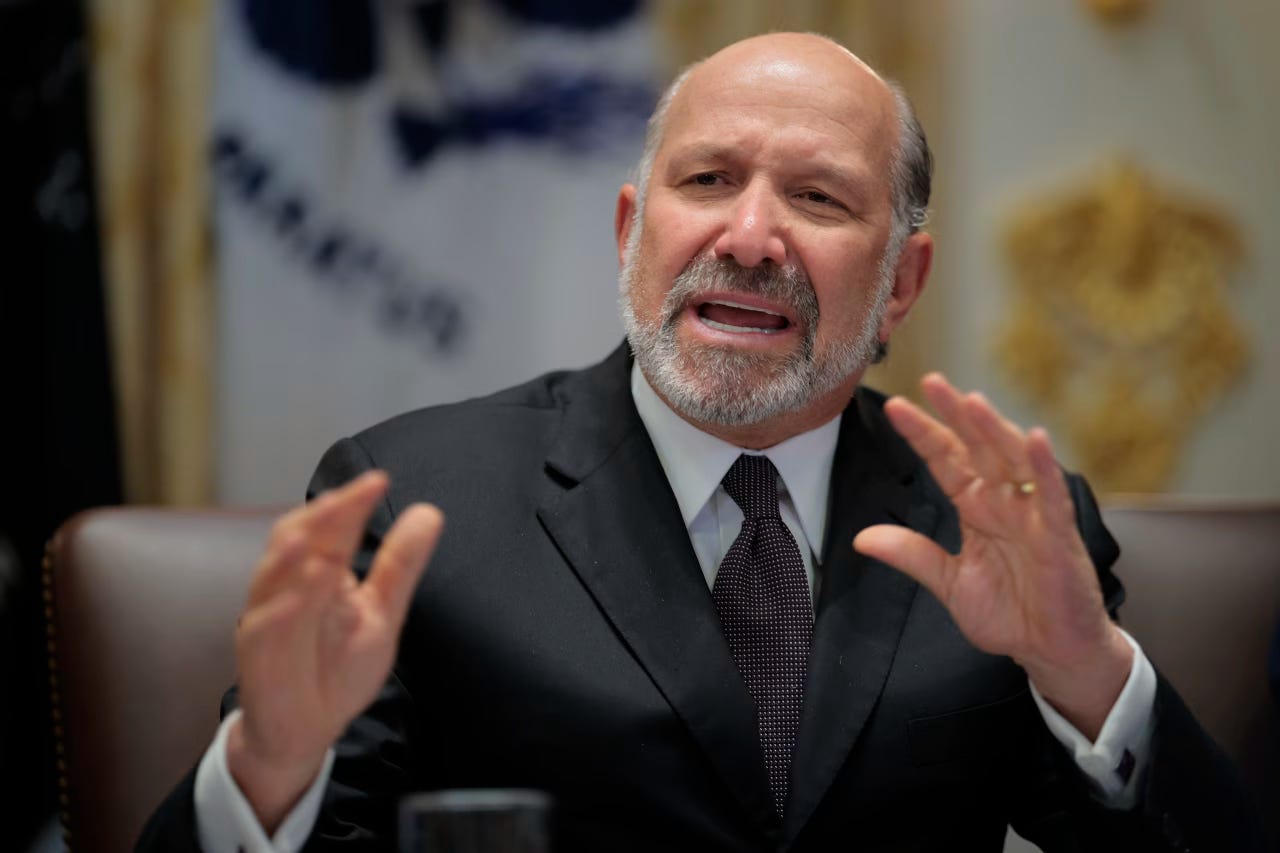
Commerce Secretary Howard Lutnick is facing mounting pressure from lawmakers in both parties over allegations that advanced American AI chips made their way to China despite federal export restrictions. The controversy centers on Nvidia’s multibillion-dollar sales to Singapore-based Megaspeed, whose former executive, Alice Huang, is accused of being a Chinese spy. Lawmakers have also criticized President Trump’s intervention to reinstate Nvidia CEO Jensen Huang following revelations of his extramarital affair with Alice Huang.
Lutnick reportedly resisted efforts by Treasury Secretary Scott Bessent and Secretary of State Marco Rubio to blacklist Megaspeed. Bessent publicly expressed frustration with the Commerce Department’s delays in restricting semiconductor exports. Republican and Democratic senators are now demanding answers about whether the department allowed other companies to circumvent export restrictions. Republican Sen. Tom Cotton pledged congressional action:
“Congress has much to investigate and we will pass overwhelmingly bipartisan chip export-control bills, including my Chip Security Act, one way or the other.”
Democrats, who will take control of both chambers of Congress in January, are also investigating potential financial conflicts of interest. They want to determine whether Southeast Asian data centers that allegedly supplied advanced computing power to China had financial connections to Cantor Fitzgerald, the financial services firm Lutnick previously led and his sons now run. The Commerce Department maintains that Lutnick has complied with all ethics requirements.
Further complicating matters, The Atlantic reported that Lutnick reassigned federal agents responsible for investigating advanced AI chip smuggling to his personal security detail. Republican Senate Banking Committee Chairman Tim Scott has requested that Lutnick testify before his committee next month. Republican Sen. John Kennedy wants both Lutnick and Bessent questioned under oath about the department’s handling of semiconductor exports.
Republican Sen. Thom Tillis has gone further, calling for Lutnick’s resignation. Tillis questioned why Lutnick failed to intervene when Jensen Huang accompanied Trump on a high-level trip to meet Chinese President Xi Jinping, despite reportedly having been briefed on intelligence concerning Huang’s affair. Washington Democratic Sen. Maria Cantwell also expressed concerns about Lutnick’s leadership of the Commerce Department.
Editor: When the people responsible for enforcing export restrictions are themselves the subject of congressional scrutiny, it’s worth asking who’s watching the watchdogs.
Source: The Hill
A German technology company wants to tackle AI’s enormous electricity bill by doing some of the heavy lifting with beams of light.
New Light-Powered AI Chips Could Slash Data Center Energy Costs (up to 5x)

German technology startup Q.ANT is developing photonic processors that use waves of light instead of electrical signals to perform complex AI calculations. As artificial intelligence becomes more sophisticated, the energy required to power it is becoming increasingly expensive. Tech companies are scrambling to build data centers near affordable renewable energy sources, but supply shortages, logistical hurdles, and public opposition are complicating those plans.
Rather than replacing conventional graphics processing units (GPUs), Q.ANT wants its light-powered chips to work alongside them. Traditional GPUs excel at performing enormous numbers of straightforward mathematical calculations, while photonic processors are particularly suited to complex, nonlinear mathematics. Q.ANT believes its technology could be especially useful for image recognition, video generation, robotics, and other applications involving physical AI. The approach could also reduce cooling requirements, a significant expense for data center operators.
Q.ANT founder and CEO Michael Förtsch said computer simulations suggest that combining photonic processors with conventional chips could reduce energy consumption by a factor of four or five. However, he acknowledged that those savings have yet to be demonstrated using actual hardware. Förtsch explained the division of labor between the two technologies:
“Linear math? Please route it to the GPU. Non-linear and complex stuff? Please route it to us.”
The company has already deployed its processors in data centers operated by cloud provider IONOS as part of a pilot program. More than 30 engineering teams are reportedly developing AI models optimized for photonic computing. Developers can continue using familiar programming languages such as Python and C++, although existing software optimized for GPUs will require modifications to take full advantage of the new hardware.
Another potential advantage is that Q.ANT’s processors can be manufactured using established 90-nanometer chipmaking technology dating back to the 2000s. That could allow manufacturers to leverage existing production facilities without massive new investments. However, supply chain limitations, software adoption, and convincing major cloud providers to embrace an unfamiliar technology remain significant hurdles.
Editor: The AI industry has spent years throwing more electricity at its problems. Maybe what it really needed was a little light.
Source: WIRED
Read The Morning Sixpack Archives here:


