




The Morning Sixpack stays free because the news that shapes your life should not be hidden behind a paywall. Paid subscribers are not paying for access. They are helping fund the research, writing, and independent voice that goes into every issue. Become a paid subscriber and help keep smart, honest news analysis free for everyone.
Inflation is back at 3.8%, growth is running hot, and the Fed may have to keep reaching for the brakes.
Inflation Reaches 3.8% as Strong Growth Keeps Fed Under Pressure
The Fed’s preferred inflation gauge rose to a 3.8% annual rate in October, moving further from the central bank’s 2% target. The personal consumption expenditures price index increased 0.1 percentage point from September, matching economists’ forecast. Core PCE, which excludes food and energy, reached 3.3%—0.1 point above expectations. Policymakers watch core inflation for a clearer view of longer-term trends, even as the Fed formally tracks the overall measure.
The latest numbers add to the case for another rate increase at the Fed’s December 8–9 meeting. Markets were already pricing in a quarter-point hike. Traders still expected two more increases beyond that, but trimmed the odds of a third 2027 hike to about one in three, down from roughly even odds on Tuesday. Inflation has remained above the Fed’s target for about five and a half years.
The inflation report arrived alongside revised data showing the economy grew at a 4.3% annualized rate in the third quarter. Consumer spending rose 4.2% during the quarter, while real final sales to private domestic purchasers—a measure Fed officials use to assess underlying demand—jumped 5.8%. The strong growth suggests higher interest rates have not yet put much of a chill on economic activity.
For October, consumer spending increased 0.3%, matching the pace of price increases but falling short of forecasts. Personal income rose 0.7%, well above the 0.4% estimate, and the personal saving rate climbed to 4.1%. Inflation pressures have been fed by energy costs, tariffs and strong demand tied to the artificial intelligence buildout; the White House also announced new tariffs on 14 trading partners, including China, the European Union and Japan.
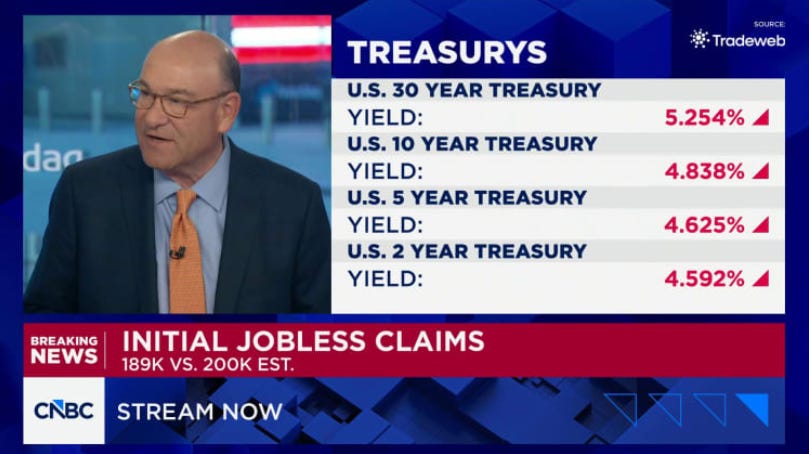
Economists warned that persistent demand and price pressures could make inflation harder to contain. “Inflation is too hot and it will not be brought under control as long as economic demand is also too hot,” said Chris Rupkey, chief economist at Fwdbonds. Initial jobless claims offered another sign of a resilient economy, falling to 189,000 for the week ending November 21—13,000 fewer than the prior week and below the 200,000 expected.
Editor: The Fed wants inflation at 2%; the economy keeps handing it reasons to stay busy.
Source: CNBC
Wall Street just watched the AI trade wobble again—and a 3.8% inflation reading gave investors another reason to reach for the sell button.
Nasdaq Drops 3% as AI Sell-Off Returns and Inflation Stays Hot
U.S. stocks tumbled Wednesday, led by another sharp drop in artificial intelligence shares. The Nasdaq Composite fell 3.1%, the S&P 500 lost 2.2%, and the Dow dropped 728 points, or 1.5%. Nvidia slid 6%, while Oracle fell more than 6% and Alphabet lost more than 4%. The technology sector ETF XLK was down over 4%.
Investors were also weighing inflation that showed little sign of cooling—and the possibility of more Fed rate hikes. October’s personal consumption expenditures price index rose 3.8% from a year earlier, up from 3.7% in September. Core PCE, excluding food and energy, reached 3.3%, slightly above forecasts. The figures reinforced expectations for rate increases in December and January.
The White House’s announcement of new tariffs on 14 trading partners, including China and the European Union, added to investors’ unease. The administration said the measures target subsidized industrial overcapacity and would not exceed rates in existing trade framework deals. New duties generally would not stack on top of existing tariffs, with an exception for China.
The latest drop followed a volatile stretch for technology stocks, including a sharp rally Monday after Jensen Huang was reinstated as Nvidia’s CEO, followed by declines in Nvidia and Anthropic. Anthropic shares fell below their $83 IPO price, while Nvidia lost ground for a second consecutive session. Deutsche Bank’s Jim Reid said the market had returned to a “risk-off tone,” though he described the current pattern as a rotation into defensive sectors rather than an indiscriminate sell-off.
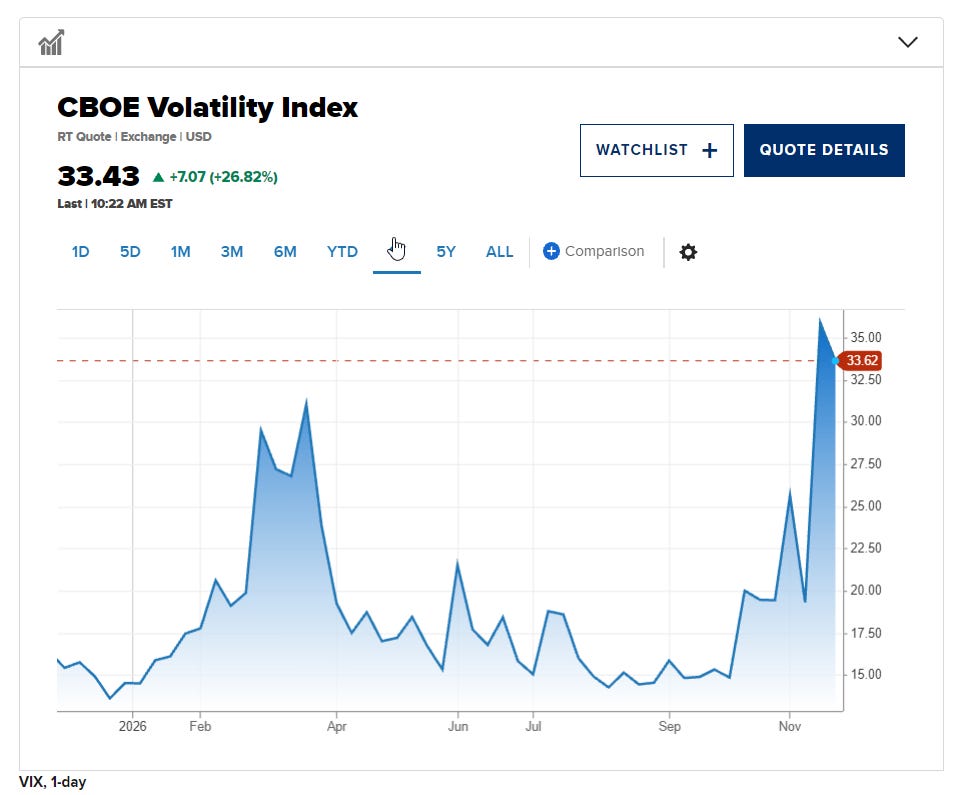
Investors sought safer assets as Treasury yields fell, while Wall Street’s volatility index climbed above 30. The 10-year Treasury yield dropped to 4.824%, and the VIX rose to 33.70 from Tuesday’s close of 26.36. Defensive sectors such as health care and consumer staples had drawn buying even as technology stocks sank.
Editor: The AI trade had a big comeback, then remembered it still has to answer for the price tag.
Source: CNBC
The Army blew up five tons of unstable lead azide to prevent an uncontrolled blast—and nearby residents had to trust the barriers, water, and wind forecast.
Army Detonates Iowa Lead Azide Stockpile After Warning It Could Explode
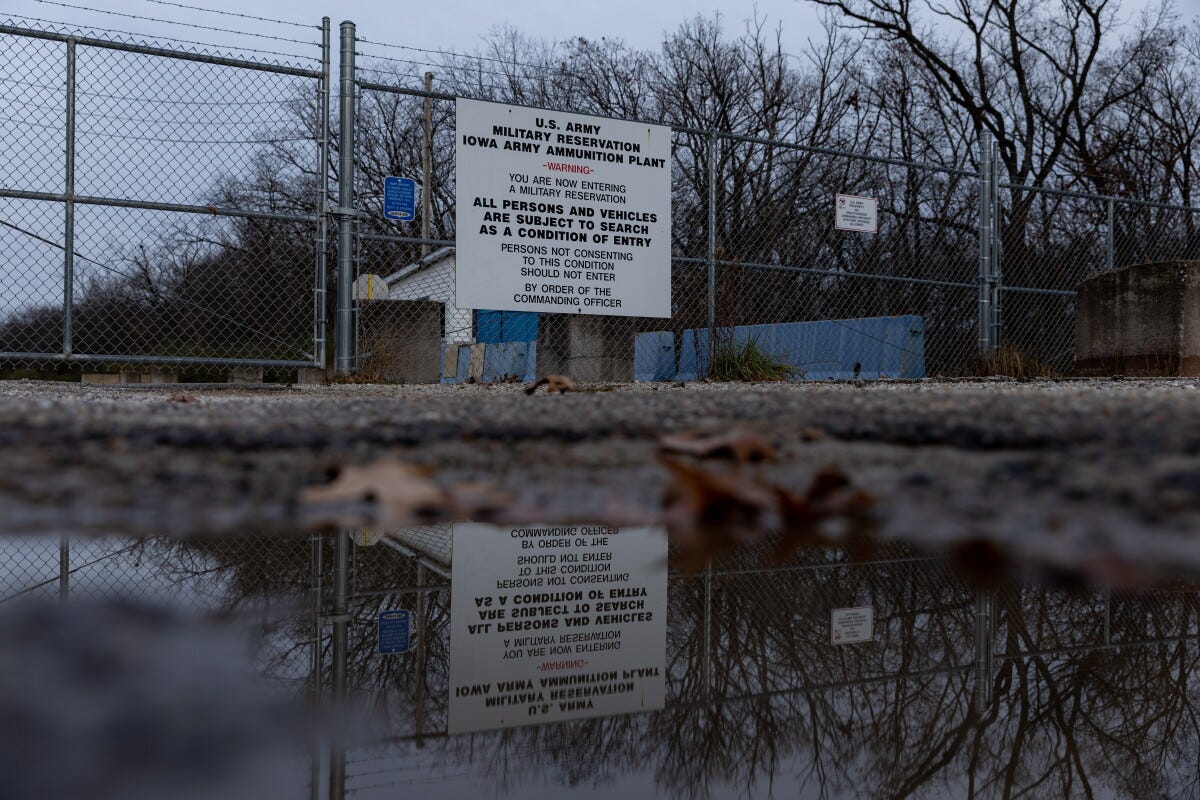
The U.S. Army intentionally detonated the nation’s entire stockpile of lead azide Wednesday at the Iowa Army Ammunition Plant in Middletown. Officials said the roughly five tons of degraded bomb-making material had become dangerously unstable and could explode without warning as temperatures fell. The controlled blast sent up two white plumes that witnesses several miles away saw dissipate quickly.
The Army said it built safeguards to limit lead dust, while residents nearby took precautions and worried about what might be carried downwind. Officials urged people within five miles to be ready to evacuate, but said barriers around the blast site should contain much of the plume. The Army surrounded the bunkers with concrete and sand barriers, used ballistic gels and foams, and planned to douse the material with more than 100,000 gallons of water.
The stockpile, stored at the Iowa site since 2009, was found partially crystallized during an inspection in March. That made it sensitive to friction and cold, raising the risk of spontaneous detonation. Army experts concluded that alternatives such as thermal treatment or neutralizing the contents were less safe than a controlled blast.
The detonation had been postponed three times after backlash and to allow more time for safety measures and suitable wind conditions. Environmental groups sued to stop it, but a federal appeals court ruled Monday that the Environmental Protection Agency had adequately included safeguards to limit lead dust. Officials expected the wind to carry the plume southwest toward Missouri, away from Burlington, though homes and farms could still lie along its path.
Some residents sealed windows and doors, while nearby schools canceled classes and a gas station planned to reopen once it was safe. Environmentalists and residents raised concerns about potential harm to health, water, farms and animals. “I don’t think lead danger goes away any time soon,” said Lucy Giehl, a nearby resident, adding that someone might have considered the problem sooner.
Editor: When a chemical stockpile becomes a ticking hazard, “we’ll deal with it later” stops being much of a plan. But blowing it all up was probably not the right answer and we’ll know in a few years as cancer rates rise after it’s “discovered” that nearly everything has been contaminated.
Remember, high fructose corn syrup (HFCS) is made from corn. Iowa grows a LOT of corn. And HFCS is in nearly everything.
Source: Associated Press
After a nearly two-year legal fight, Kilmar Abrego Garcia left the U.S. for Spain by commercial flight—a far different ending than the administration’s planned deportation to Liberia.
Kilmar Abrego Garcia Leaves U.S. for Spain After Legal Fight

Kilmar Abrego Garcia, whose mistaken deportation to El Salvador became a flashpoint in President Trump’s immigration crackdown, has left the United States for Spain. He departed Tuesday and arrived in Madrid Wednesday morning, according to his lawyers and administration officials. There was no indication he entered Spain through a formal agreement with its government.
Abrego Garcia’s lawyer described the departure as voluntary and temporary, saying he left “a free man.” Attorney Simon Sandoval-Moshenberg said Abrego Garcia chose his destination and traveled on a commercial flight, rather than being sent in restraints on an ICE flight to Liberia. His lawyers say he plans to decide where to settle while waiting out the remainder of the current administration.
Abrego Garcia has a wife and child who are U.S. citizens, and his lawyers say he has options to return to the country. Sandoval-Moshenberg said they hope a future administration will help reunite the family in Maryland. The Trump administration celebrated the departure as a “self-deportation.”
Before leaving, Abrego Garcia and the administration had been at odds over where he should go. He had been willing to move to Costa Rica, where his lawyers said he had been offered refugee status, but the administration instead sought to deport him to Liberia. Courts blocked that plan.
Abrego Garcia has lived in the U.S. for more than a decade. An immigration judge ruled in 2019 that he could not be deported to El Salvador because he could face persecution or torture there; after he was mistakenly deported in 2025, he was returned to the U.S. and charged with human smuggling, allegations he denied. A judge later dismissed the criminal charges, which his lawyers argued were retaliation for the wrongful deportation.
Editor: The administration called it self-deportation; his lawyer called it a free man choosing his own flight.
Source: NPR
The Supreme Court struck down Trump’s sweeping tariffs, so the administration is rebuilding them country by country—with more paperwork and, potentially, more costs for shoppers.
Trump Proposes New Tariffs on China, Europe and 12 Other Trading Partners

The Trump administration has proposed new tariffs on China, the European Union, Japan and 11 other trading partners. The duties would replace some tariffs the Supreme Court struck down earlier this year, after ruling that Trump lacked authority to impose broad import taxes under the emergency law he had used. The proposed rates vary by country, with China facing 20%, in addition to existing 25% tariffs on certain technology and industrial goods.
The administration says the tariffs target countries it accuses of subsidizing excess industrial production and flooding global markets with cheap goods. The proposal follows an investigation launched by U.S. Trade Representative Jamieson Greer in March. The tariffs are not final: they must go through hearings and a public comment period, and countries that negotiate with Washington could receive lower rates.
The targeted countries include Bangladesh, Cambodia, India, Indonesia, South Korea, Malaysia, Singapore, Switzerland, Taiwan, Thailand and Vietnam, alongside China, the EU and Japan. Proposed exemptions cover oil and gas, food that cannot be grown in the United States, critical minerals, fertilizers, and certain semiconductor chips and pharmaceuticals. Mexico and Norway were also investigated, but their reports were not released.
The proposal is the latest turn in the administration’s effort to restore tariffs after the Supreme Court’s February ruling. Broad duties imposed under Section 122 of the 1974 Trade Act expired after 150 days; the administration then pursued Section 301 investigations, which can support tariffs lasting four years and can be renewed. The new duties could supersede earlier tariffs tied to a separate forced-labor investigation when the proposed excess-capacity rate is higher.
The announcement comes after Democrats campaigned on the cost-of-living impact of tariffs and won the midterm elections. Critics say the new duties could add uncertainty and costs, while changing trade laws to limit Trump’s authority would require veto-proof majorities in Congress. Some tariffs have bipartisan support, and trade policy does not split neatly along party lines.
Editor: The tariff plan survived the Supreme Court only by changing legal lanes; the bill for imported goods may still find its way to consumers.
Source: The Washington Post
The administration’s DHS chief was sent abroad while his public handling of nationwide tech outages drew criticism back home.
DHS Secretary Mullin Faces Criticism Over Tech Outages And Immigration

Homeland Security Secretary Markwayne Mullin is facing criticism over his public response to technology outages that grounded flights and disrupted corporate email and banking systems. The breakdowns raised national security concerns, and the White House removed Mullin as the administration’s public spokesman after he struggled to reassure the public. He also drew criticism for flying on a government jet to a college football game during the crisis.
Mullin’s unannounced five-day trip to Jordan, Azerbaijan and the United Arab Emirates added to questions about his judgment and standing in the administration. The trip had been planned for months, according to people familiar with it, and DHS said it was intended to strengthen security partnerships. Officials said Mullin followed travel rules and reimbursed the government for personal travel by his wife and guests. President Trump defended him, saying he was doing a good job and worked hard.
Administration officials described Mullin as amiable and said he had brought a more professional atmosphere to DHS than his predecessor. But some said he has struggled to project competence while adapting from the Senate to leading an agency with 260,000 employees. His remarks about possible artificial intelligence involvement in the outages, based on an unnamed acquaintance’s suggestion, reportedly frustrated senior officials.
Mullin’s role in immigration enforcement has also drawn criticism from both sides. He has said he wants ICE to focus on criminals, yet the department continues Trump’s mass deportation campaign, including arrests of people without criminal records. DHS reported removing 483,000 immigrants from the U.S. interior in fiscal 2026, while business groups have complained that workplace arrests are costing them workers.
Mullin has also faced criticism over fatal shootings by immigration officers and high-profile arrests, including a father and daughter at Seattle-Tacoma International Airport and a Princeton neuroscience researcher. He has sometimes expressed a willingness to consider legal status for some undocumented immigrants, while promising “no amnesty.” Critics say he lacks influence over White House immigration policy, and some administration officials have privately questioned how long he will remain in the job.
Editor: Running a 260,000-person agency is a harder assignment than looking confident at a podium.
BUT HERE’S THE THING: Republicans have NEVER wanted to govern anything. They just want it all to fail so they can save money on their taxes.
Source: The Washington Post
Read The Morning Sixpack Archives here:


