




The Morning Sixpack stays free because the news that shapes your life should not be hidden behind a paywall. Paid subscribers are not paying for access. They are helping fund the research, writing, and independent voice that goes into every issue. Become a paid subscriber and help keep smart, honest news analysis free for everyone.
Russia’s rumored nuclear space weapon has European leaders reaching for the telescope—and the treaty book.
Russia’s Reported Nuclear Space Weapon Raises Alarm In Europe
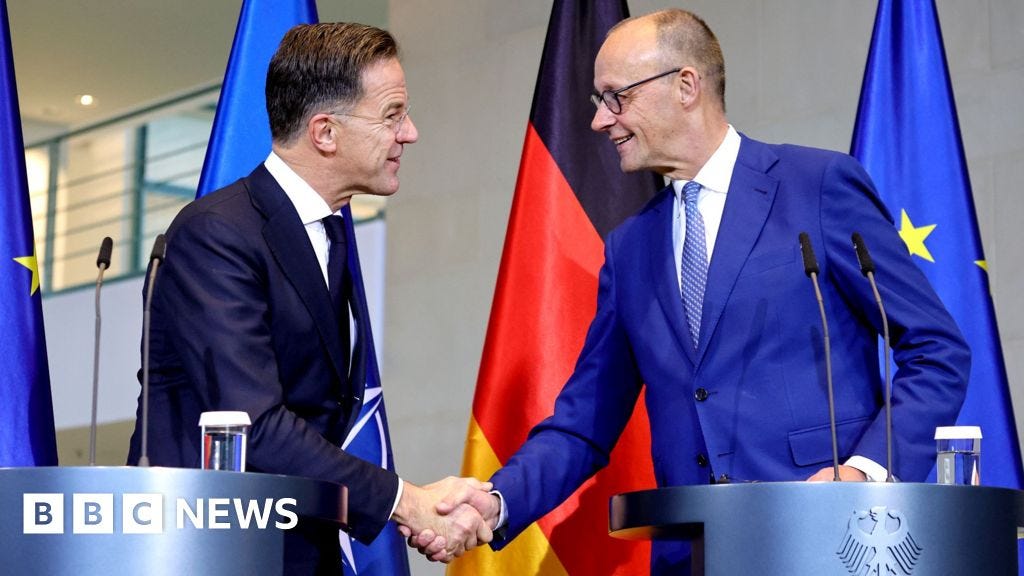
German Chancellor Friedrich Merz said reports of Russian plans for a nuclear weapon in space reveal the level of escalation Russia is prepared to pursue. Merz did not confirm or deny the reports. He said Germany would continue assessing its deterrence and defense and update them where needed.
The European Space Agency chief called nuclear weapons in orbit an “ultimate nightmare scenario.” Josef Aschbacher told Handelsblatt that such a weapon would threaten the infrastructure that modern life increasingly depends on. A German government spokesman, Stefan Kornelius, urged people not to become excessively nervous about hypothetical dangers.
Russia is a signatory to the 1967 Outer Space Treaty, which bans weapons of mass destruction from orbit. But countries including the United States and China have pursued or considered other military capabilities in space, including weapons aimed at rival satellites. Those satellites support military communications, surveillance and navigation.
Bleddyn Bowen, co-director of Durham University’s Space Research Centre, said a nuclear explosion in space could have “massive infrastructural effects.” More than 15,000 active satellites could be affected, he told the BBC’s Today programme. The consequences would be indiscriminate and could also destroy Russia’s own space infrastructure.
In 2024, the United States accused Russia of developing a space-based anti-satellite weapon equipped with a nuclear warhead. Russia denied the allegation. The latest reports revive concerns about the militarization of orbit, where a single weapon could put a vast number of countries’ satellites at risk.
Editor: Space is already crowded with satellites; adding nuclear weapons would be a spectacularly bad way to make room.
Source: BBC
Jensen Huang is back at Nvidia after Trump says he helped broker the return—because apparently a CEO comeback now needs a White House assist.
Trump’s Role In Jensen Huang’s Nvidia Return Raises Questions
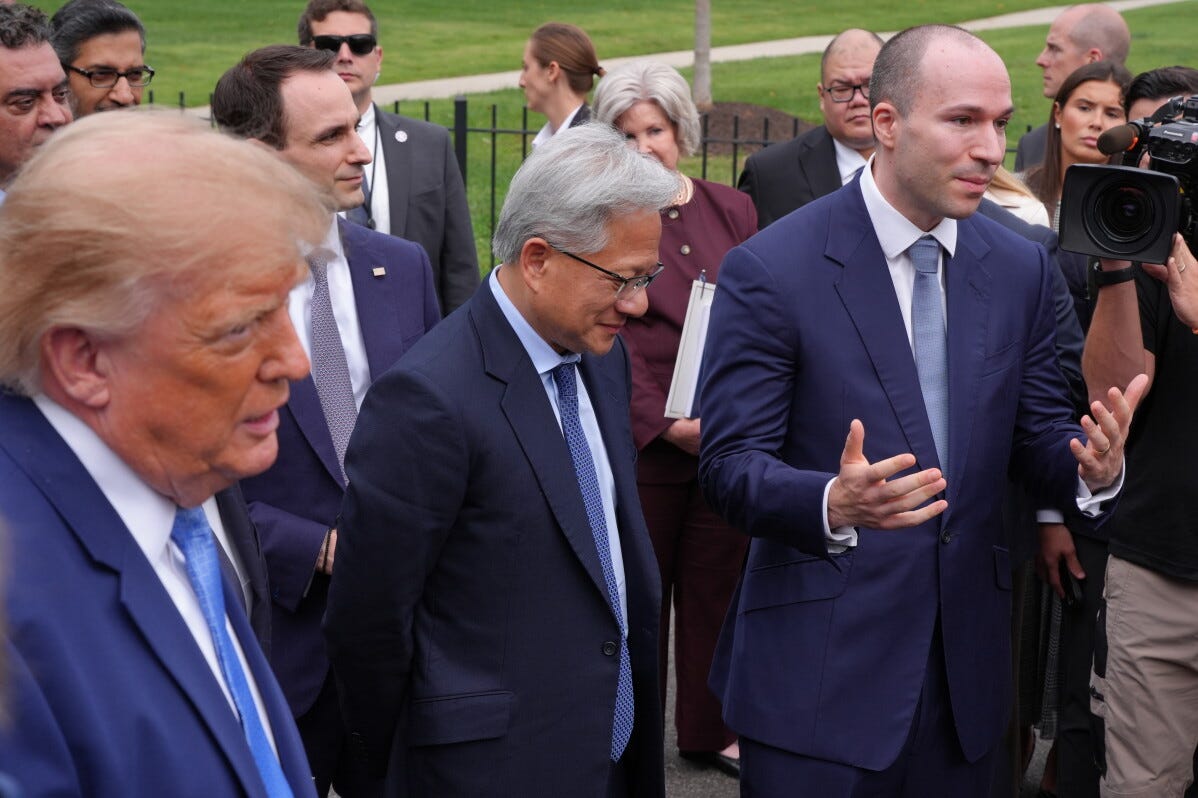
Nvidia’s board reinstated Jensen Huang as CEO less than two weeks after he stepped down, following a public intervention by President Donald Trump. Trump told CNBC, “I convinced them,” and said he had made the deal. He also claimed his administration had conducted a “very thorough investigation” and that Huang had been “exonerated.” Nvidia shares surged more than 30% on the news, recovering nearly $1 trillion in market value.
The comeback is unfolding amid scrutiny of Nvidia’s business ties and possible chip exports to China. Huang stepped down after reports of affairs with two subordinates and an executive at Megaspeed, a Nvidia customer accused of helping Chinese firms get access to Nvidia computing power through Southeast Asia. The Justice Department has been investigating whether Megaspeed smuggled Nvidia chips into China. Nvidia’s accounting practices have also drawn scrutiny from the Securities and Exchange Commission.
The Wall Street Journal’s editorial board argues Trump’s assurances to Nvidia’s board raise questions about whether the company could face enforcement over potential export-control or securities violations. Treasury Secretary Scott Bessent had publicly questioned whether Nvidia’s culture enabled export-control evasion to boost revenue. California Attorney General Rob Bonta has said his office is investigating whether chips or confidential information reached China and whether Nvidia misled investors or the public.
Trump’s intervention has also invited comparisons with his earlier demand that Intel CEO Lip-Bu Tan resign over alleged ties to Chinese companies. Tan kept his job after Intel agreed to give the U.S. government a 9.9% stake. The WSJ editorial says Nvidia’s board may have faced pressure to reinstate Huang, while the company still faces legal and political exposure, including possible shareholder lawsuits over Huang’s disclosures about his relationship with the Megaspeed executive.
The episode is likely to fuel political scrutiny, with Senate Democratic leader Chuck Schumer vowing investigations into Nvidia, Huang, and the Trump administration. The editorial warns that tying U.S. AI success to one executive or company overlooks competitors such as Google, OpenAI, Meta, Microsoft, and Amazon, which are also developing advanced chips. It argues Trump’s rescue of Huang risks making export controls and national security look subordinate to political preference—and that’s a lot of baggage for one CEO’s return.
Editor: When the White House starts helping boards pick CEOs, “independent oversight” begins to sound more like a nostalgic concept.
Source: Al Jazeera · Associated Press · The Wall Street Journal
Donald Trump Jr.’s investment firm is drawing congressional scrutiny. Turns out “private business” gets a little less private when the president’s family is involved.
Democrats Investigate Trump Jr.’s 1789 Capital Ties
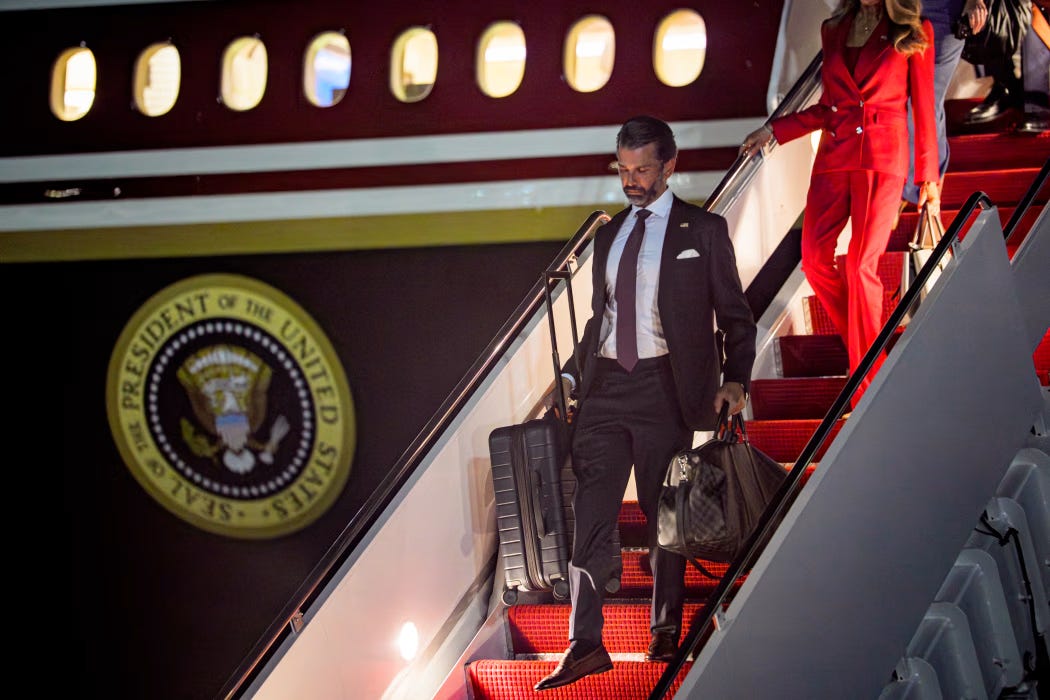
Rep. Jamie Raskin, the incoming chairman of the House Judiciary Committee, has requested records from four companies tied to 1789 Capital, where Donald Trump Jr. is a partner. The letters seek communications and materials about the firm’s investments by December 7. Raskin says 1789 Capital may have had advance knowledge of federal contracting decisions, raising questions about whether it benefited from insider access. Trump Jr. has denied profiting from White House connections or making investment decisions using inside information.
The four companies are defense contractor Hadrian Automation, vaping company Juul, prediction market Polymarket, and online firearms retailer GrabAGun. Raskin’s letter says Hadrian received 1789 Capital investment and later won nearly $1 billion in federal contracts. Juul received investment as the Trump administration eased some vaping restrictions. The letter says Polymarket benefited after federal investigations closed in 2025, while GrabAGun could benefit from a proposed rule allowing firearm distributors to ship directly to customers’ homes.
Trump Jr. sits on GrabAGun’s board, and 1789 Capital helped take the company public. GrabAGun called Raskin’s allegations baseless, saying the proposed rule was widely discussed and that its input came through public comments. Juul said it intends to cooperate with congressional efforts to understand the company. Hadrian Automation and Polymarket did not respond to the Journal’s requests for comment.
Trump Jr. has said he understands why people might perceive corruption when a firm he works for invests in companies that receive government contracts, but added, “It doesn’t make it so.” Bill Burck, a lawyer representing 1789 Capital, called the allegations “personal attacks untethered to actual evidence.” He said the firm had responded to an earlier inquiry and identified what he described as factual errors in Raskin’s understanding of its operations.
The records requests are an early sign of how Democrats plan to use congressional oversight after taking control of the House in January. Raskin says the Judiciary Committee will examine whether public officials and their families can profit from government information or access. The inquiry’s central question is whether 1789 Capital’s connections gave it an improper advantage—and the companies now have a deadline to provide records.
Editor: When the president’s son is in the investment business, “just a coincidence” is going to need a very tidy paper trail.
Source: The Wall Street Journal
Newborn vitamin K shots have been routine for decades. Now misinformation is helping put babies at risk—and doctors are scrambling to get through to parents.
Doctors Struggle to Protect Newborns as Vitamin K Refusals Rise
At a Grand Rapids hospital, a newborn whose parents had refused a vitamin K shot began bleeding from her eyes, nose and rectum about 36 hours after birth. Doctors rushed her to intensive care and gave her blood products and vitamin K. She survived, but her doctors believe she might have died if the bleeding had started at home. The case reflects a wider challenge as more parents refuse the shot.
Nationally, the share of newborns who do not receive vitamin K injections more than doubled, from 3.1% in 2017 to 6.8% in 2025. Babies are born with low levels of vitamin K, and the injection has been standard newborn care since the 1960s. It prevents vitamin K deficiency bleeding, a rare but potentially fatal condition that can include bleeding in the brain. According to the CDC, babies who miss the shot are 81 times more likely to develop the condition; one in five babies who do develop it dies.
Doctors say refusals have risen alongside vaccine hesitancy and broader mistrust of medicine. Influencers and online forums have spread claims that the shot is linked to childhood cancer, harmful or unnecessary. At the Grand Rapids hospital, pediatrician Torrie LeBlanc and colleagues created fact sheets and trained staff to talk with parents without shaming them. Their effort has stopped refusal rates from rising there, but refusals of other newborn medications continue to increase.
The conversations can be difficult: LeBlanc persuades about half of parents who initially refuse the shot to change their minds, while other doctors report success rates of 20% to 40%. Some parents ask for vitamin K drops or supplements instead. Those are less effective than the injection, require repeated doses, and no oral version is federally approved, according to the report. Doctors say they would rather offer some protection than none, while emphasizing that the injection remains the standard.
The consequences can complicate later care, too. Doctors treating a two-week-old for suspected meningitis worried that a spinal tap could cause dangerous bleeding because the baby had not received vitamin K; the parents refused the procedure, so the team treated the child with antibiotics without confirming the diagnosis. The parents later thanked the staff, but still declined routine vaccinations. Doctors say they are trying to preserve trust while persuading families to accept care that can prevent rare but devastating outcomes.
Editor: A newborn can’t fact-check TikTok. The adults around them have to do better.
Source: NPR
Rudy Giuliani is getting the nation’s highest civilian honor in a private White House ceremony—no press, just the medal and the memories.
Trump to Award Rudy Giuliani Presidential Medal Of Freedom
President Donald Trump will award former New York City Mayor Rudy Giuliani the Presidential Medal of Freedom on Tuesday. The White House plans to hold a closed-press ceremony, honoring Giuliani for what it describes as a lifetime of public service. The medal is the nation’s highest civilian honor, alongside the Congressional Gold Medal.
The award recognizes people who make especially meritorious contributions to U.S. security, national interests, world peace, or significant public and private endeavors. Giuliani, 82, said he was “honored and humbled” to receive it from the nation and Trump, whom he called his commander-in-chief.
White House assistant press secretary Olivia Wales praised Giuliani’s work as a federal prosecutor and mayor. As U.S. attorney for the Southern District of New York, Giuliani prosecuted mob bosses and pursued organized crime. As mayor, he led New York City during a period of significant change.
Wales also cited Giuliani’s leadership after the September 11 attacks, saying he represented American leadership in the face of tragedy. Giuliani said he shared credit with colleagues who worked with him, disagreed with him and supported him, particularly those who died in causes they pursued together.
The ceremony will take place behind closed doors, with no press present. Trump said he would “proudly honor” Giuliani—often known as “America’s Mayor”—for his service to the American people.
Editor: A closed-press ceremony means the medal gets the spotlight, while the questions can wait outside.
Source: Fox News
It’s so hot in Arizona that even the cactus are dying—and their nighttime food supply is getting cooked, too.
Arizona’s Saguaro Cacti Struggle as Heat Storms Intensify

Rising heat is taking a growing toll on saguaros, the iconic cacti of the American West. In Phoenix, researchers estimate that heat-related deaths rose from 1% to 2% of saguaros each year before 2020 to 7% in 2023. The rate has since fallen to about 4% to 5%, but researchers say that remains troubling. In 2023, Phoenix endured 31 consecutive days with temperatures of at least 110 degrees Fahrenheit.
The danger isn’t limited to scorching afternoons: unusually hot nights interfere with how saguaros make food. Like other cacti, saguaros keep their pores closed during the day to limit water loss, then open them at night to absorb carbon dioxide. Hot nighttime temperatures can disrupt the chemical process that stores the carbon dioxide for photosynthesis the next day. The cactus gets less food just as heat damage increases its need for energy to repair itself.
Reuters’ analysis found Phoenix had only nine nights above 86 degrees Fahrenheit during the entire 1960s. This decade, it has already recorded more than 175 such nights. The heat can also drain the cactus’s water, damage its skin and leave it more vulnerable to infection. Researchers say prolonged heat can weaken a saguaro over years; a cactus may take a decade to die.
The problem extends to the next generation. Saguaro seedlings are tiny and vulnerable to summer drying, and they depend on shade from rocks or “nurse trees”—some of which are also dying after repeated heat waves. Fewer than one in a thousand seeds becomes a seedling, and more than 99% of those seedlings die in their first year. Researchers say large recruitment events, when enough young cacti survive to replace older plants, may happen only every two or three decades.
Saguaros in cooler, higher-elevation areas around Tucson are still faring better than those near Phoenix, but researchers have found little evidence of recent recruitment there, too. The cactus grows slowly, reproduces slowly and can live for more than a century, so the consequences will play out over decades. The heat is also stressing other desert wildlife: Reuters cites research finding major declines in Mojave bird species and increased risks for meerkats in Africa’s Kalahari Desert.
Editor: The saguaro spent millennia adapting to the desert. It didn’t get a vote on the thermostat.
Source: Reuters
Read The Morning Sixpack Archives here:


