


Drone Wars, Oil Windfalls and Emoji Diplomacy
From rising inflation to exploding boats, dairy farm bombings, Putin’s oil payday and Russia arming Iran—this week’s chaos comes with receipts.
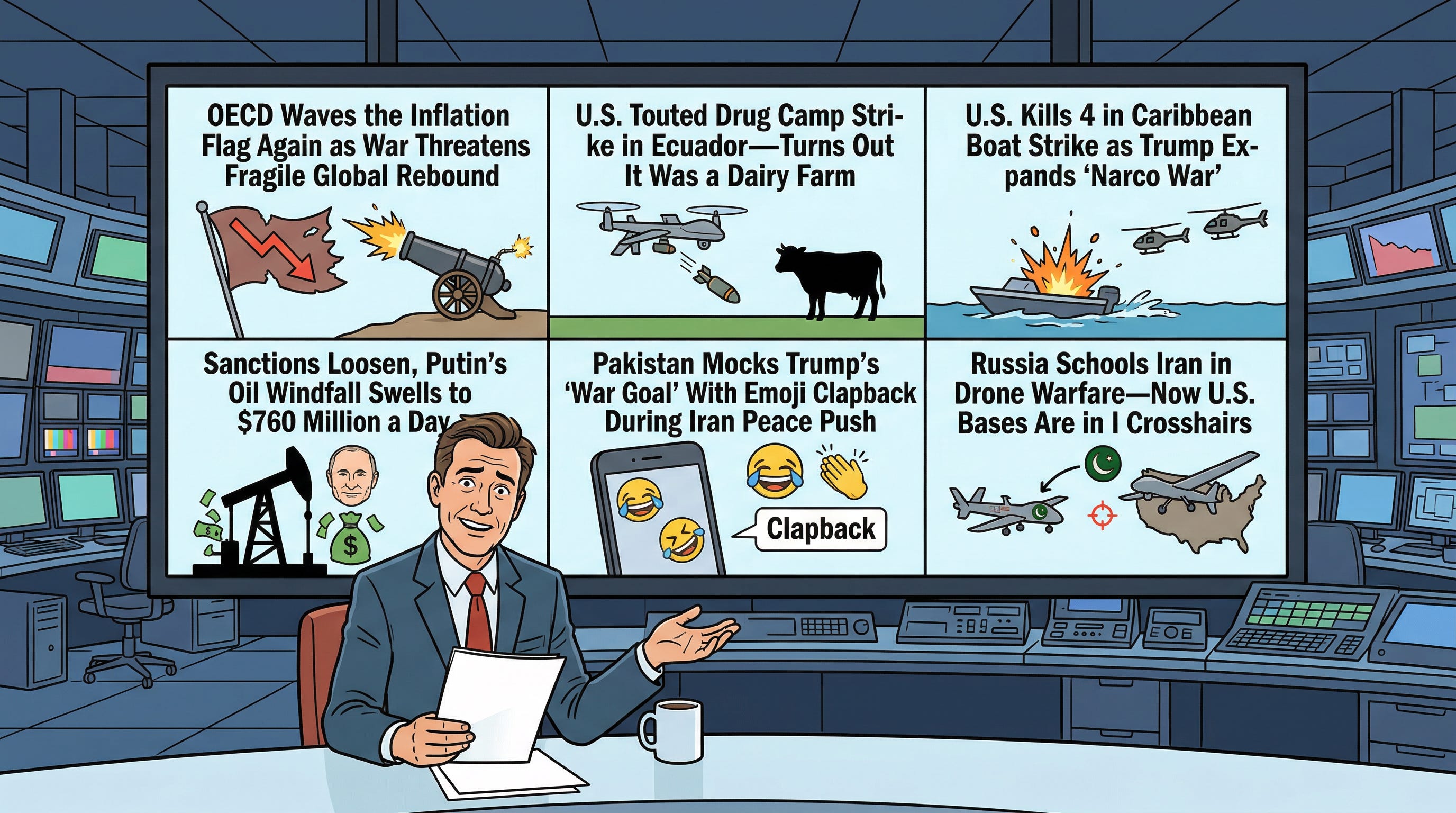
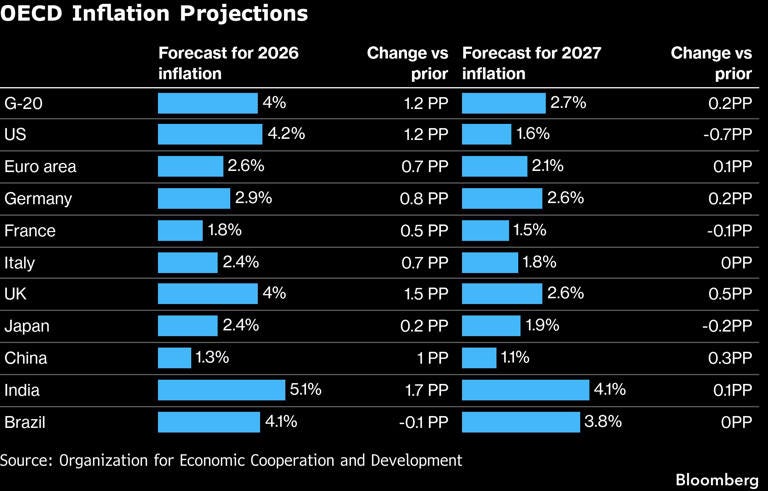
The global economy was finally stabilizing—and then war jolted inflation forecasts higher. The OECD now sees prices surging again across major economies, with the U.S. running even hotter. Energy shocks are back in the driver’s seat, and central bankers don’t look thrilled.
In Ecuador, a strike hailed as a blow against narco-terrorists turned out to have flattened a working dairy farm. Residents say it was cows and cheese—not cartel trainees. The optics are ugly, and the evidence remains thin.
Meanwhile, U.S. Southern Command killed four more men in a Caribbean boat strike, pushing the administration’s expanding “armed conflict” with cartels into triple-digit fatalities. It’s not interdiction anymore—it’s a military campaign, complete with aerial footage and mounting legal questions.
On the economic front, sanctions waivers are letting Russia sell oil closer to full market prices. Discounts to India and China are shrinking fast, meaning more cash per barrel for the Kremlin as global crude prices climb.
Diplomatically, Pakistan publicly mocked Trump’s stated war goal of reopening the Strait of Hormuz—pointing out it was open before the ultimatum. When a key peace intermediary reaches for clap emojis, it’s not a great sign.
And strategically, Russia is now feeding Iran satellite intelligence and upgraded drone tech, while Tehran applies battlefield lessons from Ukraine against U.S. forces in the Gulf. The drone revolution isn’t theoretical anymore—it’s hovering over American bases.
This week’s through-line? The battlefield, the oil market and the global economy are now fused together—and everyone’s playing offense.


