

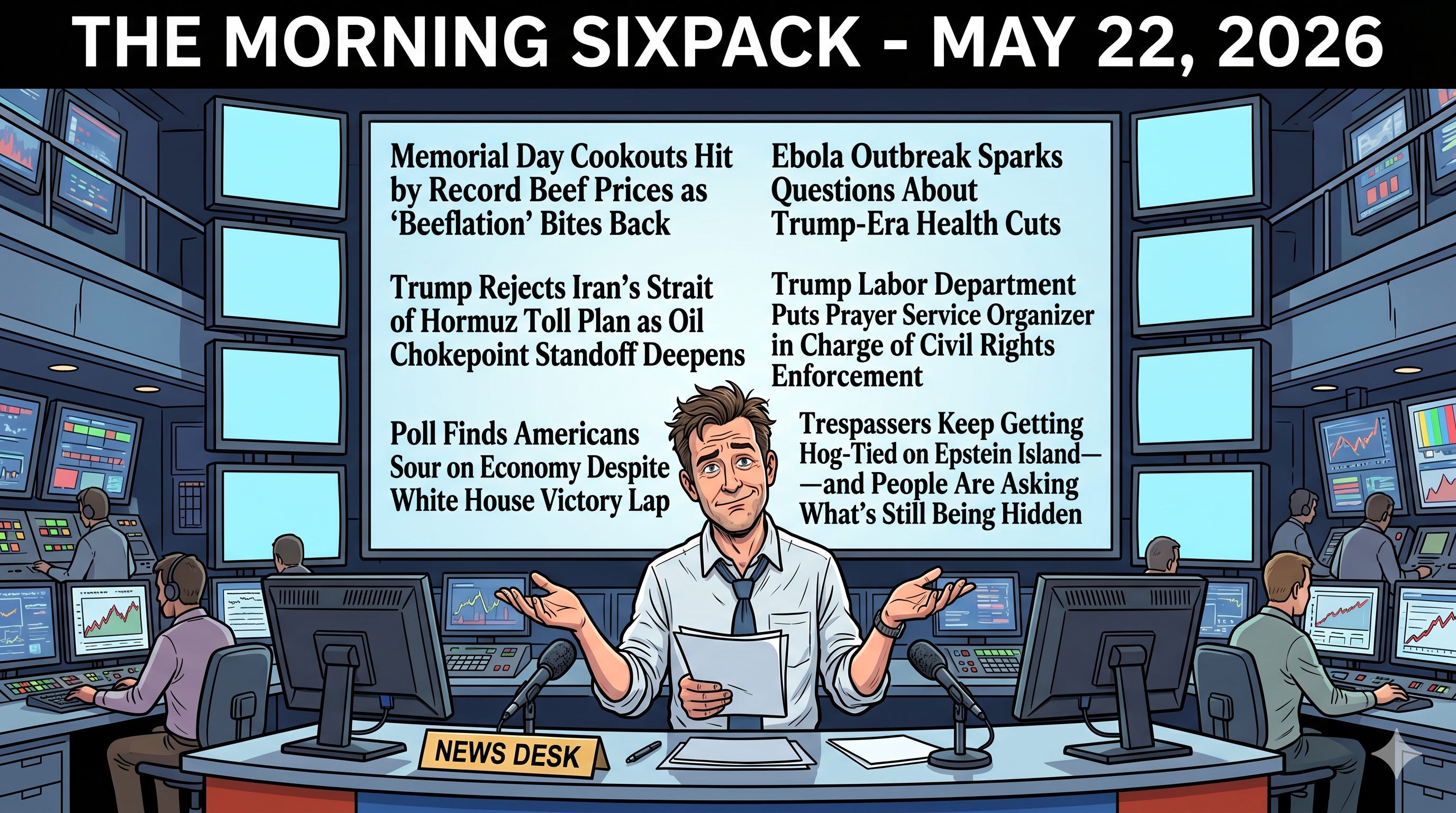
From backyard cookouts getting crushed by inflation to Iran threatening one of the world’s biggest oil chokepoints, today’s headlines feel less like stability and more like a stress test for everyone’s wallet and blood pressure. Add in Ebola fears, government shakeups, and whatever the hell is still happening on Epstein Island, and you’ve got another perfectly normal news cycle in 2026.
Ground beef prices just hit a record high ahead of Memorial Day weekend, turning America’s favorite cookout tradition into a budgeting exercise. Families are paying nearly $7 a pound for ground beef as shrinking cattle supplies and strong demand keep prices elevated. Even the White House is struggling to explain why burgers now cost like luxury goods while restaurant chains scramble to push more chicken instead.
A new Ebola outbreak is raising fresh concerns that years of public health cuts weakened outbreak response systems. Critics say disease monitoring and emergency infrastructure were hollowed out at the exact moment global preparedness mattered most. Funny how “government waste” suddenly becomes important again when deadly viruses start making headlines.
The U.S. and Iran are inching toward a possible peace deal, but the Strait of Hormuz remains a massive global pressure point. Iran floated ideas involving shipping tolls through the strategic oil passage, while the Trump administration warned that any attempt to control the waterway would be unacceptable. Translation: the global economy is one bad diplomatic phone call away from another gas-price nightmare.
The Trump Labor Department quietly put its workplace faith leader in charge of civil rights enforcement. Kenneth Wolfe, who organized controversial worship services inside the agency, now oversees an office historically responsible for policing workplace discrimination among federal contractors. Critics say the administration is dismantling traditional civil rights enforcement while elevating religious initiatives inside government.
Polls show Americans still feel miserable about the economy despite nonstop political messaging about growth and resilience. Voters continue focusing on grocery prices, rent, insurance, and basic affordability instead of stock market headlines or GDP statistics. It turns out people trust their bank accounts more than campaign talking points.
And then there’s Epstein Island, where trespassers claim they were hog-tied, blindfolded, and detained by armed security years after Jeffrey Epstein’s death. The infamous island remains heavily guarded despite endless promises of transparency surrounding the trafficking scandal. The more aggressively authorities lock the place down, the more people wonder what exactly they still don’t want anyone seeing.
The biggest theme running through all these stories? Trust is collapsing everywhere—government, institutions, markets, public health, even official narratives. Americans are increasingly looking at the people in charge and asking one simple question: are you actually solving problems, or just managing the optics?


